Apparently, car companies thought giving drivers the option to voice command a bunch of smart phone apps would make driving safer.



A new study by AAA and the University of Utah put the new gadgetry available inside cars to the test, and found that all that technology causes distracted driving.
According to Max Smith, the study found 30 2017 models from various manufacturers "had systems that put a significant burden on drivers to use — mentally or visually pulling attention from the road." With infotainment, navigation, voice commands, and more, cars are harder to drive safely.
All those new systems create distractions a lot like cell phones do, but many cars are taking steps to integrate cell phone technology into the driver's control. "Initial research on the effects of drivers’ phone use through the dashboard screens using features like Apple’s CarPlay suggests that they may be less frustrating to use than some of the built-in options, although that does not mean they are safe to use while in motion," according to Smith. "The current setup, with some cars allowing texting, internet searches or social media posts from behind the wheel, is a 'recipe for distracted driving," writes Smith.
Included in the study's findings is a list of the worst of the worst of the distracted driving offenders.
Read the full story: Your car can now cause distracted driving
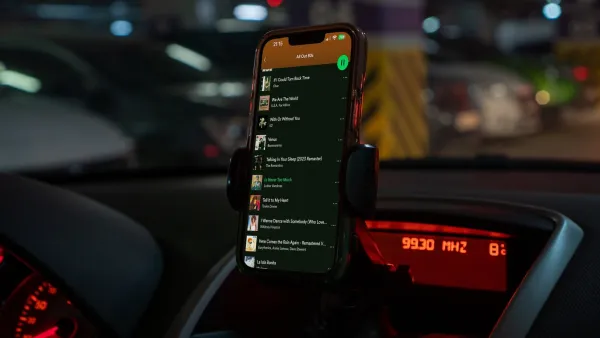
Traffic deaths rise by 15% on major album release days
Enjoy those new tracks, but don't forget to keep your eyes on the road.

StreetVision tool pinpoints likely crash sites using mobile phone data
The tool can help cities quickly identify high-risk intersections and corridors and make an evidence-based case for safety interventions.
USDOT Launches Unfunded 'SAFE ROADS' Program
The program targets “distractions” and “political messages or artwork,” and paves the way for autonomous vehicles.

Desperate measures: Advocates weigh draining Lake Powell to fill Colorado River
Draining the reservoir could reduce evaporation losses by a couple hundred thousand acre-feet.

Eastern Nebraska is running out of electricity
Data centers and electrification are straining eastern Nebraska’s grid, throttling economic development.

Malls are becoming the midtowns of the future
Mall and office park redevelopments are a generational opportunity to create new nodes of urbanity.

NYC breaks ground on anti-flooding infrastructure project
New York City's new system will reduce stormwater flows to local sewers by 90%.

One Kentucky town’s secret to affordable housing
The Smoketown Community Land Trust has already built seven affordable homes for community members.

Houston gains petal-shaped cooling infrastructure to make streets more ‘delightful’
The city has installed the pavilions along 15 blocks in Houston.

FREE Course: Walkable City 1: Why Walkability?
After describing his path towards focusing on walkability as the essence of good planning, Jeff Speck marches through his five principal reasons for making more walkable places.
Reinventing Malls: Planning Alchemy—Turning Gray Fields Into Gold
The course focuses on the opportunities and imperatives that shape reinvention of mall sites.

City of Rosemead
Rutgers University, Edward J. Bloustein School of Planning and Public Policy
One Hundred Miles
University of Michigan School for Environment and Sustainability (SEAS)
Hunter College, City University of New York (CUNY)
The Architects Foundation
City of Cambridge
Montrose County
The Pocatello Development Authority