Chicago Mayor Rahm Emanuel proposed an expansion of the city's Downtown Zoning District this week. The changes would allow taller buildings in a larger swath of the city.


Bill Ruthart reports that Chicago Mayor Rahm Emanuel is "seeking a new program to charge developers extra for packing more square footage into downtown buildings, with the money going for projects in Chicago's economically depressed neighborhoods."
"The mayor estimated the proposal could generate roughly $40 million to $50 million in the next three or four years — but it also could help some developers make millions of dollars more on new projects," adds Ruthart.
The "Neighborhood Opportunity Bonus," as Mayor Emanuel calls, it would build on the existing "Zoning Bonus Ordinance," to provide incentives for developers to build more amenities into projects in return for greater height and density.
"Under the mayor's plan, some of the current bonuses — which he argued benefit mostly the building itself — will be eliminated in exchange for fees that would be set aside for neighborhood projects," reports Rurthart, who also describes how the new funding for economic development in struggling neighborhoods would be spent.
Fran Spielman provides additional coverage of Mayor Emanuel's announcement for the Chicago Sun-Times.
Read the full story: Emanuel: Charge downtown developers more, spend money in struggling neighborhoods
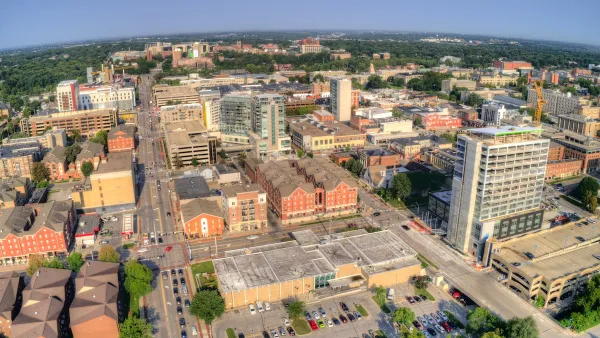
Iowa City Hopes Zoning Amendments Will Increase Housing Supply, Diversity
Iowa City is planning ahead to ensure that housing supply keeps up with housing demand.
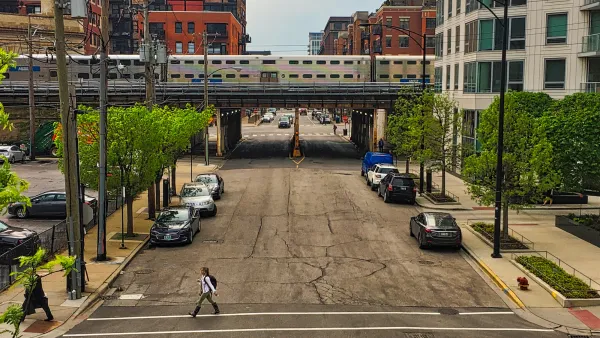
Chicago eliminates parking requirements near transit
In 2025, Illinois barred cities from mandating parking near train and bus stations.
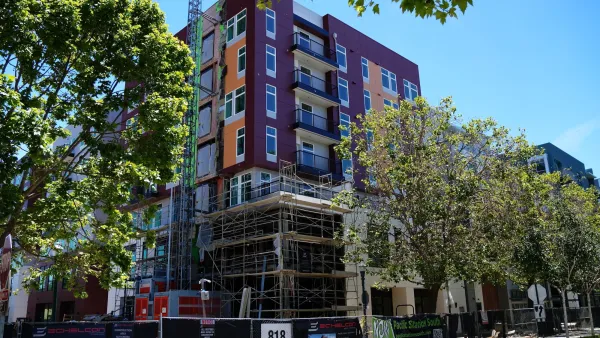
Report: California's density bonus is a 'win-win' for developers and affordable housing
Almost half of new multifamily projects in 2024 relied on a density bonus.

Planetizen Federal Action Tracker
A weekly monitor of how Trump’s orders and actions are impacting planners and planning in America.

California plans to bury El Niño’s downpour
If the state plays its cards right, it may be able to store a billion acre-feet of El Niño’s water in aquifers.

Desperate measures: Advocates weigh draining Lake Powell to fill Colorado River
Draining the reservoir could reduce evaporation losses by a couple hundred thousand acre-feet.

In Texas, data centers are swallowing promised parkland
Residents who moved to Taylor, Texas for a rural community now have to contend with three data centers in their backyard.

How a Chicago-sized wind farm beat the odds and powered on
The project spanned five presidential administrations and a standoff with a U.S. military base.

MTA gives itself 30 days to transform pit into basketball court
The site has been under construction since 2022; the city originally estimated it would finish the court in 2024.

FREE Course: Walkable City 1: Why Walkability?
After describing his path towards focusing on walkability as the essence of good planning, Jeff Speck marches through his five principal reasons for making more walkable places.
Reinventing Malls: Planning Alchemy—Turning Gray Fields Into Gold
The course focuses on the opportunities and imperatives that shape reinvention of mall sites.

City of Rosemead
Rutgers University, Edward J. Bloustein School of Planning and Public Policy
One Hundred Miles
Hunter College, City University of New York (CUNY)
The Architects Foundation
University of Cincinnati Online
City of Cambridge
Montrose County
The Pocatello Development Authority