Government / Politics
The Future is Fiction
What will our cities look like in the year 2050?
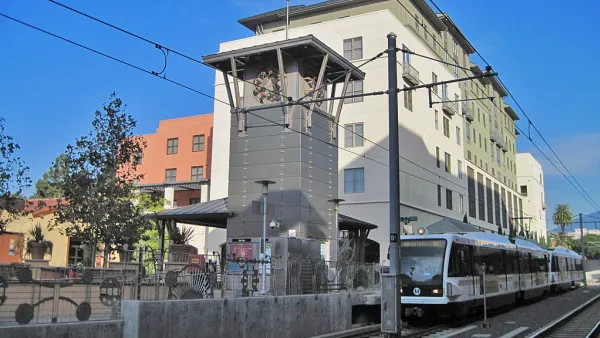
A Potential Downside to $120 Billion in Transportation Investments in Los Angeles
The editorial board of the Los Angeles Times warns that along with new transit lines comes new housing for residents who want to enjoy the benefits of reduced auto-dependence. Plans need to ensure minimal housing displacement around the new stations.
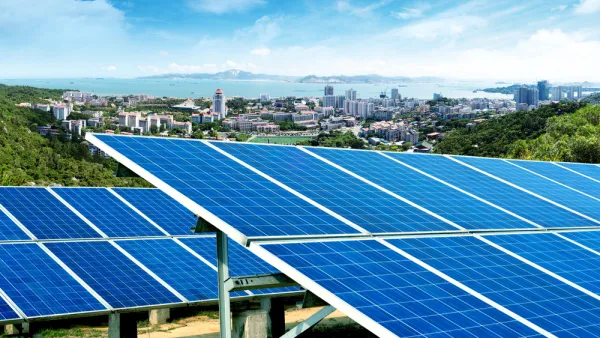
How Cities Will Lead the Energy Future
Last month, politicians, energy executives, and energy experts met in Istanbul for the 23rd World Energy Congress. The event gives global leaders a chance to coordinate energy policy, discuss new ideas, and seek solutions to climate change
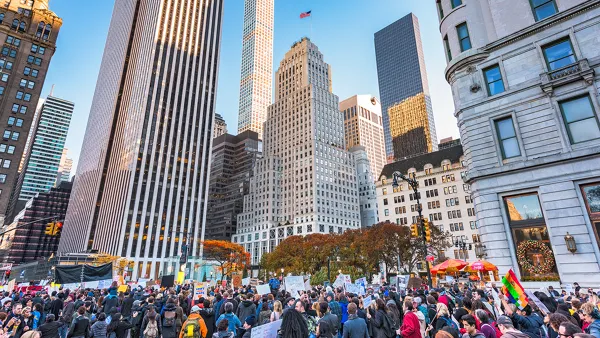
Trump Election Coverage Round Up (Planning Edition)
A compendium of the most discussed examples of news and commentary regarding the election of Donald Trump as President of the United States—but only what's directly relevant to the fields of planning and urban design.
Truly Responsive and Inclusive Planning
Current planning practices can alienate some voters, which contributed to Donald Trump’s success in the recent US election. How have planners contributed to this problem, and how can we achieve more responsive and inclusive planning?
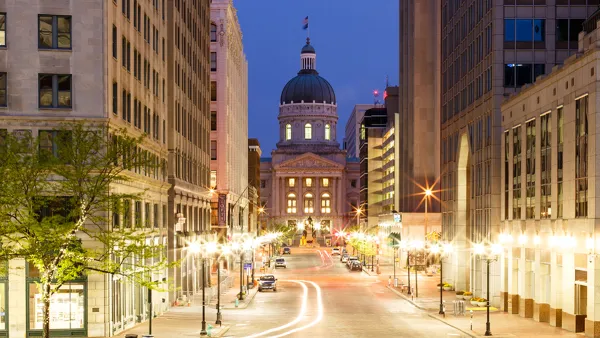
Indianapolis Voters Overwhelmingly Pass Income Tax for Transit
Marion County may soon have the nation's most progressive tax dedicated to public transit, and only bus transit at that. In addition to the faith and business communities that backed the measure, Gov. (now V.P.-elect) Mike Pence deserves credit.
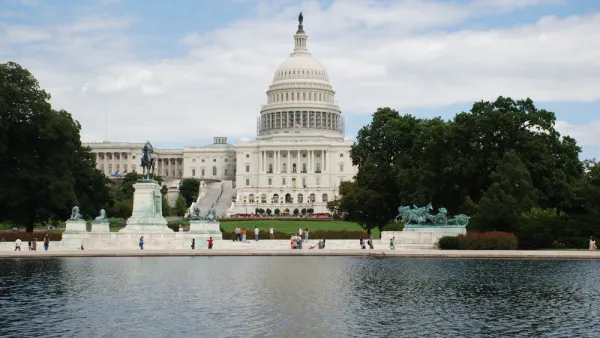
AIA Statement: Architects Will Work With President Trump on Infrastructure
The executive director of the American Institute of Architects (AIA) released a statement saying the profession is willing to participate in the president elect's ambitious infrastructure plan.
The $40 Million, Voter-Approved Park Bond That Never Happened
Voters in Cobb County, Georgia, overwhelmingly prioritized parks and green space back in 2008. Cobb County commissioners', however, are still acting to quell those intentions.
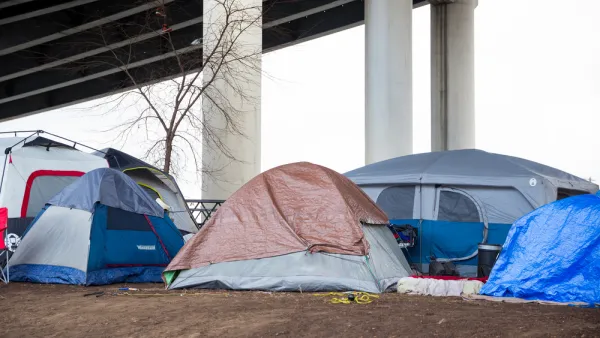
San Francisco Voters Express Frustration with Tent Living
Voters appear to have passed the most contentious ballot measure in San Francisco, Proposition Q, that allows city workers to remove tent encampments if shelter is available. Voters in other Bay Area counties passed taxes for affordable housing.
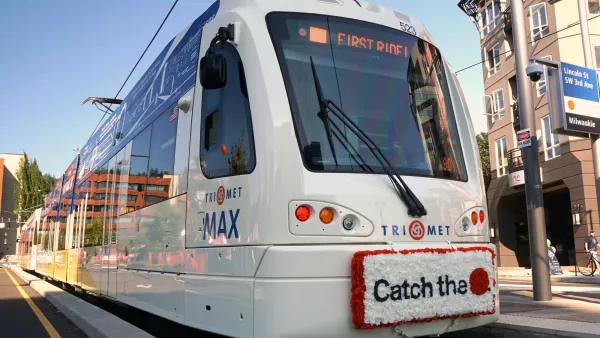
Votes Seem to Favor Expansion of Portland-Metro Light Rail System
Votes are still being counted, but an expansion of the MAX light rail system to the suburban community of Tigard appears to be squeaking out a victory.
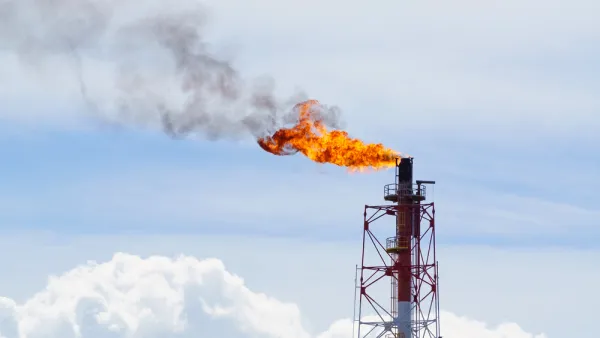
How Environment and Energy Ballot Measures Fared in Tuesday's Election
More than the president was decided. Results are in on a Washington carbon tax, a California plastic bag ban, a Sunshine State restriction on solar panels, and on a ban on oil drilling in a California county that actually has oil drilling.
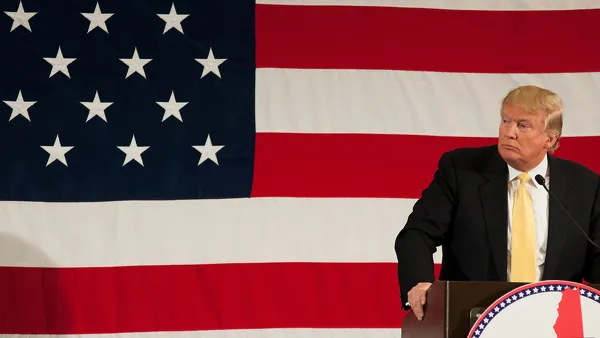
Election Roundup: Planning's Big Day at the Ballot Box
Beyond the headline-grabbing presidential election, many states and localities voted on issues critical to the planning profession.
More Towns Mimicking New Orleans and Allowing Public Drinking
It used to be that only New Orleans and Las Vegas allowed people to carry a drink outdoors and imbibe in public. Now cities all over the country, mostly in traditionally conservative states, are loosening their laws.
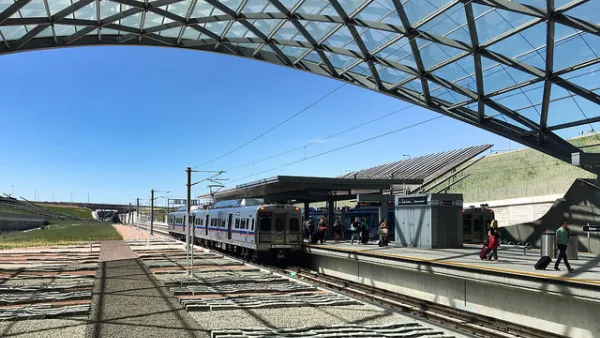
Problems on Denver's New Commuter Rail Lines Threaten Shutdown by Federal Regulators
The problems caused by crossing gates for the new A and B Lines are so serious that the Federal Railroad Administration had threatened to close both lines on Nov. 5. They granted the Regional Transit District a 90-day waiver.
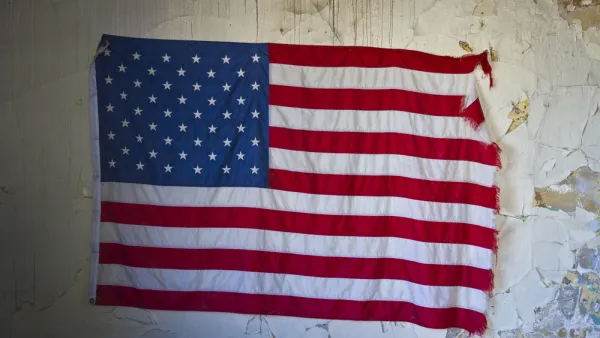
Poverty in the United States Explained
The Brookings Institution has provided a data-driven examination of the subject of poverty in the United States, to provide the kind of policy nuance and detail missing from the 2016 presidential campaign.
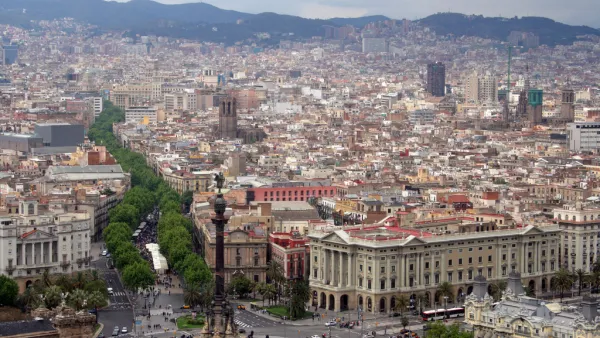
Barcelona Tackles its Traffic, Pollution With Parking Policies and Superblocks
We talked to Barcelona's mobility guru, Mercedes Vidal, about how the high pollution levels that are pushing the city to rethink heavy traffic flows, provide faster more efficient public transport and hike up parking fees.

An Early Win for Clinton on the Penultimate Day of Election
With Pennsylvania a battleground state and Philadelphia a Democratic stronghold, ensuring that transit-dependent voters get to the polls was a given, but a transit strike beginning Nov. 1 threatened to derail access. The strike was settled Monday.
Good for the Planet—and the Real Estate Industry?
Climate change is the new reality, and building owners and developers that want to remain in business need to adapt. So says a recent Urban Land Institute (ULI) report that calls last year's Paris agreement "a potential game changer."
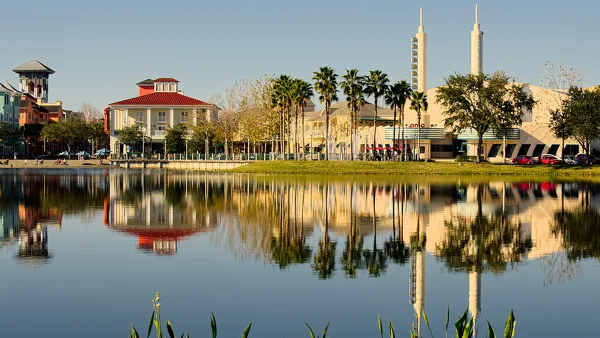
Another Reason to Watch Florida on Election Day
While Florida may well determine who becomes the next president, renewable energy advocates are worried about a measure on the ballot that will have far-reaching effects on solar power should it pass.
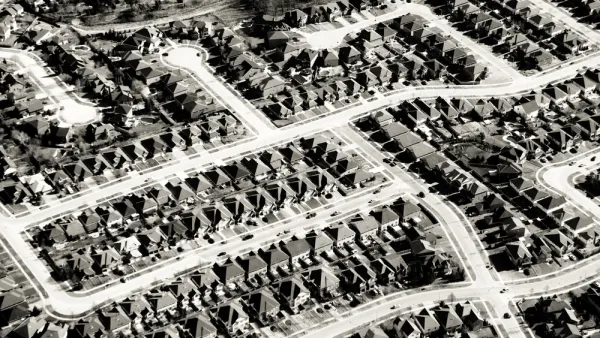
Tuesday's Election May Hinge on the Changing Demographics of Suburbs
Today's suburbs have changed dramatically from a generation ago. Younger, more diverse, and more liberal, they are "trending more Democratic." The PBS News Hour explores this critical demographic shift five days before Election Day.

FREE Course: Walkable City 1: Why Walkability?
After describing his path towards focusing on walkability as the essence of good planning, Jeff Speck marches through his five principal reasons for making more walkable places.
Reinventing Malls: Planning Alchemy—Turning Gray Fields Into Gold
The course focuses on the opportunities and imperatives that shape reinvention of mall sites.

City of Rosemead
Rutgers University, Edward J. Bloustein School of Planning and Public Policy
One Hundred Miles
University of Michigan School for Environment and Sustainability (SEAS)
Hunter College, City University of New York (CUNY)
The Architects Foundation
City of Cambridge
Montrose County
The Pocatello Development Authority









