E-bikes are helping America become less car-dependent, but inconsistent regulations and rider behavior can turn them into a threat to pedestrians.


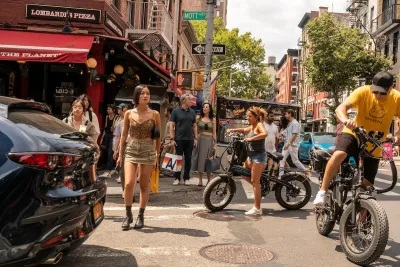
While e-bikes seem unlikely to make automobiles go the way of the horse-and-buggy, there can be no doubt that e-bike use is on the rise. This is particularly true in metropolitan areas, where e-bike ridership in cities like New York, Chicago and San Francisco is booming, driven by a major shift toward everyday commuting and practical transportation.
While roughly 16% of U.S. adults have tried an e-bike, 4% identify as current active, regular riders, translating to roughly 11 to 14 million adults, according to an August 2025 report from YouGov. The U.S. e-bike market footprint is valued at approximately $2 billion according to Global Market Insights, meaning there are millions of active e-bikes physically on U.S. streets right now. Use of cargo e-bikes in particular is growing rapidly as families use them to replace grocery shopping, school drop-offs and other traditional car errands.
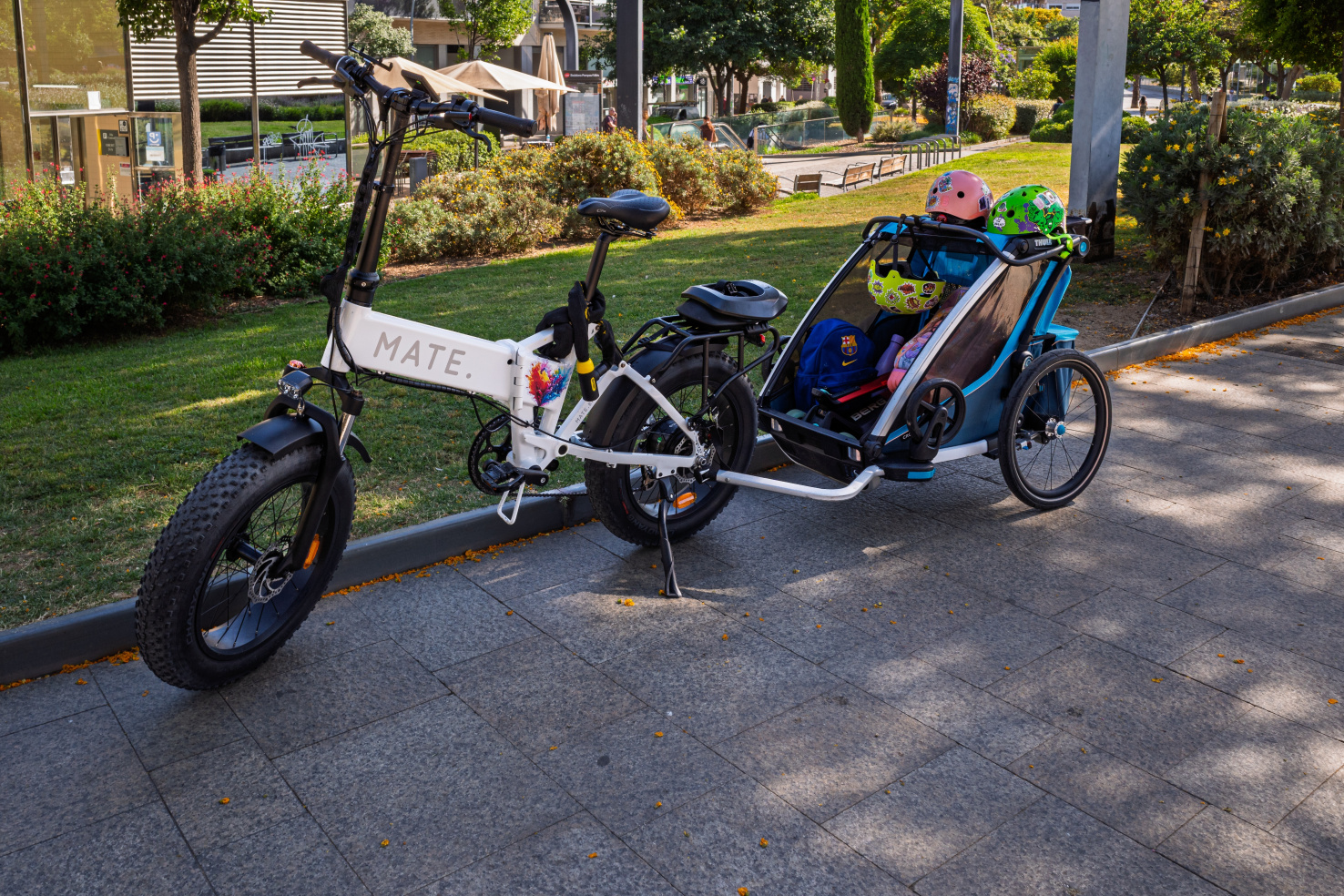
All of that is good news for those who would like to see America become less car dependent. But there is a flip side to the coin, namely the growing conflict between the explosion in e-bike use with vehicles and pedestrians.
The unintended consequences of e-bikes
While much of the conversation about e-bikes has focused on the benefits e-bikes provide (bypassing traffic jams, eliminating parking problems and costs, reducing carbon emissions, etc.), communities throughout the country are also grappling with the unintended consequences of e-bike use. These problems typically revolve around the fact that e-bikes are posing a distinct safety hazard for pedestrians due to:
- Higher Speeds and weight: E-bikes can reach speeds between 20-28 mph. Combined with their heavier frames, they carry much more kinetic energy than pedestrians in the event of a crash. This not only severely limits the reaction times for both riders and walkers, but also increases the severity of impacts with pedestrians or other obstacles.
- Quiet approach: E-bikes have electric motors, which make very little noise. As a result, pedestrians often cannot hear e-bikes approaching them from behind, particularly on shared walkways. Again, this drastically shortens the reaction time for both riders and walkers, increasing the likelihood of sudden collisions in crowded areas and crosswalks.
- Sidewalk riding: While e-bike riders are supposed to use designated bike lanes or roadways rather than pedestrian sidewalks, many do not. This leaves pedestrians with very little room to react or dodge oncoming traffic, increasing the frequency of close calls and collisions.
- Rider behavior: Many e-bike riders, especially young teens, lack the training and skills needed to safely manage their vehicles in crowded areas. In addition, studies on mixed use paths indicate inexperienced riders often exhibit aggressive passing behaviors and misjudge lateral clearances. (I was also recently on our local CBS affiliate discussing this issue.)
- Inconsistent regulations: Because e-bike use is so new and has become widely used so quickly, traffic rules, regulations and enforcement vary widely from jurisdiction to jurisdiction. This inconsistency often leaves e-bike riders not knowing or understanding the rules of the road — who has the right-of-way, roadway speed limits, etc. — where they are driving.
These issues have led to incidents such as the California case in which a 14-year-old e-bike rider struck and killed an 81-year-old pedestrian, and the Boston case in which a pedestrian was struck by an e-bike rider in Copley Square and later passed away from their injuries. Recently in my home state of Maryland, a 14-year-old in an Annapolis suburb was killed when his e-bike collided with a pickup truck.
Some of these accidents involving e-bikes and pedestrians have also led to a rash of civil and criminal lawsuits in which not just the e-bike rider, but in some cases the rider’s parents, have been held liable under negligence laws for accidents which have occurred.

Jurisdictions around the country are responding to the rise in e-bike incidents by stressing safety and prevention measures. These include posting signage which reminds e-bike riders to use designated bike lanes or roadways rather than pedestrian walkways; make use of bells, horns and/or verbal warnings when approaching and passing walkers; slowdown in zones frequented by pedestrians, on mixed-use pathways and near intersections; yield to pedestrians on sidewalks and in crosswalks; and obey the same traffic signs, lights and rules as other vehicles when traveling on roadways.
Many jurisdictions, however, have taken e-bike safety a step further by prohibiting sidewalk riding for e-bikes, extending helmet laws to cover all e-bike riders regardless of age, requiring licensing and registration for e-bike users under the age of 18, implementing public service campaigns aimed at educating citizens on e-bike safety, stepping up enforcement of e-bike regulations and requiring violators to undergo an approved safety course when receiving citations for disobeying traffic laws, riding on sidewalks, etc.
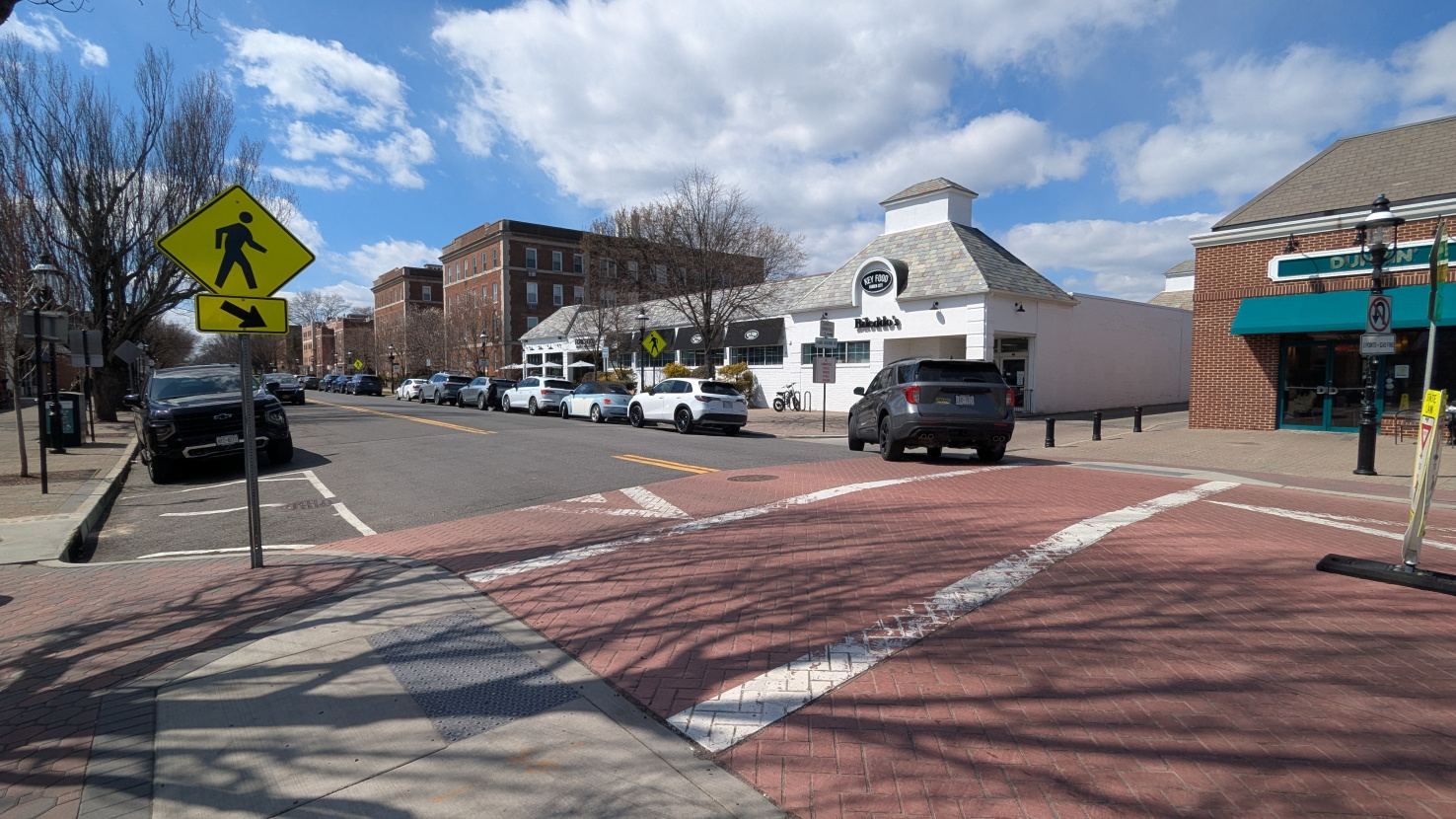
Beyond legal measures, some communities are turning to infrastructure improvements designed to increase both safety and mobility for all users. Raised intersections and crosswalks, for example, force e-bike users and vehicles to slow down at areas of potential conflict. By raising the crosswalk to the same height as the sidewalk, pedestrians can see oncoming traffic more easily. Similarly, shared paths can be widened and clearly visible striping can be installed to separate walkers or runners from faster riding e-bikes. Other, more complex designs, such as building tighter corner radii and protected turning phases to reduce sudden turning conflicts, are also being employed.
Bike lanes: essential safety infrastructure, if done right
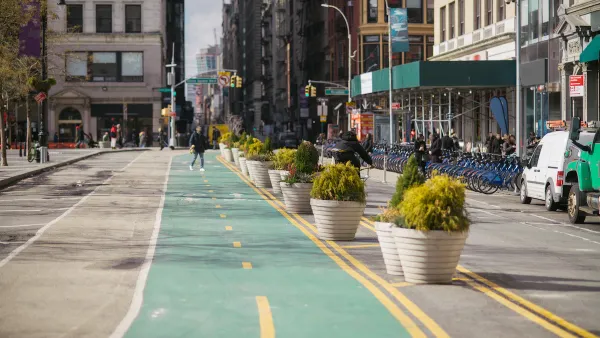
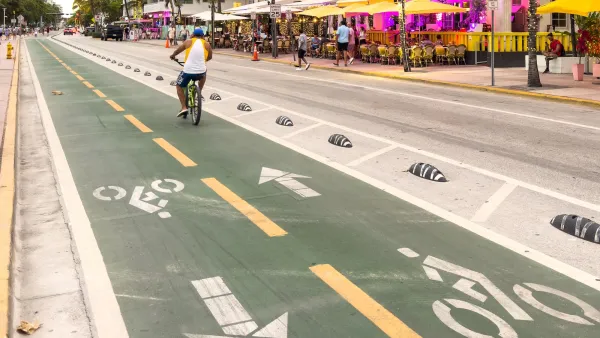
Still others have followed the example of cities like New York and Philadelphia, both of which installed protected bike lanes. Using concrete dividers, planters, parked cars or grade separations (such as raising lanes to street level), protected bike lanes have proved to be particularly effective at keeping e-bikes away from both car traffic and pedestrian walkways.
More importantly, protected bike lanes fundamentally reshape how streets function. By placing a physical barrier between bike and vehicle traffic, protected bike lanes shorten the crossing distances at intersections. As a result, pedestrians must cross streets at distinct, predictable areas as opposed to trying to navigate across multiple lanes of bike and car/truck/bus traffic. Drivers turning, on the other hand, have clearer sightlines and fewer possible collision points.
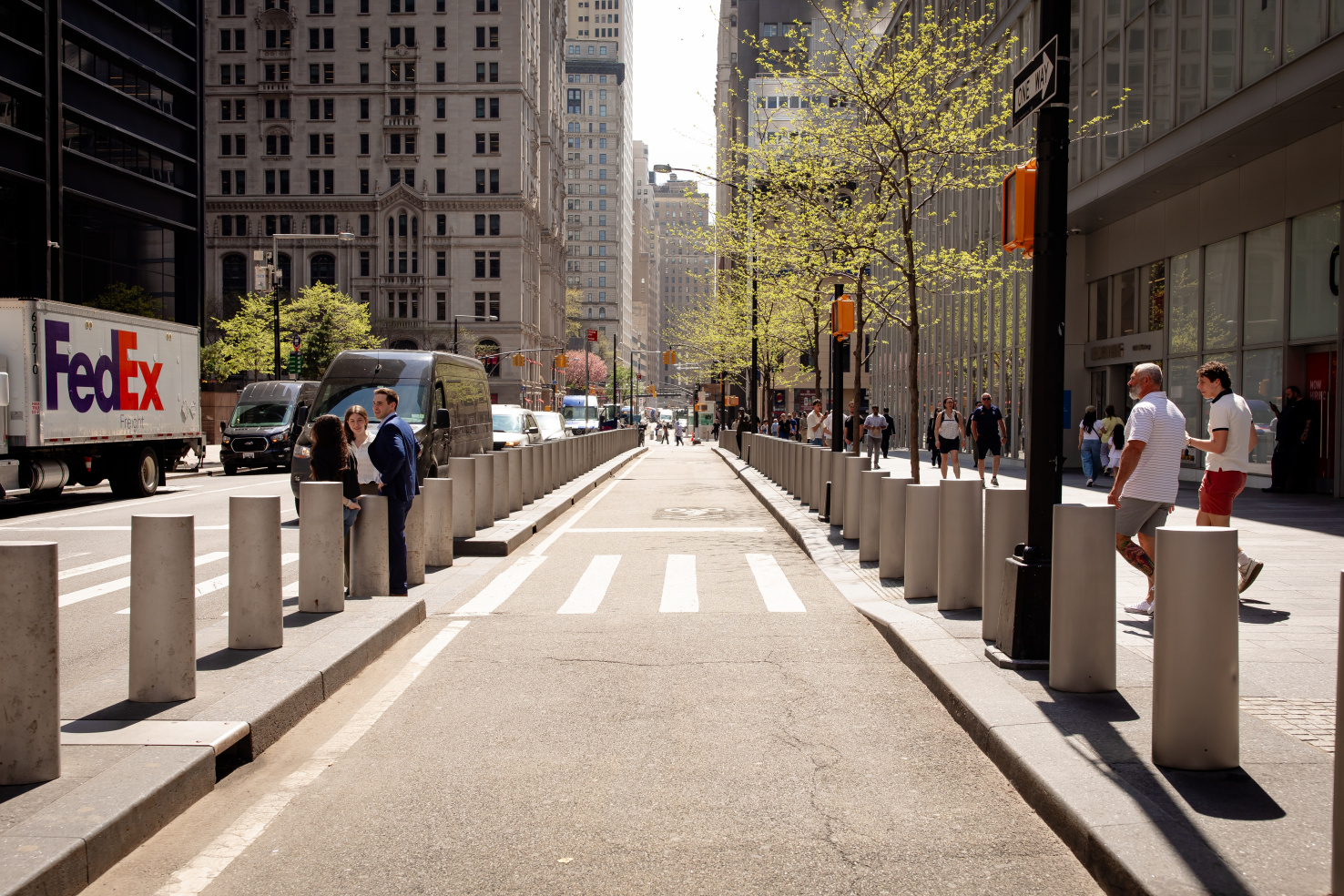
All of this infrastructure has led to more predictable driving (and walking) behavior and impressive safety improvements. In New York, for example, crashes leading to injuries for all users (cyclists, drivers, and pedestrians) fell by 40% overall on streets with protected bike lanes, and 58% after protected bike lanes were installed on 9th Avenue. Sidewalk cycle riding, meanwhile, dropped 84% following bike lane installation, vastly improving safety for pedestrians and cyclists alike.
Other cities — including Portland, Seattle, Austin, San Francisco and Washington, D.C. — have shown similar safety improvements when protected bike lanes were introduced and connected to a comprehensive transportation network. Unfortunately, not all bike lanes are created equal. Research by the Insurance Institute for Highway Safety confirms that the design of bike lanes matters. While bike lanes that are physically separated from walkways and other vehicle traffic tend to improve safety, painted bike lanes do almost nothing and, in some cases, actually increase risk for all users. Similarly, lanes with recurring driveway crossings or with flexible posts generate a higher likelihood of accidents occurring than those with concrete barriers or some other buffers.
Once cities adapt to e-bikes, every resident will benefit
E-bikes are here to stay and their use will likely increase in the future. With that in mind, more communities nationwide are being confronted with the challenge of accommodating not only e-bike users, but everyone who makes use of their sidewalks and roadways. To do that effectively, those communities would do well to follow the examples of cities which have successfully integrated their entire transportation network — from walkways to bike lanes to roadways — by focusing on both mobility and safety for all users.
—
Joe Caloggero, P.E., PTOE, PTP, is Vice President of The Traffic Group, overseeing the Traffic Engineering and Design Division. The largest “just traffic” engineering and transportation planning firm in the U.S., The Traffic Group has also built one of the industry’s largest in-house traffic data collection divisions, with more than 6,000 pieces of traffic counting equipment. For more information, contact the author at [email protected] or visit: www.trafficgroup.com.
NYC e-bike injury study highlights 'critical infrastructure deficiencies'
The sharp rise in e-mobility injuries points to a need for safer roads, not more punitive laws.
Leading Micromobility Trends for 2024: From Urban Streets to Regional Implementation
The proliferation of micromobility as a viable transportation mode offers the opportunity for cities to reimagine how they allocate public space.
FHWA removes bike lanes and speed cameras from list of traffic safety measures
The agency did not announce its intention to eliminate five proven safety measures from its list of suggested interventions.

Planetizen Federal Action Tracker
A weekly monitor of how Trump’s orders and actions are impacting planners and planning in America.

Washington state to charge fee to drivers with fuel-efficient cars
Revenue from the fee will go towards supporting the state’s highways.

Illinois considers spending $1 billion in taxpayer money on data center
A quantum computing campus and data center are currently under construction in Chicago.

HUD to end aid for mixed-immigration-status households
The new rule is projected to impact 80,000 people, nearly half of whom are children.

Trump has changed his mind on congestion pricing — maybe
The Trump administration is offering $100 million in grants so cities can implement their own traffic control programs.

‘Demolition of our heritage:’ Some US tribes speak out against BAAJA
A coalition of indigenous groups in the United States are concerned about provisions in the bill that may weaken their ability to halt large energy projects.

FREE Course: Walkable City 1: Why Walkability?
After describing his path towards focusing on walkability as the essence of good planning, Jeff Speck marches through his five principal reasons for making more walkable places.
Reinventing Malls: Planning Alchemy—Turning Gray Fields Into Gold
The course focuses on the opportunities and imperatives that shape reinvention of mall sites.

City of Charlotte
City of Rosemead
Rutgers University, Edward J. Bloustein School of Planning and Public Policy
University of Michigan School for Environment and Sustainability (SEAS)
Hunter College, City University of New York (CUNY)
The Architects Foundation
University District Partnership

