How China builds neighborhoods above its metro depots.


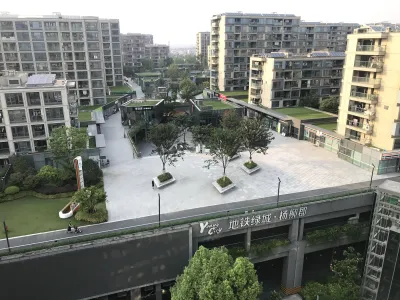
For planners facing pressure to add housing and jobs without endless outward expansion, metro depots may be among the most overlooked redevelopment opportunities in the modern city. Most cities don’t realize what they already own. Hidden in plain sight within nearly every rail system, these large facilities — where trains are inspected, cleaned, repaired and stored — typically occupy 20 to 30 hectares of valuable urban land that sits fenced off, single-purpose, and disconnected from the neighborhood around them.
I first encountered this model more than a decade ago, and have worked on it many times since. As an urban designer and architect based in China, I have led transit-oriented developments built above active metro maintenance facilities. This may sound unusual in North America, but has become increasingly common in China.
Over the past two decades, Chinese cities have built housing, schools, parks, offices, and retail directly above operating depots. The model is technically proven, commercially tested, and full of lessons, including some hard-earned ones. For Western planners, the relevance is straightforward: most modern cities with metro systems also have depots. Yet many of these sites still sit idle — fenced off, underused and quietly accumulating value that no one is capturing. Understanding what China has figured out — and where it has stumbled — is the first step toward unlocking that potential elsewhere.

Depot-integrated development: Two programs, one deck
A metro depot is not a vacant site awaiting redevelopment. It’s a working industrial facility. Building above it requires a structural deck that separates rail operations below from city life above while managing noise, vibration, ventilation, fire access and future building loads. Those challenges are real, but they are solvable. Floating track beds, isolation bearings and acoustic barriers have been deployed and codified into technical standards across dozens of Chinese cities, and residents above these depots report no perceptible noise or vibration.
After years of working on these projects, I’ve come to see that the design goal is simple: make the deck disappear, physically and psychologically. Residents should experience a normal neighborhood, not life above infrastructure.
Solving the depot is only half the challenge. These projects require designing two worlds at once: the active industrial facility running today, and the future neighborhood that will be built above it, often years later. Every structural decision made below shapes what becomes possible above.

The residential test: Hangzhou Yangliu Jun
The first question is whether people will choose to live above a depot. Yangliu Jun in Hangzhou offers a compelling answer.
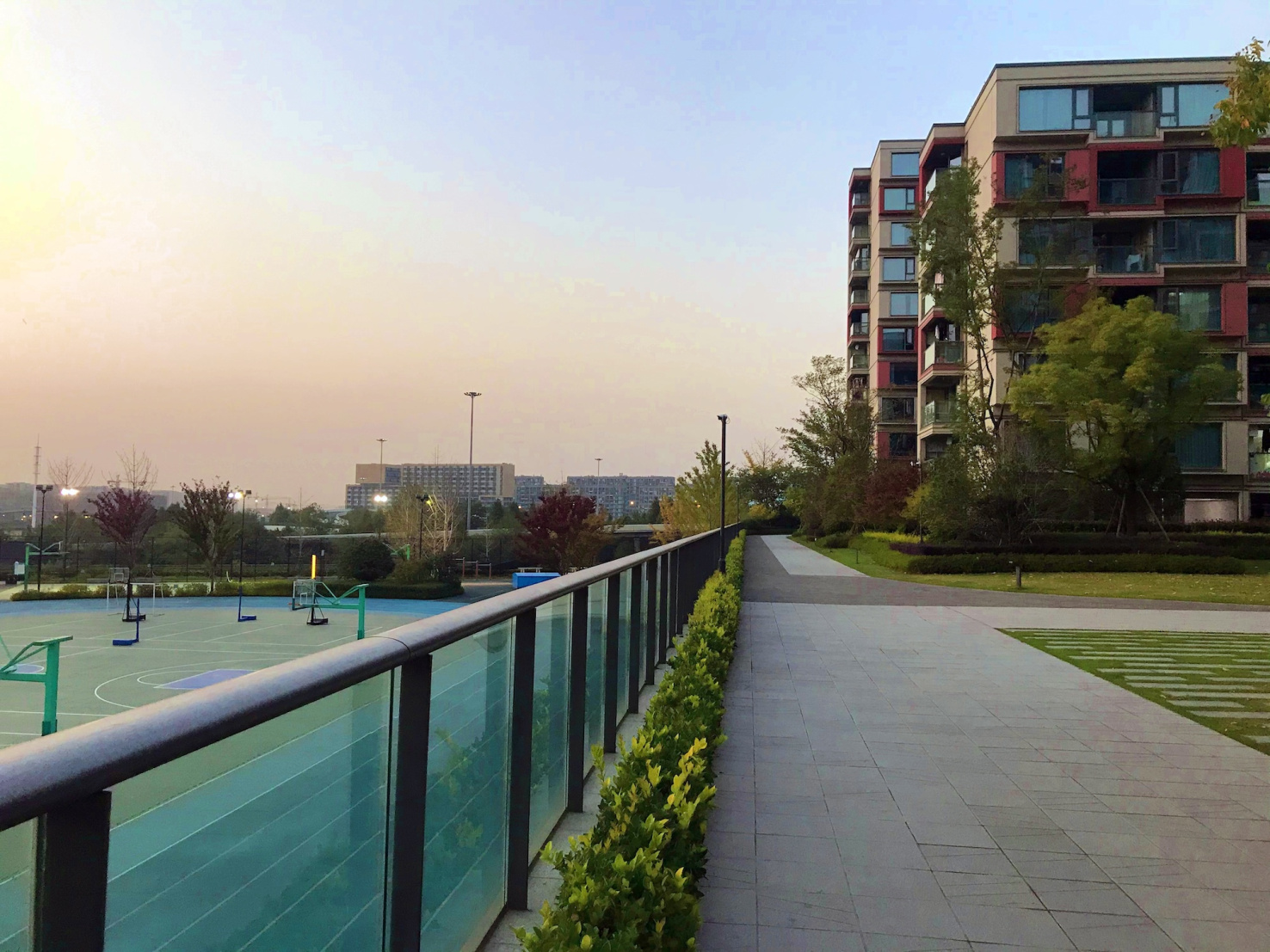
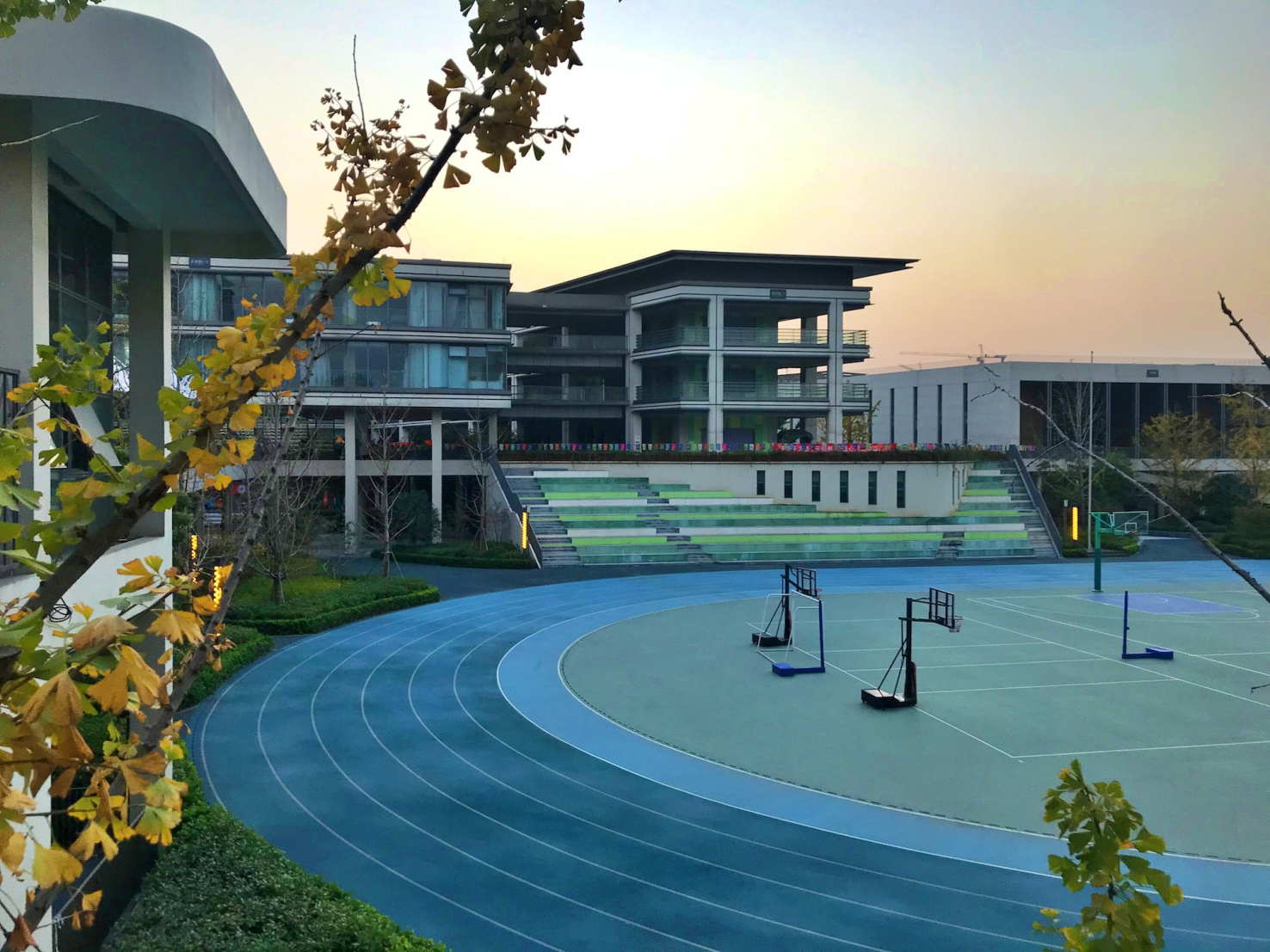
Hangzhou, home to roughly 12 million people, sits about one and a half hours southwest of Shanghai by high-speed rail. Yangliu Jun, located in a growing outer district with strong rail access but limited amenities at the time of launch, was built above the Qibao Depot on Hangzhou Metro Line 1. Since its completion in 2017, resale values have consistently outperformed comparable nearby housing. The market did not just accept the setting — it rewarded it.
The reason was not a well-designed project alone. The project delivered parks, retail, and, most importantly, a primary school and two kindergartens directly on the deck. Placing a school above an active depot required years of coordination, but it changed the proposition entirely. With schools, it becomes a vibrant neighborhood, not just housing.
There’s a transit upside as well. As residents moved in, ridership at the station below increased noticeably. The people living above the depot became daily riders using the metro beneath them.
For U.S. planners, the lesson is straightforward: density alone does not create place. Schools, childcare, parks and everyday amenities are what turn infrastructure land into a real community.
The commerce test: Shanghai MixC Wuzhong Road
If Yangliu Jun proved the residential case, Shanghai MixC Wuzhong Road tested the commercial one.
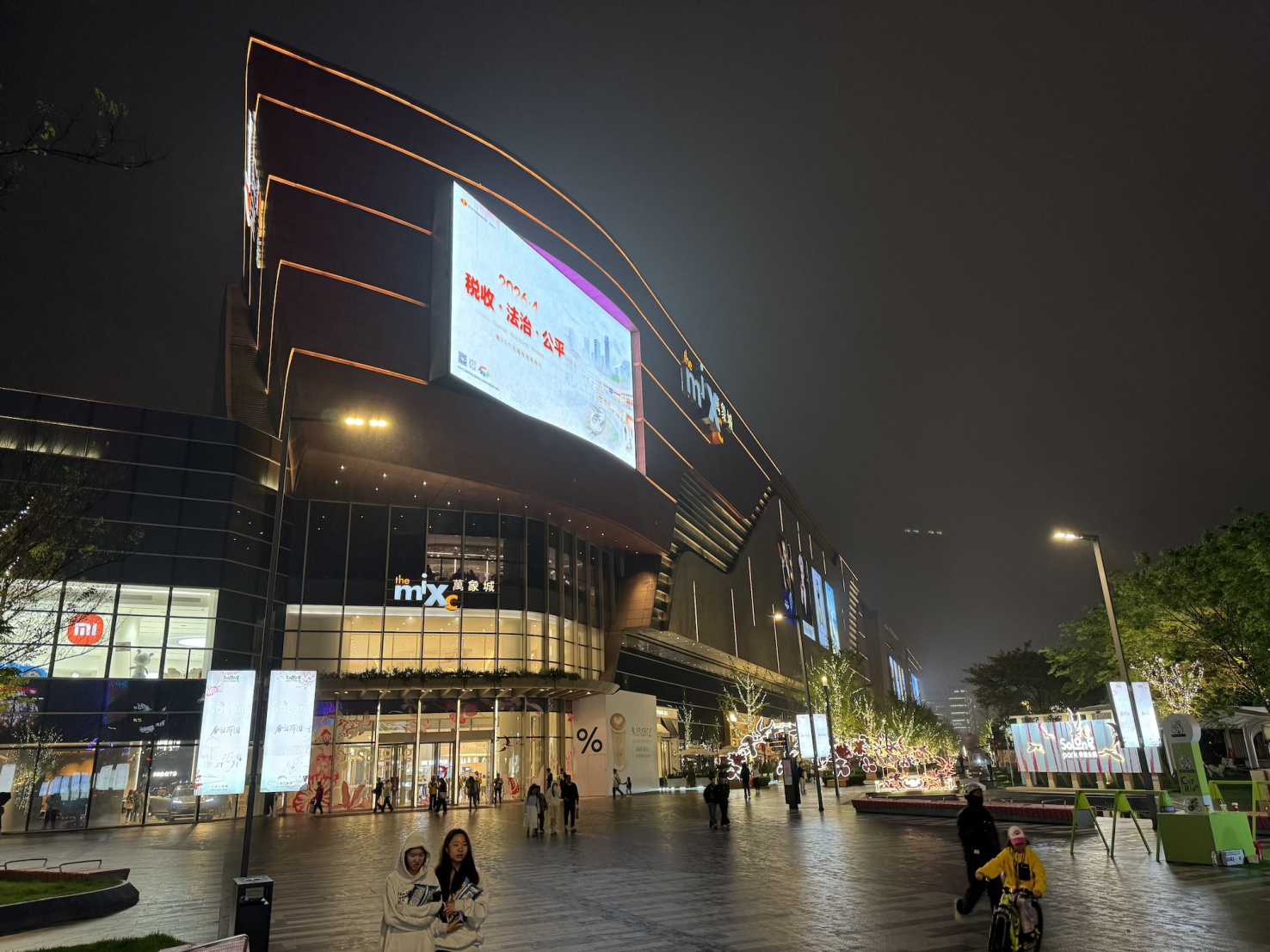
In Minhang District, beyond Shanghai Middle Ring Road, a 20-hectare Line 10 depot once sat in the middle of dense urban fabric like an industrial scar, cutting pedestrian movement and generating noise. When China Resources Land acquired development rights from Shanghai Metro in 2010, building above an operating depot at this scale was still rare.
Seven years later, the site had been transformed into a mixed-use development that rose above the deck, attracting global corporate tenants despite abundant office options elsewhere in Shanghai. The project also introduced two international hotels and more than 400 retail tenants, generating over RMB 1 billion in tax revenue within three years. This case demonstrates that the commercial real estate market — including office, hospitality and retail tenants — does not inherently discount a well-executed depot location. China Resources Land has since scaled this model to 70+ projects across 29 Chinese cities.
For any U.S. city with depot land in dense, transit-connected neighborhoods, that matters. The assumption that maintenance land can sport only low-value or back-of-house uses does not always hold.

The timing test: Hangzhou Cangqian
But technical success and market success do not always move together.
In 2019, I led a team that won the design for a 98-hectare "super-depot" in Hangzhou’s western growth area near the future West high-speed rail hub. Think of it as a greenfield transit site at the edge of a growing metro area — not unlike outer yard sites that WMATA or L.A. Metro control beyond their established urban cores. Two depots were consolidated into a single large platform supporting housing, schools, eldercare, offices, retail and major public open space, above an active depot serving Metro Line 3 and the Airport Express Line.
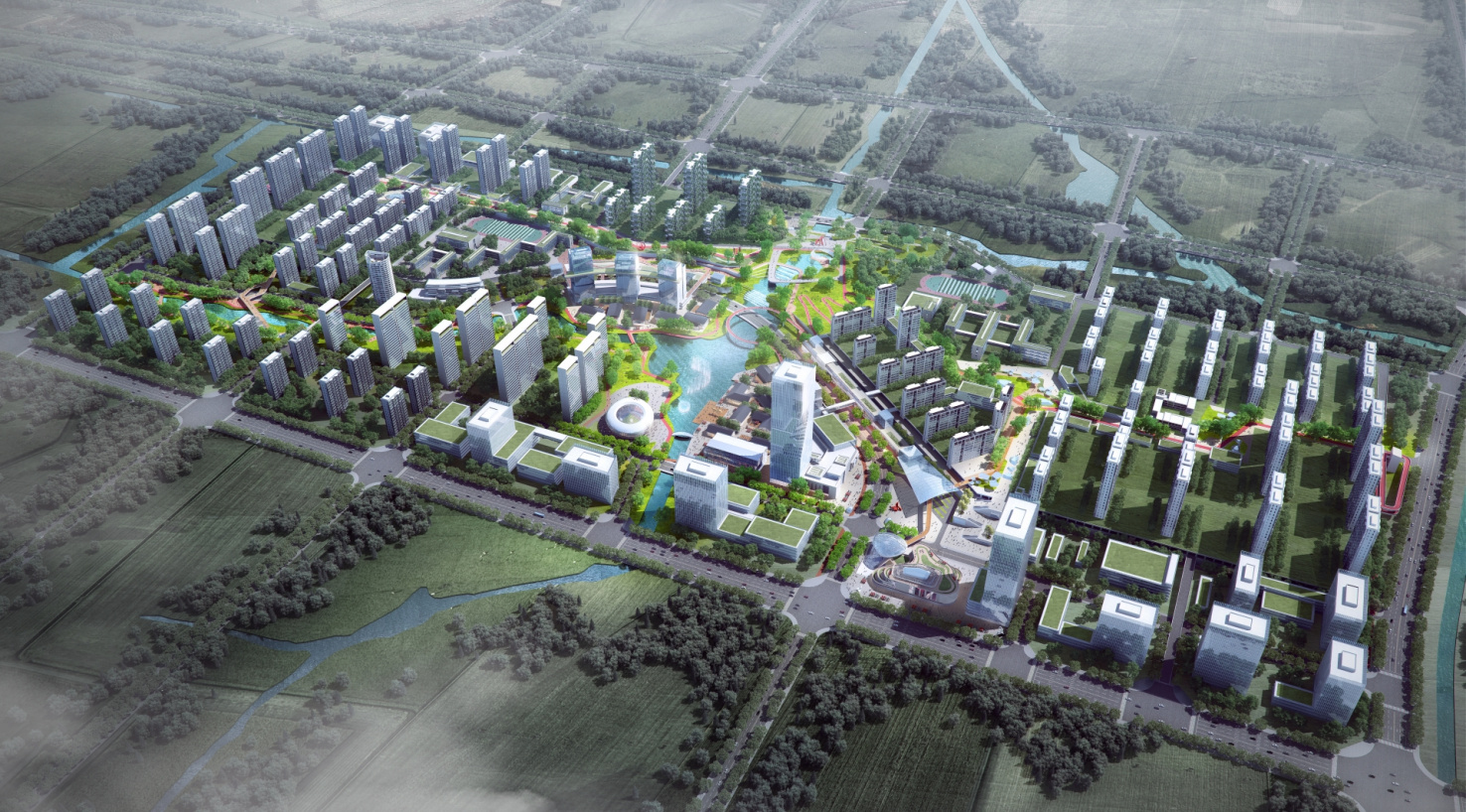

The scheme was approved during the COVID-19 pandemic, and construction advanced quickly. The deck was completed in 2022, in time for the opening of the Airport Express Line for the 19th Asian Games the next year. Since then, trains have been running and maintained daily. But the city above has not yet arrived. The towers, the schools, the parks, the retail — fully designed and envisioned — remain unbuilt. The deck now sits on the western edge of Hangzhou, waiting for the capital that will turn it into a neighborhood. When the drone photos came in, the engineering was everything we designed it to be. The silence above it was harder to comprehend.
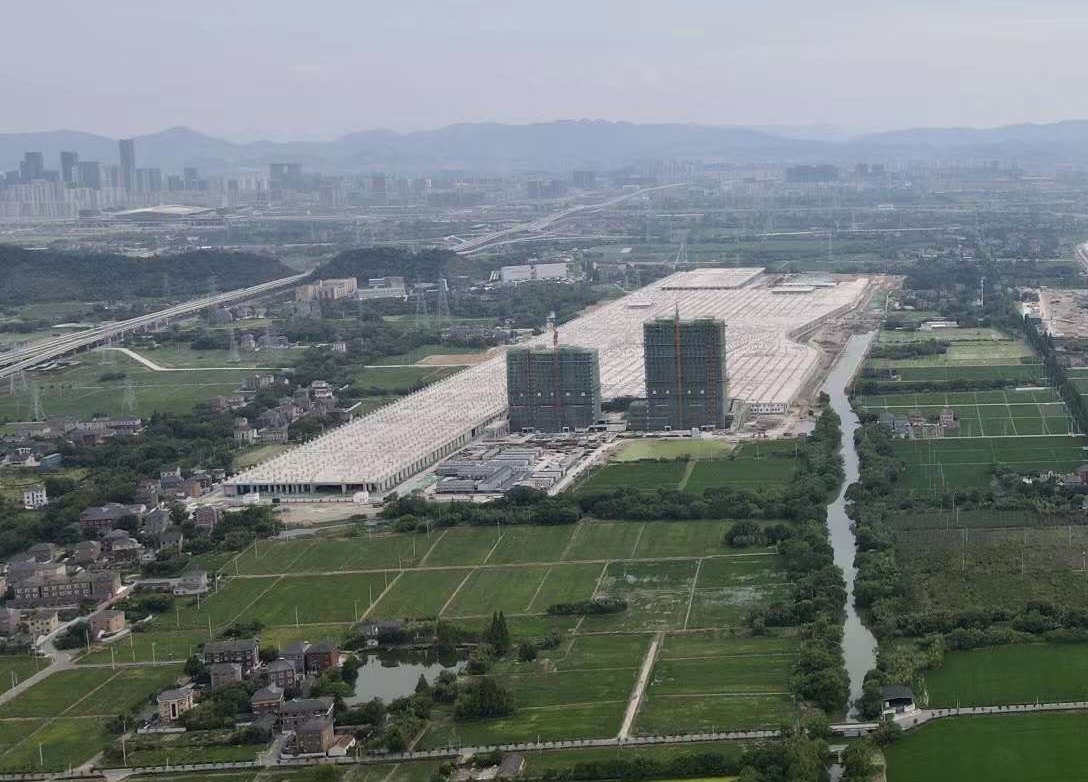
![Cangqian Depot Deck with adjacent High Speed Rail Depot Deck]](/files/inline-images/Cangqian%20Depot%20Deck%20with%20High%20Speed%20Rail%20Depot%20Deck.jpg)
Cangqian is not unique. Across China, some depot decks were completed just as the property market slowed after 2021. Projects like this stretch across time — and that’s where the risk lies. The depot and deck require major upfront investment, while the development above depends on market conditions that may shift years later. The model is not flawed, but the timing can slip. Infrastructure moves on one clock; real estate moves on another.
From platform to neighborhood
The lesson is not to step back from this model, but to approach it with the right timing and flexibility. The depot and the development above should be treated as two linked moves, not one. Plan them together, but finance and phase them so they can adapt if the market conditions change. Build the deck for what the place can become, while recognizing that the city above may take longer to arrive.
When it works, the impact is clear. People choose to live there — and pay for it. Companies move in. Schools open. Parks fill with daily life. Infrastructure that once pushed neighborhoods away begins to support them instead. What was once a barrier becomes a foundation.
This isn’t unique to China. Every city that builds rail systems also builds depots, and each one has a chance to do more with land that would otherwise remain hidden. The engineering itself is not foreign to Western cities: Hudson Yards in New York was built above an active rail yard, and similar projects are in various stages of planning in Washington D.C., San Jose and Queens. What China has tested is something more ambitious than a conventional air-rights transaction: the creation of complete neighborhoods above active operational maintenance facilities.
The gap is not technical capability. It's whether transit agencies, planners and development authorities are organized to pursue this kind of development together. Several U.S. transit agencies are already advancing joint development programs. The depot integration model offers those efforts a far more ambitious destination to aim for.
China’s past twenty years don’t offer a perfect template, but they offer something more valuable: built proof. With the right design, governance and patience, what sits below doesn’t have to limit what can grow above. The depot at the end of your metro line is not a dead asset. It may be the most undervalued piece of land your city already owns.
—
Photos courtesy of Anderson Hsieh.
Anderson Chider Hsieh is Architecture & Design Lead for China at Surbana Jurong Group. He previously served as Vice President at AECOM China and as President of the American Institute of Architects (AIA) Shanghai Chapter. He holds a Master of Science in Architecture and Urban Design from Columbia University GSAPP.

Which US cities have the most housing near transit?
Concentrating housing near frequent, reliable transit offers advantages to both residents and transit agencies, who can serve more riders more efficiently.
San Diego wants to limit upzoning law to just 16% of transit-adjacent parcels
The city's planning director says some areas are unfit for immediate upzoning due to a lack of resources or hazards such as wildfire risk.
Maryland unveils plan for 5,000 homes near transit
Gov. Moore announced a plan to activate housing construction on 134 acres of state-owned land near transit stations.

Planetizen Federal Action Tracker
A weekly monitor of how Trump’s orders and actions are impacting planners and planning in America.

Amtrak, CN end decades-long dispute with eight-year agreement
The new operating agreement establishes an updated framework for the companies to work together, including processes to resolve disputes.

Judges permit Denver to divert 77,000 acre feet from the Colorado River for reservoir expansion
Overuse and climate change have caused the Colorado River’s water levels to plummet.

NYC DOT wants faster, more permanent street upgrades
The city is examining ways to build more concrete infrastructure without getting entangled in 'decades-long' projects.

'Something we’ve never seen before:' rising utility rates could strain city finances nationwide
Data centers, climate change and other factors have caused utility rates in the United States to increase by 38% since 2020.

Trump to overrule local leaders, lease millions of acres of America’s Pacific Island territories’ seafloors to mining companies
International law says that the Indigenous people of America’s territories have a right to prior and informed consent regarding projects that impact their countries.

FREE Course: Walkable City 1: Why Walkability?
After describing his path towards focusing on walkability as the essence of good planning, Jeff Speck marches through his five principal reasons for making more walkable places.
Reinventing Malls: Planning Alchemy—Turning Gray Fields Into Gold
The course focuses on the opportunities and imperatives that shape reinvention of mall sites.

Harvard University Graduate School of Design
KFH Group Inc.
Greater Baltimore Committee
The Architects Foundation
University of Cincinnati Online
The Pocatello Development Authority
The Urban Renewal Agency of the City of Pocatello

