We thought it would be fun to ask the Planetizen family to show us their version of the Interesting Walk. What we got back surprised and delighted us beyond expectation.


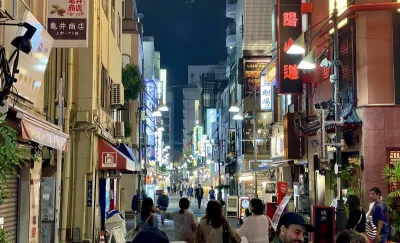
This summer the Planetizen team experienced a moment of unexpected whimsy. As we excitedly geared up to launch Jeff Speck’s blockbuster course series on walkability, we thought: wouldn’t it be fun to have Planetizen contributors, course instructors, past and current editors and other members of the Planetizen fam to send us photos representing Jeff’s walkability principles? We settled on “The Interesting Walk” as our prompt, and hit send on the email.
What we got back? Quite frankly, we’re not sure that even we knew the full depths of delight that such unbridled urban nerdery could bring. We didn’t just receive photos — we received manifestos, poetry and even music videos. Yep, music videos.
Briefly, for those unfamiliar, here is a quick overview of Jeff’s description of an “Interesting Walk”:
Nothing interests people more than other people. Humans will avoid walks that do not provide a sense of human habitation, human effort, and human scale. An interesting walk comes from urban design that:
- Hides its parking lots: For both surface and structured lots, keeping the parking away from street edges is essential. This can be accomplished with thin liner buildings or activated ground floors and has become a hallmark of successful apartment-house design.
- Avoids blank walls: The best place for a city’s arts budget is to create a mural program that gives interest to blank walls against public spaces, which new codes should preclude.
- Provides many signs of human habitation: Doors and windows—eyes on the street—give the impression that one is likely to bump into other people. Additionally, architectural detail—avoiding minimalist or overly horizontal design—adds a human touch that adds interest even when no one else is present.
- Avoids repetition: Many architects misunderstand urban projects as large architectural projects and feel the need to repeat the same building over and over in the name of “honesty” or just territory-marking. But this approach offers little reward to those who might walk from one building to the next.
- Introduces demise lines: Nobody is excited to walk past 300 feet of the same thing, yet today’s developers routinely build housing and office buildings that long with no differentiation. Architects respond to review boards’ demands by introducing variety along the entirety of a façade, creating a huge, complicated mass. The proper approach is to use demise lines, which appear to break long buildings into several simple, different buildings.
- Acknowledges regional differences: The International Style was a noble effort to create a harmonious undifferentiated global community. That didn’t work. And why travel when every place looks like no place in particular?
See below what landed in our inbox. And, since we know that all you urban nerds have images of Interesting (and deeply un-Interesting) Walks kicking around your folders — come join the party! Send your photos with a brief description of what makes your walk interesting or uninteresting to [email protected], with the subject line “Interesting Walk.” We might just publish them too.
Jeff Levine — esteemed instructor of Planetizen’s AICP Prep Class
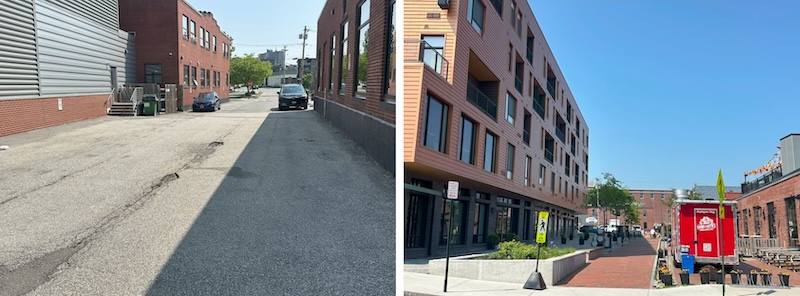
These are two photos from my city of Portland, Maine. These are two segments of the same street, Lancaster Street. One section has remained as it has been for many years. The second has been converted into a pedestrian-prioritized connection. Walking down both sections you get a very different feel. On the first, it's sunny and monotonous and has no sense of place. Walking it is a chore. On the second, it's interesting and shaded and there are lots of things to look at and places to visit along the way. It's a really marked difference in experience.
Chris Steins — Co-founder and former editor of Planetizen
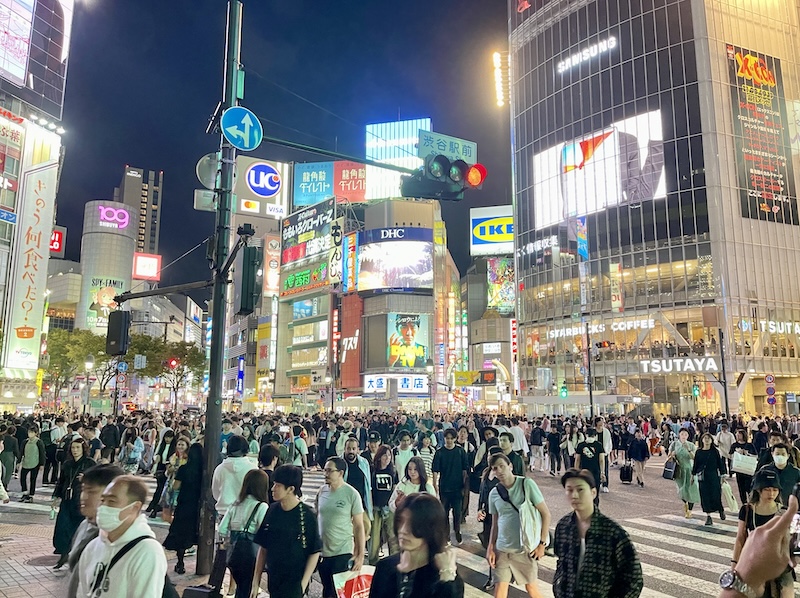
This is a photo of Shibuya Scramble. The intersection is a massive and iconic pedestrian crosswalk located just outside Shibuya Station in Tokyo, Japan. It's the busiest pedestrian crossing in the world. The crossing is famous for the way hundreds of people cross from all directions at once when the traffic lights turn red, creating a moment of organized chaos that feels uniquely Tokyo. What makes it interesting is the sheer energy of the crowd, the bright lights of the surrounding buildings, and the sense of being at the heart of one of the world’s busiest cities.
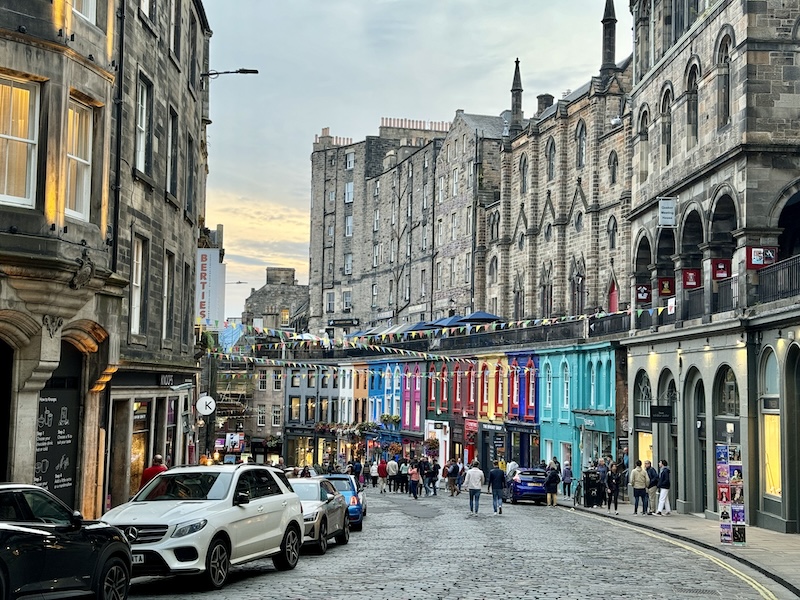
This is a photo of Victoria Street (W Bow) in Edinburgh, Scotland, a historic and picturesque street that curves from the Royal Mile to Grassmarket Square. The colorful shopfronts and medieval architecture are striking, and rumors are that inspired Diagon Alley in the Harry Potter series. What makes it interesting is the visual contrast between the cobblestone street, old stone buildings and the bright, modern storefronts. The street creates a unique blend of charm and character. There’s a buzz of tourists, locals, and street performers, but it still manages to feel cozy and walkable as you walk toward the vibrant energy of the Grassmarket Square (a food and beverage and performance square).
Josh Skelly — CEO of Planetizen
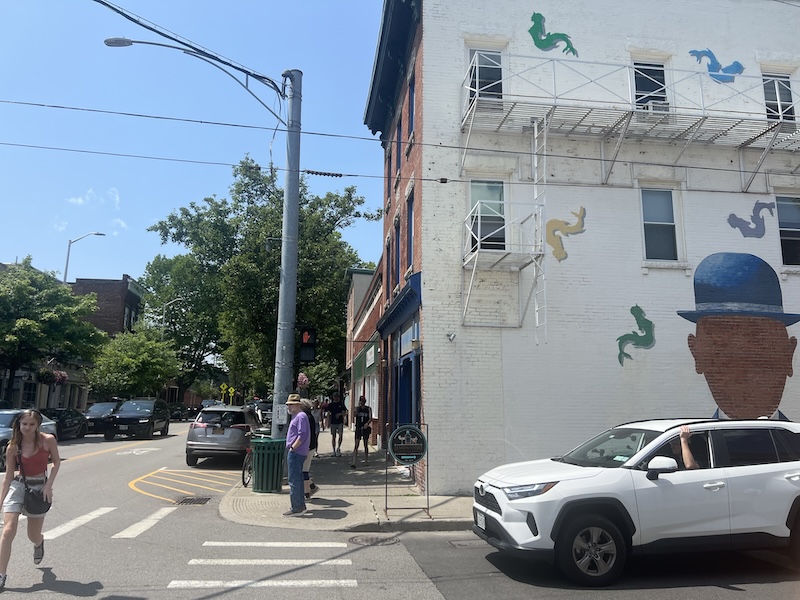
Beacon, NY has a nice walkable downtown that limits views of parking, architecture is different throughout and has some murals like this!
Alex Davis — former Planetizen Junior Video Producer & Editor
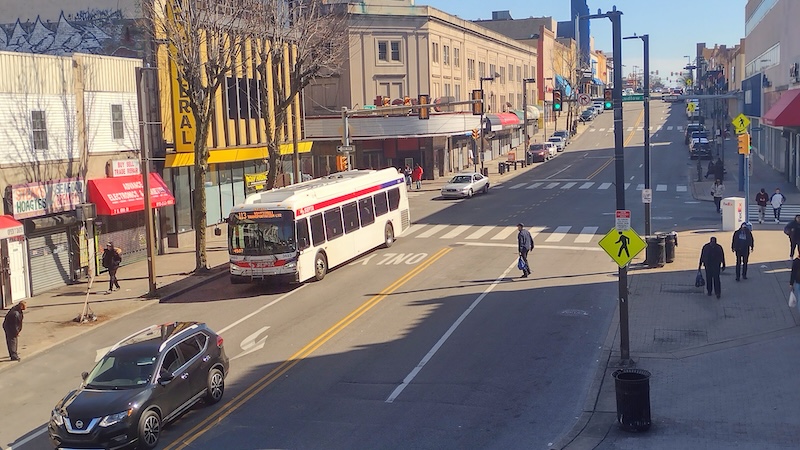
Delco in winter
No leaves please the urbanist gaze
Yet the street blossoms
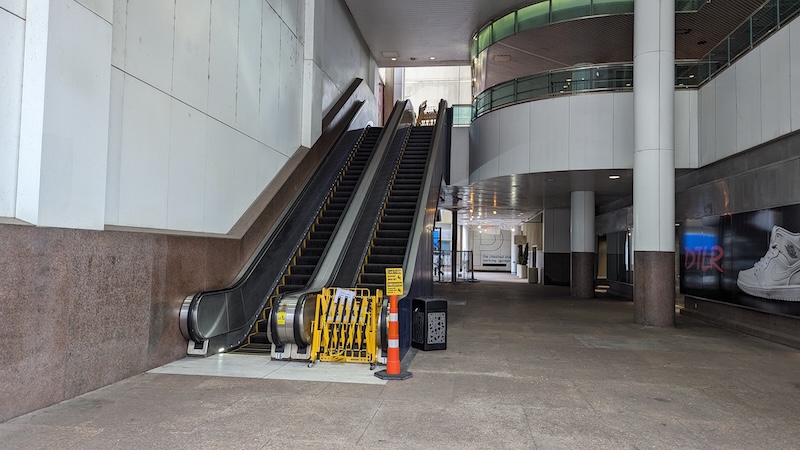
Escalator whirs
Carrying no one nowhere
Harrisburg's whisper
Christine McLaren — Planetizen Editorial Manager
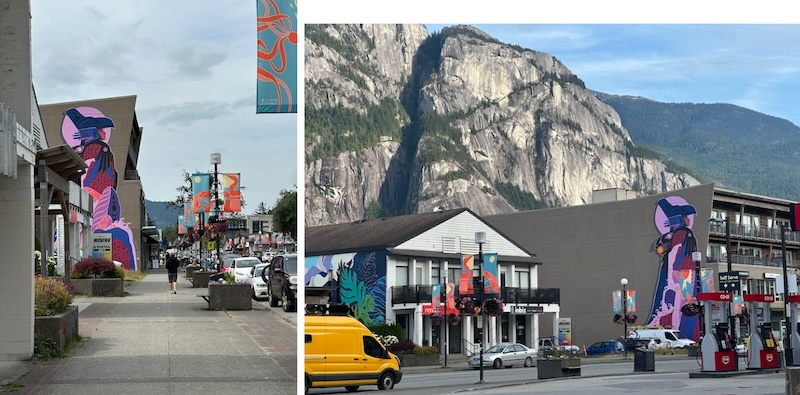
This summer visiting Squamish, British Columbia, I noticed something striking. The town has a beautiful mural walk, which I love. But this time I noticed that many of the murals seem to be strategically placed next to empty, often quite ugly lots. While I’m sure this adjacency is mostly due to the inherent visibility for a mural that those vacant lots create, it struck me that the murals almost completely distracted me from the ugly lots — so much that I almost didn’t notice them. In fact, in all my many visits to Squamish, I never noticed that they had so many vacant lots in their downtown. Both from afar, and up close, the murals draw your eye in such a way that your brain almost skips over the adjacent lot of overgrown weeds or parking. I even came across a mural in the making on my walk.

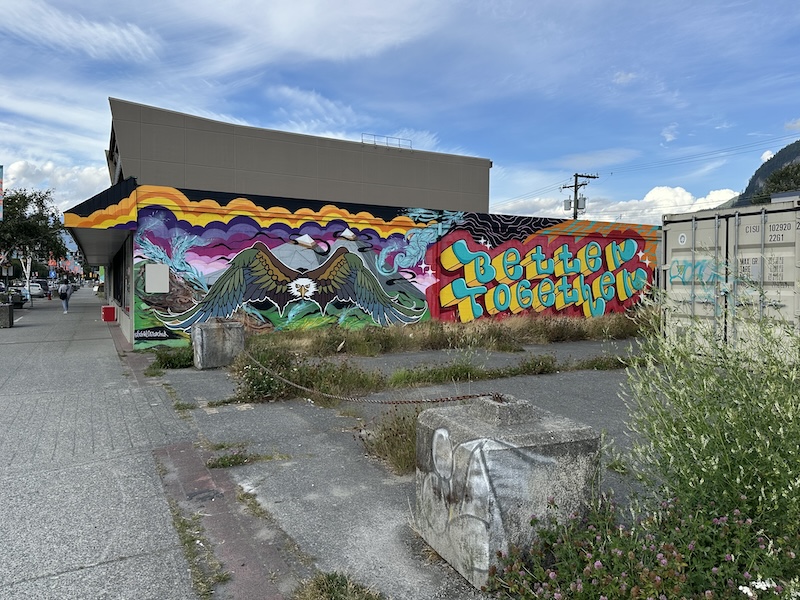
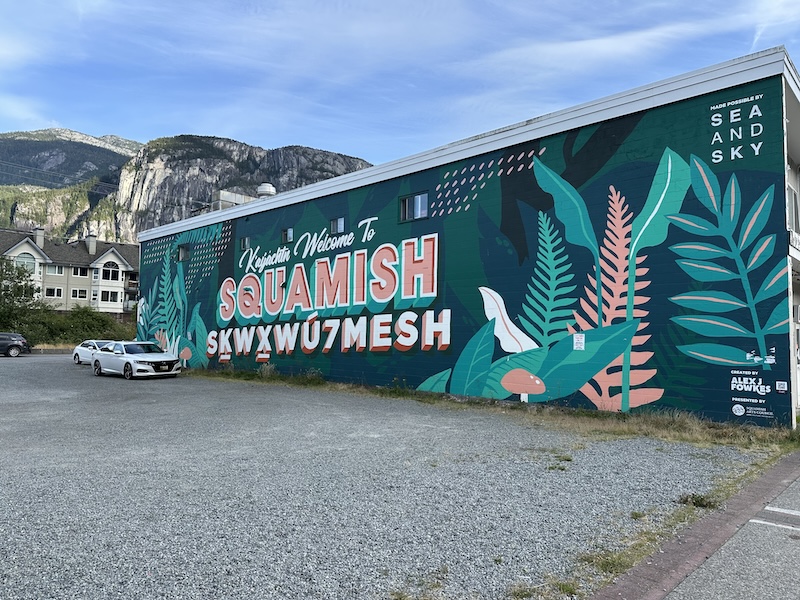
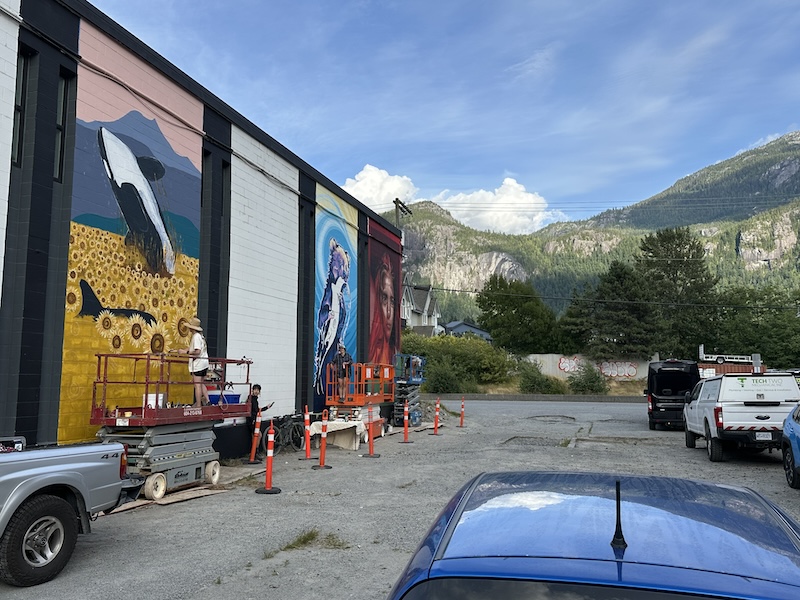
An anonymous Planetizen Courses instructor and government employee
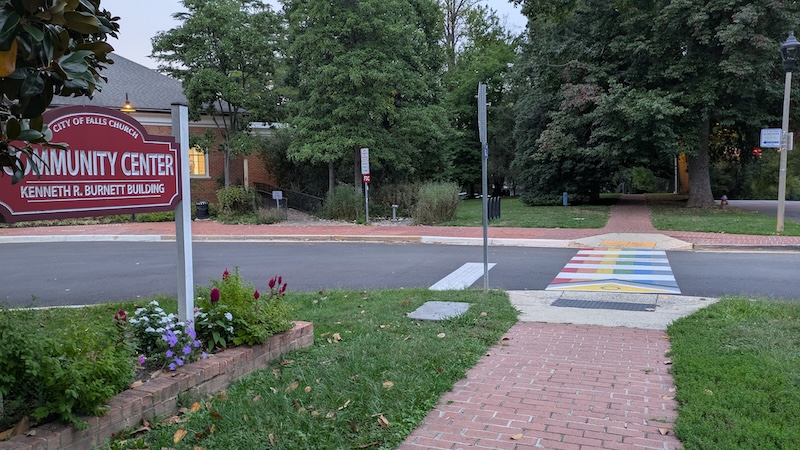
An Interesting Walk: It's been lovely to head to the City of Falls Church "center" in VA. There's quite a bit of joy — rainbows combined with traditional (old fashioned) bricks. It's fun, keeps the path interesting for families with tree lined streets.

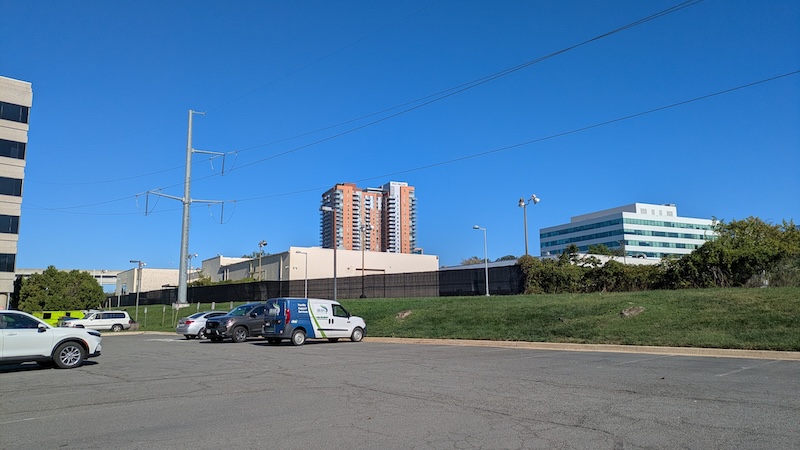
An un-Interesting Walk: This location is in the Tysons area of VA (near the new Silver Line metro). It's been remarkable to see the dense housing and commercial space develop after its construction. However, it's such a lost opportunity with considerable potential. It's one of the last few forests/wetlands in close proximity to the metro.
Jonathan Ochshorn — Planetizen Courses Instructor
I wrote a song called “Walking in Circles" and made a music video about my daily walk through the City of Ithaca, NY — down the hill to the Ithaca Commons and then back up the hill. The images in the video that I shot to document the walk became the subject of the song, albeit with a bit of poetic license intended to draw some larger meaning from the experience.
1. The path I take is circular
Where I start is where I end
Down the hill and up again
It's my religion as it were
A morning walk to start each day
Try to keep the wolves at bay
2. I walk along a deep ravine
Houses perched up in the air
Like Slinkys® poised upon a stair
A glimpse of nature in between
But someone's digging down below
A sign of who we are and where we go
Chorus: I'm walking in circles
Not because I'm bound to roam
I'm walking in circles
Just to get back home
3. What do these figures represent
Creatures lurking in the woods
Not found in other neighborhoods
I pass a place that I used to rent
Way back in nineteen seventy-three
When it was just Andy, Bill, and me [Chorus]
4. King and State still coexist
Thus we learn from history
Of a constant struggle to be free
Warmer times are sorely missed
As forms emerge out of the snow
And ducks decide where they should go [Chorus]

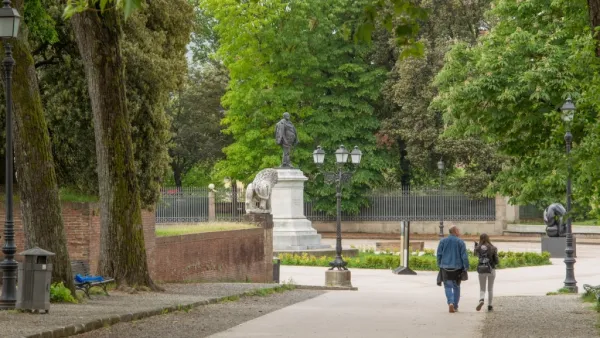
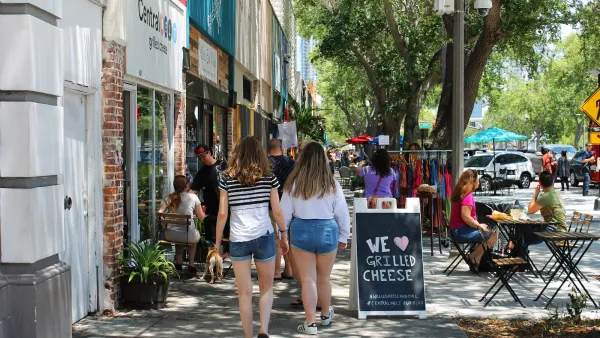
St. Petersburg Launches Sidewalk Master Plan to Close Gaps in Pedestrian Network and Improve Accessibility
The plan will inform priorities for fiscal year 2027.
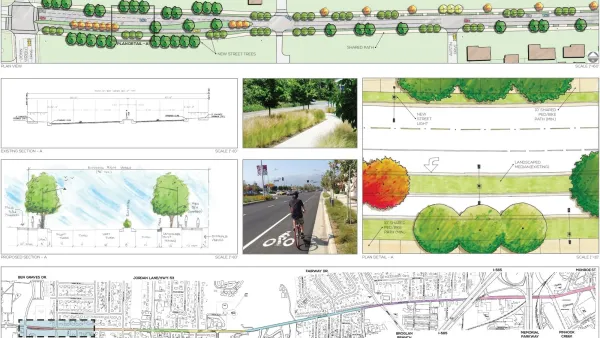
Huntsville, Alabama Launches $30M Complete Streets Project
A redesign of Holmes Avenue will bring new sidewalks, bike lanes, lighting, and street furniture to the corridor.
See the First Complete Map of NYC Walking Traffic
A new model of pedestrian routes and activity can help NYC planners make more informed decisions about transportation infrastructure and pedestrian safety improvements.

Planetizen Federal Action Tracker
A weekly monitor of how Trump’s orders and actions are impacting planners and planning in America.

Data reveals that NYC’s bet on congestion pricing has paid off
After almost two years of the program, reports show positive impacts on traffic and air quality and no disruptions to parking.

HUD modernizes 50-year-old manufactured housing framework
The Next Generation Manufactured Housing Action Plan establishes new energy-efficiency standards for manufactured homes, and new guidelines for anchoring them.

Small single-family homes are illegal in most of MA. Voters can change that
Most land zoned for single-family housing in Massachusetts requires at least 40,000 square feet of land per house.

Public steps inside U.S.’s first battery-powered train
Metra’s groundbreaking train feature modern seats and a futuristic battery car.

Companies show off AI technology, new innovation hubs at APTA Expo
Nearly 700 companies attended the American Public Transportation Association’s Expo last week, which happens once every three years.

FREE Course: Walkable City 1: Why Walkability?
After describing his path towards focusing on walkability as the essence of good planning, Jeff Speck marches through his five principal reasons for making more walkable places.
Reinventing Malls: Planning Alchemy—Turning Gray Fields Into Gold
The course focuses on the opportunities and imperatives that shape reinvention of mall sites.

One Hundred Miles
County of Mendocino
planning NEXT
The Architects Foundation
University of Cincinnati Online
Montrose County
Northern Illinois Transit Authority (NITA)
The Pocatello Development Authority

