Exclusives

FEATURE
Innovations in Post-Master's Graduate Planning Education
Professional doctorates or certificates of advanced graduate study (CAGS) can offer an alternative to a PH.D. for planners looking to expand their education beyond the master's degree.

FEATURE
Election Roundup: Planning's Big Day at the Ballot Box
Beyond the headline-grabbing presidential election, many states and localities voted on issues critical to the planning profession.

BLOG POST
Does Suburbia Promote Fertility?
In Joel Kotkin's new book The Human City, he argues that suburbanization promotes higher birthrates. But this policy doesn't seem to have worked so far.

BLOG POST
Washington State's Big Climate Policy Experiment
On November 8, voters in the nation’s northwest corner will decide on I-732, which would create a carbon tax swap and potentially become a new model for fighting climate change.
BLOG POST
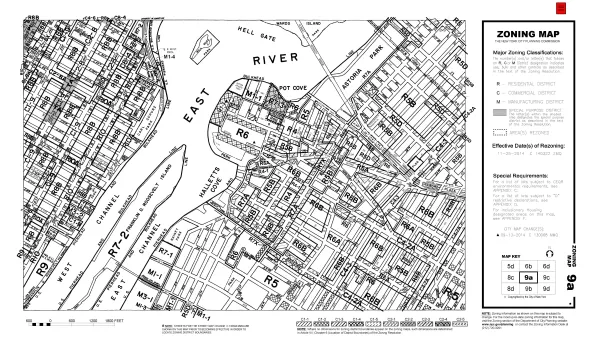
What Old Zoning Maps Tell Us About Planning
Steven T. Moga guest blogs about a new article in the Journal of Planning Education and Research.

FEATURE
The Promise and Significance of Planning Month
This October, the American Planning Association celebrated National Community Planning Month, or #PlanningMonth for short.

BLOG POST
Halloween Costumes for Urban Planners — 5th Edition
Looking for fun halloween costume ideas? Look no further than Planetizen for the latest halloween costumes.

BLOG POST
Playing Chicken with Autonomous Vehicles
Adam Millard-Ball guest blogs about a new article in the Journal of Planning Education and Research.

FEATURE
Top Websites - 2016
The annual list of the best planning, design, and development websites, representing some of the top online resources for news, information, and research on the built environment.
BLOG POST
Are States Too Active or Not Active Enough? Yes.
State governments like to limit local taxing authority but not local zoning—maybe they should do the exact opposite.

BLOG POST
Are the Skies Like Wilderness, and Do Drones Belong?
Love 'em or hate 'em, drones are coming. But is the issue of aesthetics getting enough treatment in the drone wars?

BLOG POST
Especially in California, Greens Have Missed the Party
While the Green Party nominates a presidential candidate every four years as a publicity stunt, other politicians—Democrats and Republicans alike—have been steadily pursuing a green agenda in California. California cities are better off for it.
BLOG POST
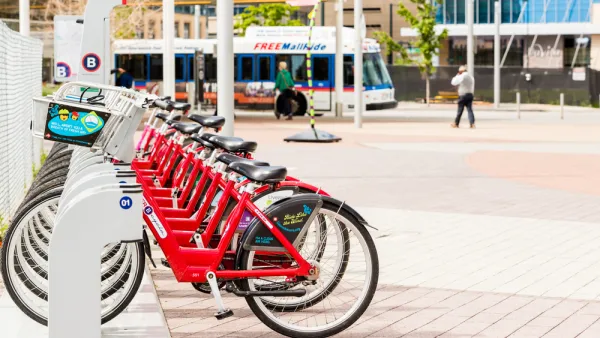
Multimodal Millennials? A Closer Look Using Multifaceted Traveler Types
Kelcie Ralph guest blogs about a new article in the Journal of Planning Education and Research.

FEATURE
The Landlord vs. the Fair Housing Lawyer: Race and Planning in the 2016 Election
The 2016 election presents a contest between two campaigns with fundamentally different views of fair housing in the United States—at a time when fair housing is a growing challenge with deep ramifications for the nation.

BLOG POST
Urban Containment: Sometimes Bad, Sometimes Not So Much
Some commentators on urban containment treat the issue as all-or-nothing: either strict limits on suburban development are good public policy everywhere, or they are good public policy nowhere. Perhaps a more nuanced view is appropriate.
BLOG POST
Jane Jacobs, 'Cities First,' and the Virtues of Being Wrong
The great urbanist may have offered a flawed theory of urban origins, but that doesn't mean her idea is completely worthless.

BLOG POST
Rethinking Traffic Safety
The United States has, by far, the highest traffic fatality rate among peer countries. Don’t blame drivers; planners need to rethink transportation safety.

BLOG POST
Commuting in America 2015
Is commuting Deplorable? Can we Make Commuting Great Again? It is sometimes necessary to resort to hyperbole to draw attention to real data.

FEATURE
Jan Gehl on the Politics of Transforming Cities
Advancing the politics of public transportation and public spaces is not easy. Danish architect Jan Gehl and his firm Gehl Architects, however, have a track record of success with cities around the world.
BLOG POST
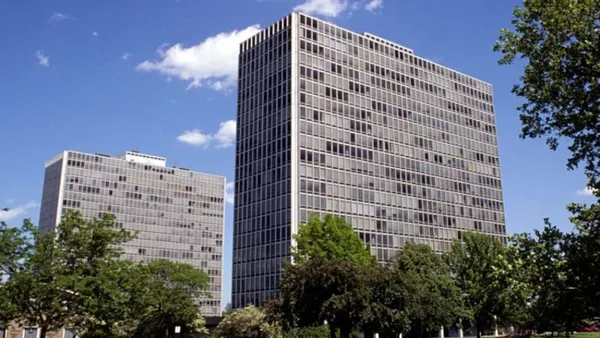
CIAM's Third Way
A blog post comparing the Athens Charter, written by modernist architects in the 1930s, to traditional urbanism and modern sprawl.
Harvard University Graduate School of Design
KFH Group Inc.
Greater Baltimore Committee
The Architects Foundation
University of Cincinnati Online
The Pocatello Development Authority
The Urban Renewal Agency of the City of Pocatello

FREE Course: Walkable City 1: Why Walkability?
After describing his path towards focusing on walkability as the essence of good planning, Jeff Speck marches through his five principal reasons for making more walkable places.
Reinventing Malls: Planning Alchemy—Turning Gray Fields Into Gold
The course focuses on the opportunities and imperatives that shape reinvention of mall sites.