Environment
Katrina and Sandy: Devastating Storms, But That's Where the Similarities End
Roberta Brandes Gratz examines the many differences, and few similarities, between the two most devastating urban storms of recent memory. Among the most elemental differences: one devastated neighborhoods, one a city; one was man-made, one natural.
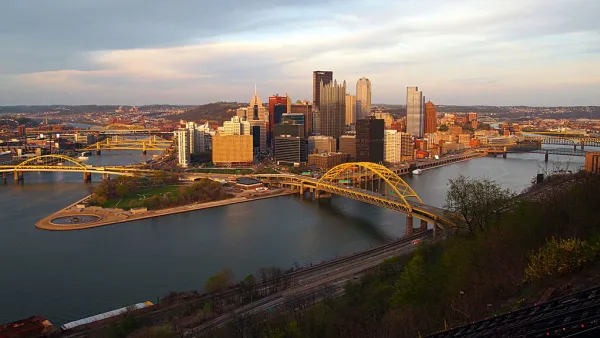
Once Dumping Grounds, Pittsburgh's Rivers Now Eyed by Residents and Developers Alike
Once controlled by "industrial behemoths", Christine H. O'Toole examines the role that Pittsburgh's three rivers - its genius loci - have played in spurring the redevelopment of the city's downtown.
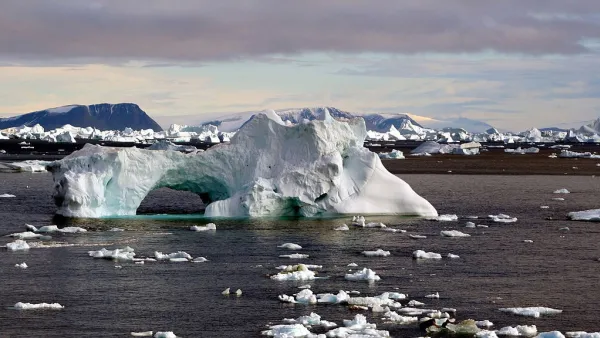
Looking at History and Seeing a Grim Future for the World's Coastal Cities
Justin Gillis tags along with researchers who are trying to pinpoint just how much of the world's coastlines will be inundated by dramatically rising sea levels. By looking at historical records scientists are beginning to paint a grim picture.
Who Should Pay for Parks?
Philadelphia spends $64 on parks and recreation facilities per resident, one of the lowest totals in the nation. Ryan Briggs uses the city as a lens to examine the growing impact of budget cuts to park systems on their surrounding communities.
Obama's Inaugural Address Cheered by Urbanists and Environmentalists
Matt Bevilacqua found much to cheer in the 'renewed focus on urbancentric topics' that President Obama delivered in his second inaugural address. Climate change, immigration, and inequality were among the speech's primary topics.
10 Innovations Driving America's Cities and States Forward
"America is renewing itself from the bottom up." That is the premise underlying the second annual “Innovations to Watch” list just released by The Brookings Metropolitan Policy Program and The Rockefeller Foundation.
India's Energy and Resources Institute Taking the LEED
India’s foremost environmental think tank is touting a recently developed sustainable building certification program "Green Rating for Integrated Habitat Assessment" (GRIHA) as more holistic than LEED. Could it also help enforce labor laws?
NYC Unveils Plans for Cleaning Up One of Its Most Polluted Waterways
The EPA has released plans for how it intends to clean up Brooklyn's Gowanus Canal Superfund site. Branden Klayko reports on the $500 million, two pronged approach.
Black Carbon Takes No. 2 Spot In Climate Change Agents
31 atmospheric scientists have written a new study on the major component of soot called 'black carbon', long identified with causing respiratory problems - and have shown how it is the 2nd most important agent of climate change after carbon dioxide.
What the Sandy Recovery Bill Gets Wrong
This week, the U.S. House of Representatives approved a two-part bill to fund the recovery from Hurricane Sandy. In an essay written prior to the vote, Rob Young criticizes the rush to approve rebuilding the entire coast as it was before the storm.
Vacancies Leave Obama's Environmental Agenda Unclear
With yesterday's announcement that Interior Secretary Ken Salazar will soon step down, the three top environmental posts in the federal government are waiting to be filled. The vacancies are further muddling the administration's second term agenda.
Wind's Future Remains Uncertain Despite Credit Renewal
While the wind energy credit was extended thanks to the fiscal cliff deal, don't expect to see a flurry of wind projects built and certainly it won't match last year's production. Much uncertainty remains for this renewable power industry.
The Challenge of Bringing Walkability to America's 99 Percent
Kaid Benfield proposes not only more walkable neighborhoods in the United States, where a pedestrian is struck by a vehicle every 7 minutes, but also more walking to reverse the country's alarming obesity trend.
Imminent Doom as Grand Strategy
What do three-pack-a-day smoking habits, triple-decker cheese burgers and sprawl have in common? They all offer immediate gratification and deferred consequences. But now the bill's coming due. Ben Brown lays out some ways to face the music.
Sandy Already Changing How Buildings are Designed in NYC
From roof mounted gas-powered generators to emergency floodgates and watertight mechanical rooms, developers and their designers in New York are already incorporating preventative measures into new and revised designs for their buildings.
LA County Supervisors Propose Pavement Parcel Tax
Facing federal regulatory action for violating Clean Water Act standards, the L.A. County Board of Supervisors will consider a parcel tax weighted towards a property's amount of impervious pavement to fund programs to reduce stormwater pollution.
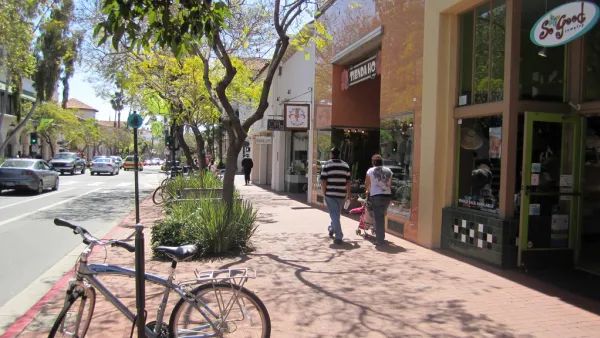
How Walkable Communities are Key to Modern Geopolitics
The "great global project" of this century, says Patrick Doherty, is how to "accommodate 3 billion additional middle-class aspirants in two short decades." In a bold essay, he outlines how the U.S. must lead the global transition to sustainability.
Affordable Housing with First-Rate Design
Kaid Benfield examines a model 'pocket neighborhood' - Little Rock's Pettaway - which simultaneously improves a declining neighborhood, provides affordable infill housing and applies advanced measures for stormwater control.
Lexington Looks Underground to Guide Downtown Redevelopment
Town Branch Creek was once the lifeblood of Lexington, Kentucky. Now, more than a century after it was rerouted and buried, city leaders want to resurrect the historic waterway as the focal point of downtown redevelopment.
Beijing Smog Levels "Off The Scale"
In Beijing, the level of air pollution is the highest the monitors at the U.S. embassy have ever recorded since put in place in 2008. The pollution results from a combination of weather conditions and particulate matter - most from coal burning.

FREE Course: Walkable City 1: Why Walkability?
After describing his path towards focusing on walkability as the essence of good planning, Jeff Speck marches through his five principal reasons for making more walkable places.
Reinventing Malls: Planning Alchemy—Turning Gray Fields Into Gold
The course focuses on the opportunities and imperatives that shape reinvention of mall sites.

City of Rosemead
Rutgers University, Edward J. Bloustein School of Planning and Public Policy
One Hundred Miles
University of Michigan School for Environment and Sustainability (SEAS)
Hunter College, City University of New York (CUNY)
The Architects Foundation
City of Cambridge
The Pocatello Development Authority
The Urban Renewal Agency of the City of Pocatello









