Community / Economic Development
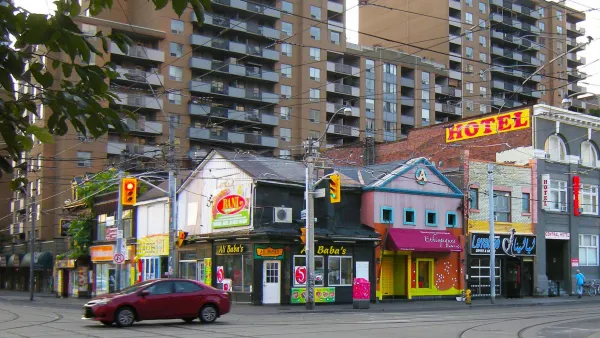
Eyes from the Street – A Finer Filter
Evidence described here suggests that urban design for "eyes on the street" is not enough to lower crime.
The 'Find It, Fix It' App Increasingly Used to Roust the Homeless
Seattle's Find It, Fix It app plays a telling role in the city's approach to its homeless population. The question is whether the app is fixing anything for the people living on the street.
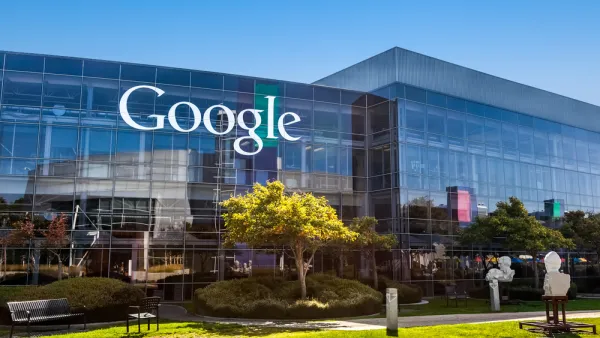
Google Tax to Appear on November Ballot in Mountain View, California
If a majority of the city's voters approve the city-sponsored ballot measure, business license fees will change from a flat $30 annual fee to a new tax based on the number of employees, with the largest employer, Google, to pay $3.3 million.

One in Two Arrests in Portland Are of Homeless People
Three in 100 people in Portland are homeless.
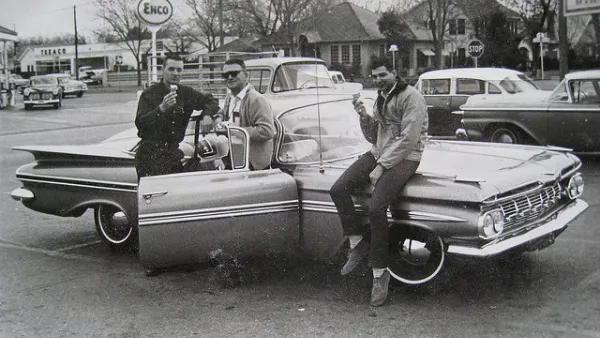
Mourning the Loss of the Dairy Queen in Rural Texas
As populations shrink, small towns are losing an important place to get together,,
Regrets of an Accidental Placemaker
My pitches for space usually centered around the developer’s needs and not the needs of the neighborhood or its residents. I didn’t pay much attention to what impact those events would have on the surrounding neighborhoods.
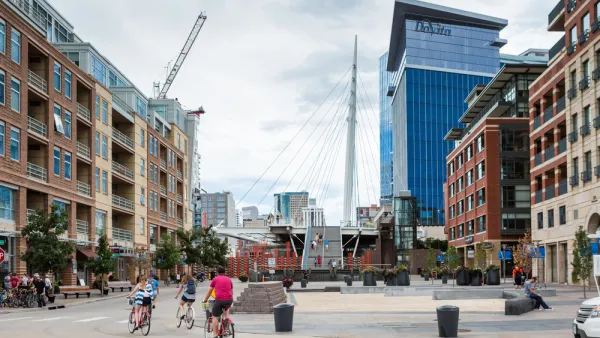
To Make the Most of Transit Oriented Development, Include Affordable Housing
Low-income residents are more likely to use transit, and transit needs riders. The relationship seems ripe for mutual benefit.
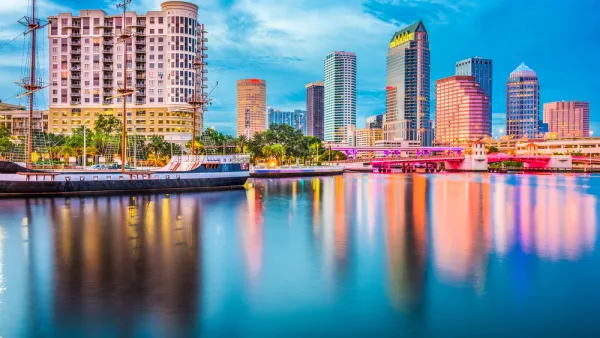
Massive Waterfront Investment 'Reinvents' Tampa
After decades of planning, the city hopes several huge developments will draw millenials and empty-nesters.

When Pennsylvania's 'Right to Farm' Means Living With the Pigs Next Door
New residents to formerly agricultural area are trying to shut down a hog-feeding operation, but so far without much success.
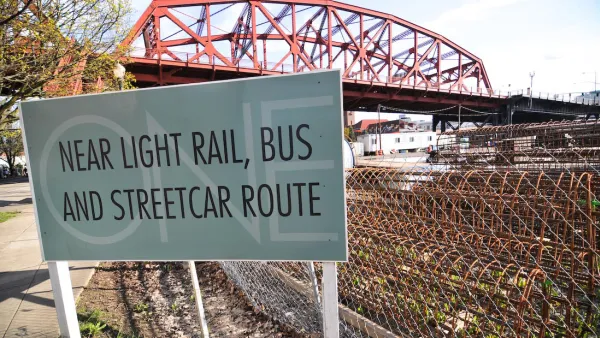
When Gentrification Follows Transit Oriented Development
From an environmental perspective, transit oriented development is hard to argue. From a socio-economic perspective, transit oriented development must make room for all income levels, according to this opinion piece posted on the NRDC website.
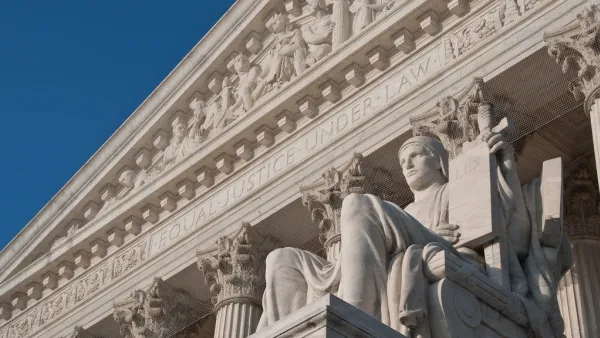
Did the Supreme Court End the 'Retail Apocalypse'?
The decision in South Dakota v. Wayfair certainly didn't hurt traditional retailers, but they're still going to have to help themselves in the face of competition from online retail.
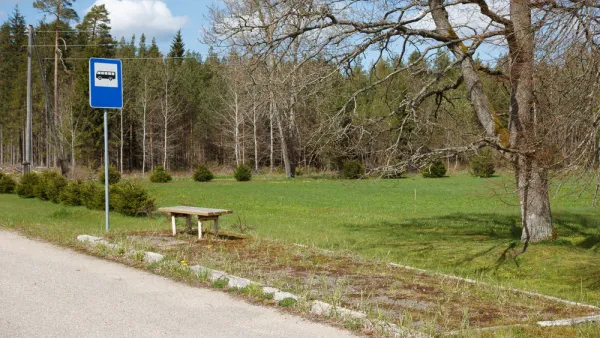
Most Rural Counties Losing Population
Experts expect the 2020 Census to reveal some potentially startling trends of population decline in rural parts of the country.

The 'Shale Crescent,' Also Dubbed the 'Plastic Belt,' Removes the Rust
The region spanning Ohio, West Virginia, and Pennsylvania is claiming a new name.
$29 Million in Series C Funding for an Urban Agricultural Company
Looking for signs of the growth of urban agricultural as a viable industry?

Interactive Maps Explore Barriers to Opportunity
A pair of interactive maps and a report compare access to opportunity in two very different neighborhoods. In both places, residents confront "friction of distance" and feel their input on public decision-making is limited.
Sued for Gentrification
A lawsuit against the District of Columbia claims deliberate actions to attract "creative" workers discriminates against low-income and African American residents.
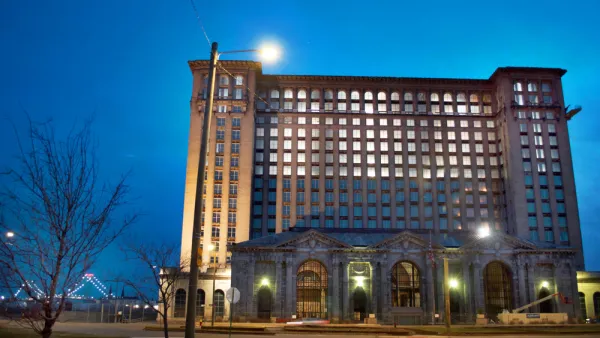
The Massive Significance of Ford's Move into Detroit's Abandoned Michigan Central Depot
Ford has confirmed its plan to move into the Michigan Central Depot in Detroit.
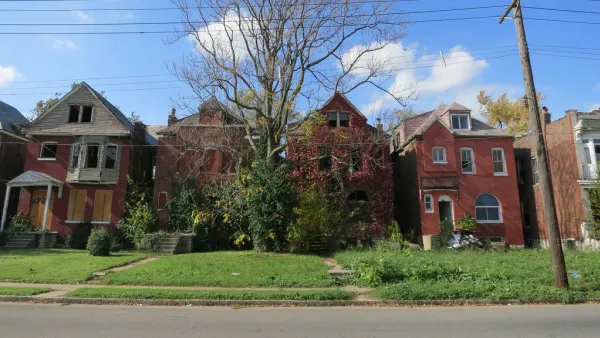
Book Review: The Divided City, by Alan Mallach
Jason Segedy's review of a must-read for all planners interested in the subject of "Legacy Cities."
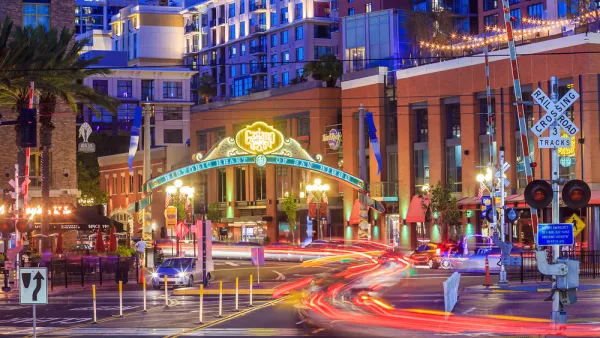
Looking Back to Find the Future of San Diego
An advocacy group is republishing the 1974 regional plan for sustainability, and finding that it's just as relevant now as it was then.
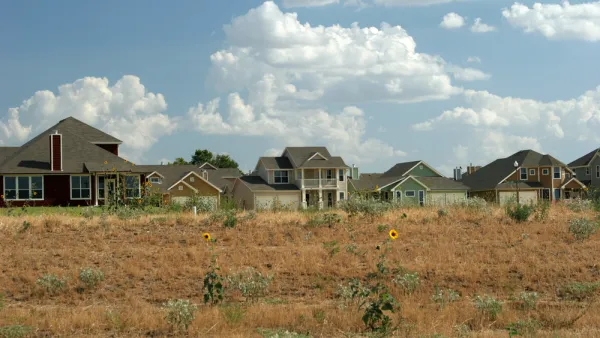
Study: There's a Lot of Vacant Land in Texas Cities
All that empty acreage means that these big, rapidly developing cities don’t really have to sprawl.

FREE Course: Walkable City 1: Why Walkability?
After describing his path towards focusing on walkability as the essence of good planning, Jeff Speck marches through his five principal reasons for making more walkable places.
Reinventing Malls: Planning Alchemy—Turning Gray Fields Into Gold
The course focuses on the opportunities and imperatives that shape reinvention of mall sites.

City of Rosemead
Rutgers University, Edward J. Bloustein School of Planning and Public Policy
One Hundred Miles
University of Michigan School for Environment and Sustainability (SEAS)
Hunter College, City University of New York (CUNY)
The Architects Foundation
City of Cambridge
Montrose County
The Pocatello Development Authority









