How much does weather actually play into the choices people make about their travel behaviors?


This post originally appeared on Jarrett Walker’s blog, Human Transit.
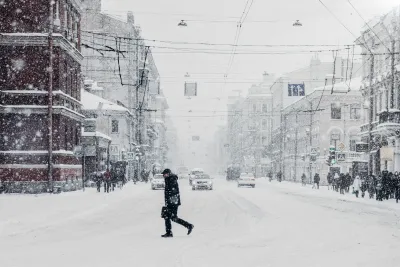
Almost everywhere I travel as a consultant, someone asks me whether it’s realistic to expect people to walk given the extremes of their climate.
They don’t just ask me this in Edmonton and Singapore. I’ve even been asked this about Los Angeles, where the climate is very mild by global standards. Well-traveled elites can form wildly nuanced intolerances about weather. But how much should these opinions matter?
For example, if you’re a popular economics pundit based in the bucolic climate of San Francisco, almost all of the world’s urban climates will seem extreme to you, so it may seem logical to say:
Visiting any country in the Global South makes you realize why walkable urbanism is dead. Walking around sucks when it's hot. And the whole world is only getting hotter.
— Noah Smith 🐇🇺🇸🇺🇦🇹🇼 (@Noahpinion) October 7, 2025
And yet when I travel in the “Global South” I see lots of people walking. They may not be having an ideal experience. The infrastructure may be uncomfortable or even unsafe. But they’re walking. They are probably walking because they can’t drive or can’t afford to buy a car, but then, their cities are already congested, so their cities wouldn’t function if everyone was in cars.
These people’s behavior matters. Once more with feeling: The functionality of a city, and of its transport system, arises from the sum of everyone’s choices about how to travel, not just the preferences of elites. When elites make pronouncements about what “people” will tolerate, while really speaking only of themselves, they mislead us about how cities actually succeed. They also demean the contributions of the vast majority of people who are in fact tolerating extreme weather to do whatever will give their lives meaning and value.

Most people don’t travel that much. Most people have therefore adapted, often unconsciously, to the climate where they live. (As they say in Saskatchewan, “there’s no bad weather, there are only bad clothes.”) There are ways to adapt to most weather conditions. There are things you can do as an individual, and then there are also things that great urban design and planning can do.
Are there extreme exceptions? Dubai comes to mind. I’ve walked in Dubai, scurrying from one rectangular block of Modernist shade to the next, often needing to cross high-speed streets full of reckless drivers. But Dubai’s problem is not that it would be impossible to walk there. It’s that the city was mostly designed by elites who assumed that nobody would walk (because they as elites wouldn’t walk) and they’ve therefore made choices that make walking difficult. There are pleasant walkable areas in Dubai, notably the historic port that was laid out back when everyone walked.

And in every city there will be times when walking is less pleasant. But people and economies adapt to that. The Spanish ritual of the siesta is a practical adaptation to the fact that it’s often unpleasantly hot in the mid-afternoon. So people often rest then, and instead drive their economies late into the evening. Most cities also tolerate a few days a year when the weather is so bad that the economy isn’t expected to function normally. In Portland, where I live, winter ice and snow have this effect; these events are so rare that the city can’t expect to handle them the way Chicago does. We mostly shut down the city for a day or two, and that ends up being the least bad solution.

The human ability to adapt is the key to our spectacular success on this planet. Our problem is that the people who lead our public conversations, our elites of wealth and opinion, are often some of the least adaptable people on earth. And when societies assume that we should listen to those people, we all end up internalizing the message that there’s something wrong with us if we even try to walk in Phoenix in July or Chicago in January.
And that’s wrong. Sometimes walking a few blocks is the key to liberty and prosperity in someone’s life. Most people do what makes sense in the place where they live. Only if we recognize that will we make the investments in urban design to make walking more bearable in extreme weather. And only then will our cities include everyone.

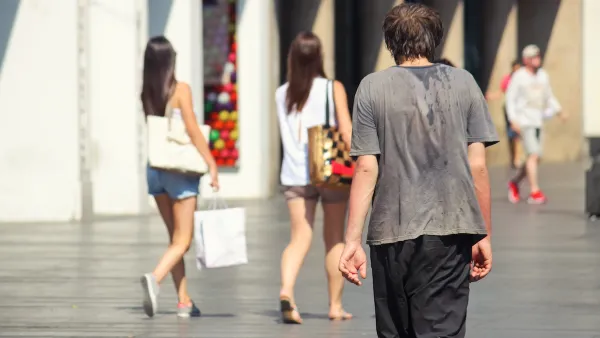
Index Measures Impact of Heat on Pedestrian Activity
When heat and humidity are high, people are more likely to opt for cars when possible.
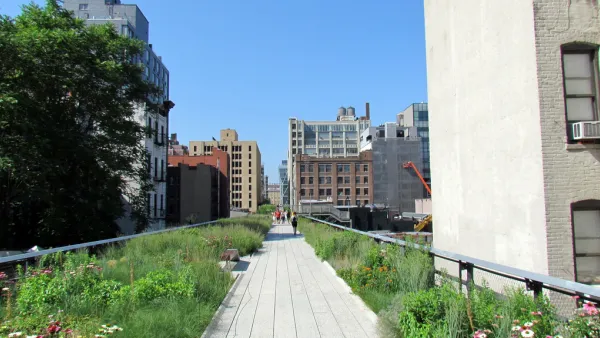
Unsurprisingly, People Enjoy Walking More in Safe, Green Spaces
New research shows that people are likely to walk more in places that are both walkable and green.
Copenhagen is losing its cool
In a city long designed to maximize light during dark Scandinavian winters, climate change is forcing the Danish capital to rethink its relationship with the sun.

Planetizen Federal Action Tracker
A weekly monitor of how Trump’s orders and actions are impacting planners and planning in America.

The state-sanctioned urbicide of Austin
People don’t kill cities. Freeways do.

US to reduce Colorado River water deliveries to Mexico
A new Colorado Treaty amendment reduces Mexico’s Colorado River water allocation by 250,000 acre feet.

5 New England states march closer to 800 megawatt wind energy project
Securing federal approval for the project may be complicated under the Trump administration, which has historically been hostile towards domestic wind power.

Baltimore to break ground on $50 million Transit Priority Project
The project will bring faster bus trips, safer streets and better bike connections to Baltimore.

Airbnb launches $250 million 'last-dollar financing' housing accelerator, makes first investment in Austin
The company will put $6.4 million towards affordable housing development in Texas’ capital.

FREE Course: Walkable City 1: Why Walkability?
After describing his path towards focusing on walkability as the essence of good planning, Jeff Speck marches through his five principal reasons for making more walkable places.
Reinventing Malls: Planning Alchemy—Turning Gray Fields Into Gold
The course focuses on the opportunities and imperatives that shape reinvention of mall sites.

Eagle County Government
Harvard University Graduate School of Design
Nashville Planning Department
The Architects Foundation
University of Cincinnati Online
The Pocatello Development Authority
The Urban Renewal Agency of the City of Pocatello
Journal of the American Planning Association

