World
Global issues, U.N., etc.
Study: Astounding Loss of Global Biodiversity in Last 40 Years
According to a newly released study by the World Wildlife Fund, the Zoological Society of London, and other NGOs, the world has lost half of its biodiversity, particularly in fresh water ecosystems and in developing nations.
'Keeping it Modern' to Research Conservation Solutions
The quest to preserve the masterpieces of modern architecture can also provide a model for preserving lesser-known construction from the 20th century. An initiative of the Getty Conservation Institute would achieve both goals.
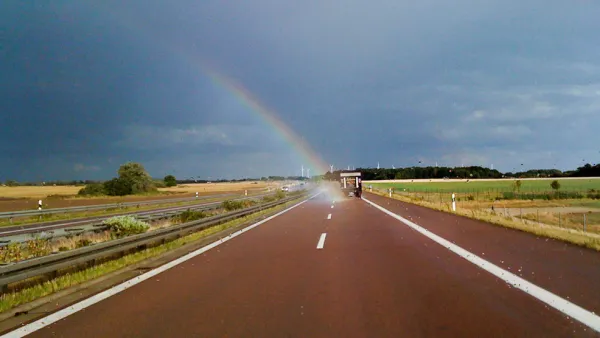
Three Technological Innovations that Could End Asphalt as We Know it
As more municipalities are shutting off lights for energy savings, technological innovations are leading the way in new lighting and paving systems to make up for these economic and environmental constraints.
How the Sharing Economy Masks an Economic Crisis
Evgeny Morozov, a researcher on the political and social implications of technology, critiques the less-hyped implications of the emerging sharing economy.
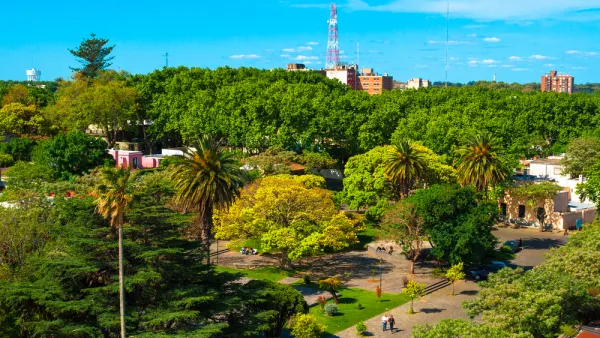
'Trees in Hard Landscapes': Guide for High-Performance Urban Infrastructure
A new cross-disciplinary report cites 32 case studies to offer practical solutions for integrating trees into civic spaces and surface car parks.
AT&T Planning for Growth of 'Connected Car' Market
AT&T is predicting a growth market for wholesale customer relationships with car manufacturers.
The Look and Feel of 'Inherently Urban'
Greek orators, current solution-based efforts, and 25 photographs remind us of the central role of human opportunity in the urban environment.

Bloomberg Donates $125 Million for Urban Transportation
In his second global transportation donation meant to reduce death and injury from transportation, the former NYC mayor will take a decidedly urban focus by directing his foundation to select ten cities to receive $125 million, he announced Monday.
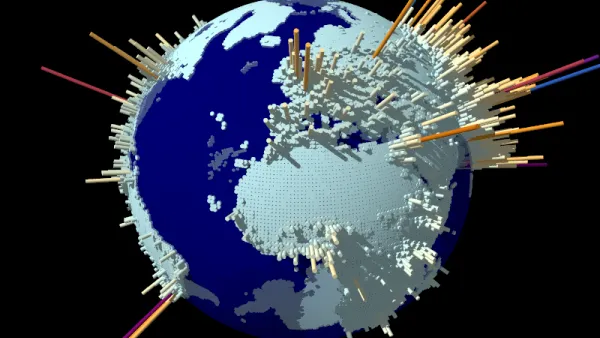
New Grim Population Projection: 11 Billion People
So much for the conventional wisdom that world population would peak at 9 billion by 2050 and then decline. A new analysis shatters it, concluding population will rise to 11 or 12 billion by 2100, and possibly continue growing.

Underground: The Next Frontier of Urbanization
With rapidly urbanizing metro areas, some cities are not looking to build up, or spread out, anymore. Rather they have begun to grow into underground spaces.
Neuroscience and Landscape Architecture
Two new studies use EEG and fMRI to pinpoint which elements of urban parks and gardens induce brain activity associated with meditative states.
Gov. Jerry Brown Touts California's Success at U.N. Climate Summit
Leonardo DiCaprio may have received top billing, but Jerry Brown spoke as well on the actions of the Golden State to combat climate change under his watch. Two days earlier, he signed six bills to increase sales of electric vehicles.
Friday Eye Candy: Life Finds A Way
NPR's Cities Project is crowdsourcing Instagram photos of nature creeping back into urban spaces.
6 Questions to Consider for Digital Public Engagement Planning
Digital engagement is the latest buzz when it comes to public participation. If your town is thinking about diving into the digital realm, consider these six questions.
A New, Flexible System for Congestion Pricing
Researchers at MIT have developed a new, flexible congestion pricing system.
The Importance of Inter-Urban Walkability
In his third "place-decoding" essay from France, Chuck Wolfe recalls all that we can learn from walking between settled places.
What's Your 'Elevator Pitch' for Greener, Healthier Cities?
Kaid Benfield shares his placemaking pitch.
Studies: 2013 Worldwide Carbon Emissions Higher than Ever
World leaders gathering today in New York City for a United Nations climate summit will be greeted by the news that the world is doing worse than ever in reducing carbon emissions.
A Cloud-Based Firewall to Stop Car-Data Hackers
Using a cloud-based computing setup, the third largest maker of luxury vehicles unveiled a new set of protections from hackers in the face of driverless travel.

Study: Reducing Car Dependence Would Save $100 Trillion by 2050
A study examines the impact of a worldwide shift away from automobile infrastructure and finds a staggering amount of potential benefits by the year 2050.

FREE Course: Walkable City 1: Why Walkability?
After describing his path towards focusing on walkability as the essence of good planning, Jeff Speck marches through his five principal reasons for making more walkable places.
Reinventing Malls: Planning Alchemy—Turning Gray Fields Into Gold
The course focuses on the opportunities and imperatives that shape reinvention of mall sites.

Eagle County Government
Harvard University Graduate School of Design
Nashville Planning Department
The Architects Foundation
University of Cincinnati Online
The Pocatello Development Authority
The Urban Renewal Agency of the City of Pocatello
Journal of the American Planning Association