United States
Learning from Katrina, Three Years Later
Three years later, Hurricane Katrina has had lasting effects on New Orleans. It's also taught America some lessons about how to react to natural disasters -- and how not to.
Friday Funny: The $1.01 Store?
The 99 Cents Only chain is facing a dilemma- with inflation and rising food costs, they're running out of things they can sell for only 99 cents.
Stadiums Don't Pay
InTransition Magazine talks to Rick Eckstein, author of Public Dollars, Private Stadiums: The Battle over Building Sports Stadiums about why stadiums fail to fulfill their promises of economic revitalization.
As Infrastructure Crumbles, Investors See Opportunity
Burned in so many different markets, private investors are now looking at city infrastructure as a safe bet.
Figures Say Things Look Good, But Don't Account For Slumping Economy
New census figures have been released, showing a rise in median household income and more people with health insurance. But experts warn that the figures do not account for the recent slump in the economy.
Something New Inside Failed Big Boxes
When big boxes go under, they leave big holes. Communities across America are coming up with some creative ways to reuse the huge spaces left behind when big box retailers move out.
The Zero-Waste Park
Eric Lombardi, a waste-management guru, has drawn up a fanciful plan for an "eco-cycle, zero waste park" which reimagines the dump as a composting, recycling, and educating facility.
Fighting Blight, Cities Become Realtors
Boston, Minneapolis and San Diego are flipping houses in an effort to prevent neighborhood blight- a strategy that appears to be working.
Redefining Poverty
New York City is changing the way poverty in the city is defined, while the Federal government is considering a bill to do the same. Planetizen Assistant Editor Nate Berg reports in The Christian Science Monitor.
Extreme Commuting: A 23-Mile Run
Gas prices are driving a select few die-hards to trade in their cars for running shoes.
Biden Bodes Well for Rail
Transit supporters may have reason to rejoice in the selection of Sen. Joe Biden as Obama's V.P. pick.
Cities React as Drivers Become Cyclists
Across the country, cities are trying to figure out how to handle the rising tide of cyclists riding through their streets. A common reaction is to offer classes on safe cycling.
Shifting Back to the City
The suburbs draw on Americans may be dwindling, according to this column from Neal Peirce. But, he argues, this shift doesn't mean the end of suburban living.
Restaurants Draw Crowds, Even As Retail is Hit By Economic Woes
Restaurants are now a better draw than retail in a tough economy, and new retail centers are upping their percentage of eating places to follow suit.
Two Men Banned from Natl. Parks for Correcting Grammar
Two men calling themselves the Typo Eradication Advancement League drove around the country fixing typos on signage in national parks- until the park service caught them defacing a historic marker in the Grand Canyon.
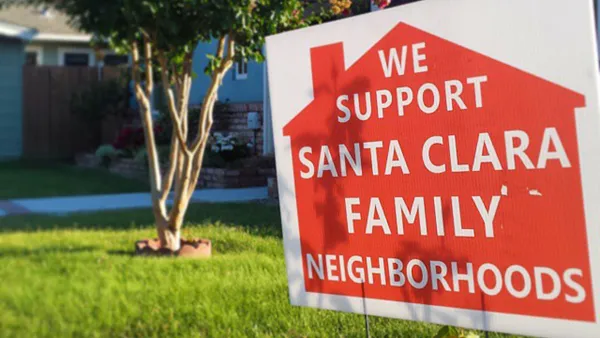
The Social Functions of NIMBYism
Assessing NIMBYism: not just its agonies but also its value in democratizing land use planning decisions, and concluding with constructive advice on how to make the most of this painful but inescapable feature of the development landscape.
Five Cities Fighting Abandonment
This article from Developer looks at five cities that are dealing creatively with their foreclosure and abandonment problems.
States Need to Focus to Tackle Poverty
In an effort to tackle poverty, 15 states have set up commissions to explore the issues. Neal Peirce says they need to focus foremost on getting more money into the hands of the impoverished and reducing the burden of taxes on them.
Don't Rebuild -- Reinvent America's Infrastructure
The deplorable state of America's infrastructure may represent a one-time opportunity: not to replace what once made sense but does no longer, but to embark on a bold program to create a more environmentally sustainable nation, writes Sara Robinson.
Camelina: A Better Biofuel?
An overlooked native plant has a lot going for it as a biofuel, and wouldn't take away from food production.

FREE Course: Walkable City 1: Why Walkability?
After describing his path towards focusing on walkability as the essence of good planning, Jeff Speck marches through his five principal reasons for making more walkable places.
Reinventing Malls: Planning Alchemy—Turning Gray Fields Into Gold
The course focuses on the opportunities and imperatives that shape reinvention of mall sites.

City of Rosemead
Rutgers University, Edward J. Bloustein School of Planning and Public Policy
One Hundred Miles
University of Michigan School for Environment and Sustainability (SEAS)
Hunter College, City University of New York (CUNY)
The Architects Foundation
City of Cambridge
Montrose County
The Pocatello Development Authority









