United States
Beantown Builds in Bulk
Boston has seen an increase of new construction over the past few years, mostly concentrated along the waterfront and its "Innovation District." The Architect's Newspaper has compiled a list of the most high-profile developments in the city.
Using Brownfields to Heal Contaminated Communities
Ronda Kaysen reports on the growing trend in transforming brownfield sites in disadvantaged communities into health centers, "in essence taking a potential source of health problems for a community and turning it into a place for health care."
Can a 600-Mile Transfusion Revive the Colorado River?
The Colorado River is struggling to provide enough water for 25 million people, which could lead to water shortages and water wars in the areas that rely on its bounty. Officials are looking to find a long-term solution, reports Felicity Barringer.
Five Ways to Put a Smile on a Cyclist's Face
With cycling rates increasing across America, it's probably a safe bet that you know and care for a bicyclist who would be ecstatic to receive one of Fast Company's "safe, stylish, and fun" gift ideas this holiday season.
Why Public Health Makes Business Sense
In the increasing competition between cities, regions, and states for the highly desirable jobs and industries driving economic growth in these difficult times, community health has become a key ingredient in attracting employers.
Raleigh Paves the Way for Walkability
Raleigh, North Carolina didn't take getting placed sixth most dangerous metro area in the country lightly back in 2009, and recently drafted a Comprehensive Pedestrian Plan in response.
Traffic Deaths at Historic Lows; Ped and Bike Fatalities Increasing
New data released this week shows that automobile fatalities dropped last year to the lowest level in 62 years. At the same time, deaths of bicyclists, pedestrians, motorcycle riders and big-rig truck drivers increased, reports Ashley Halsey III.
Is America Turning the Tide in the Battle of the Bulge?
Sabrina Tavernise reports on promising news concerning one of America's most formidable public health crises: for the first time in decades several American cities are reporting declines in childhood obesity rates.
Bodybuilding Moves to the Playground
Haya El Nasser reports on the latest trend in park design: free public 'fitness parks' that feature exercise equipment "built to withstand the rigor of weather vandalism."
Food for Thought from the APA
The APA has published the final results of a longitudinal study conducted in partnership with the Robert Wood Johnson Foundation that surveyed the national landscape of food access planning.
Battle Against Homelessness Making Progress, But Will Fall Short of Goals
A report released today shows that the federal government has been effective in reducing homelessness over the last several years, but will fall short of goals for eradicating homelessness among the most vulnerable populations.
Mapping the Leaders of Public Interest Design
For its inaugural list of the "Public Interest Design 100," PublicInterestDesign.org and research partner the University of Minnesota College of Design have identified the key figures leading the convergence of design and service.
Massive Engineering Projects Transform Seattle's Waterfront
The formerly industrial shoreline of Puget Sound will soon undergo $4.5 billion worth of engineering projects that will complete Seattle's waterfront transformation, reports Kirk Johnson.
Rentals Drive Return of Residential Development
Across the country, even in metro areas more accustomed to single-family sprawl, multi-family housing is driving the residential construction recovery, report Shaila Dewan and Nelson D. Schwartz.
Obama Doubles Down on High-Speed Rail
Undaunted by Republican opposition, public setbacks, and budgetary constraints, President Obama plans to forge ahead with his ambitious plan to develop high-speed rail systems across the U.S.
Invest in Public Transit to Slow Climate Change
Reflecting on the significance and impact of Superstorm Sandy, Bill McKibben and Lawrence J. Hanley propose a 3-step process focused on mass transit that America should pursue to promote community development, public health and the environment.
California's Alternative Energy Strategy, or Lack Thereof, Heads for a Reckoning
California has set a deadline of 2020 to rely less on fossil fuels and more on alternative energy, but a report finds this strategy could end up emptying ratepayers' pockets and damaging the state's environmental resources, reports Julie Cart.
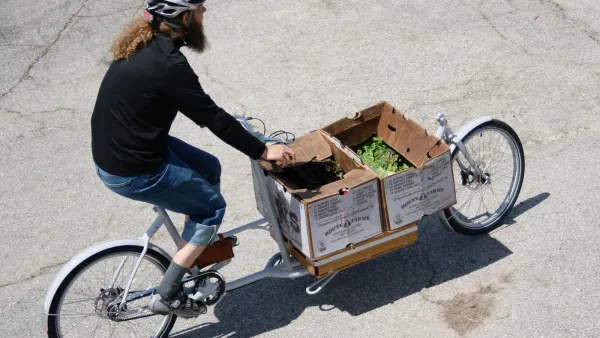
Bicyclists, Not Drivers, are the Better Consumers
Familiar with the perception that bicyclists are generally kids with no money and too much time? Emily Badger discusses the findings of a study that shows riders out-consume drivers over the course of a month for all businesses except grocery stores.
Unlocking Ideas for Re-Purposing America's Prisons
The good news - America is closing its prisons. The bad news - America is closing its prisons. Emily Badger asks how "all these empty, peculiar and often isolated buildings" can be reused.
Re-imagining the Fiscal Architecture of Our Cities
For Michael A. Pagano, local municipalities went awry in designing fiscal systems during the 20th century by fabricating what he refers to as “a crazy quilt of local revenue.” He proposes some possibilities for getting cities back on track.

FREE Course: Walkable City 1: Why Walkability?
After describing his path towards focusing on walkability as the essence of good planning, Jeff Speck marches through his five principal reasons for making more walkable places.
Reinventing Malls: Planning Alchemy—Turning Gray Fields Into Gold
The course focuses on the opportunities and imperatives that shape reinvention of mall sites.

Eagle County Government
Harvard University Graduate School of Design
Nashville Planning Department
The Architects Foundation
University of Cincinnati Online
The Pocatello Development Authority
The Urban Renewal Agency of the City of Pocatello
Journal of the American Planning Association