Urban Development
Defending the Metropolitan Council as Political Support for Regional Planning Wanes
An editorial in the MinnPost supports the regional planning of the Metropolitan Council in the Twin Cities metro area, which has been beset by a string of controversial decisions.
Study Reveals China's Middle Class Obesity Problem
A study titled "Walking, obesity and urban design in Chinese neighborhoods" finds that the population with least access to walkable neighborhoods in China—namely, the middle class, are suffering the worst of the country's growing obesity problem.
Retail Development, Housing Units to Replace San Francisco's NFL Stadium
A new retail center planned for the location of the former home of the San Francisco 49ers will serve as a hub of activity for 12,000 housing units in the planning pipeline over the next ten to 20 years.
Would Soccer Stadium Conflict with Olympic Stadium Plans in South Boston?
The New England Revolution Major League Soccer team would like to leave the cavernous and distant Gillette Stadium, also home to the New England Patriots. Is a location in South Boston, also central to a potential Olympic bid, the best fit?
Arlington County Nixes Streetcar Plans to Chagrin of Fairfax County
A decision by Arlington County to cancel plans for the Columbia Pike and Crystal City streetcar projects has dealt a blow to Fairfax County's redevelopment efforts. The line was expected to open in 2020.
The Human Dimension of the Physical City
In his latest two contributions from the south of France, Chuck Wolfe reminds urbanists of the backdrop of the human dimension of affinity, conversation and daily rituals that stand behind the physical, human scale.

Do Zombie Subdivisions Have a Future?
Alana Semuels writes about the state of the zombie subdivisions scattered around the western United States—a derelict reminder of the high water mark of the last master planned community building boom.
Converting Single Room Occupancy Hotels to Market Rate Apartments
Emily Badger discusses a phenomenon of gentrification in Chicago: former single room occupancy hotels, historically reserved for low-income housing, are being converted into market-rate rentals.

The Undeniable Urbanism of the 'Plot'
According to researchers and practitioners in the United Kingdom, there's still room for another urbanism. Chuck Wolfe digests the recent Summit on Plot-Based Urbanism from Glasgow.

Berliner Kinder: Berlin and its 'Playborhoods'
Are you thinking about playborhoods, playsheds, and free-range kids? Berlin's Kolle 37 hits it out of the park. Literally.
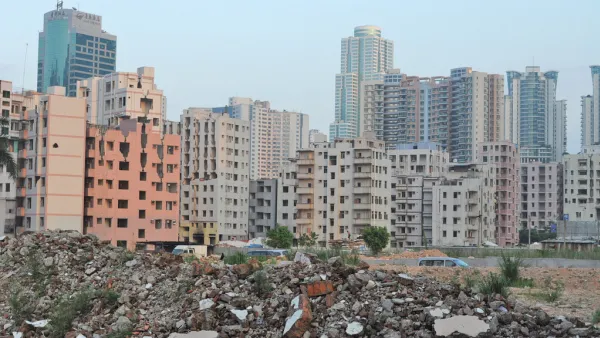
China Filling 'Ghost City' with Rural Farmers
In a bid to urbanize its vast interior, China plans to settle one of its vast pre-built cities with workers unused to city life. Upon arrival, they undergo training to become instant urbanites.
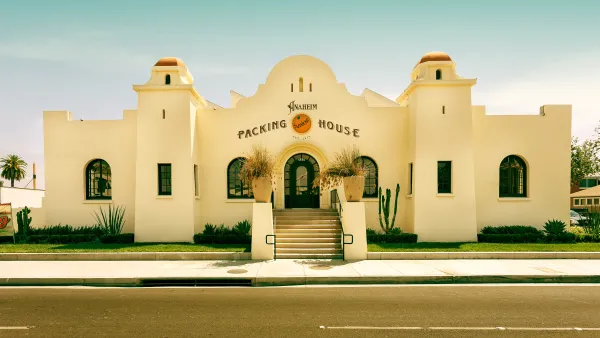
'Foodie Districts' and Downtown Revitalization
Anaheim's packing house signals a new trend with deep roots.
Twin Cities Suburbs Planning for Transit Oriented Development
Local governments along the route Southwest Light Rail line in the suburbs of the Twin Cities are anticipating the route by studying and creating plans to accommodate transit oriented development.
Pittsburgh's Proposed Budget to Shuffle Bureau of Building Inspection
Pittsburgh will attempt to spur economic development and streamline the city's permitting and code enforcement process by reorganizing the Bureau of Building Inspection.
Milwaukee's Lakefront on the Rebound—Condos, Commercial, and a Streetcar
Chris Bentley reports on the developments around Milwaukee's lakefront area, especially in response to a streetcar route proposed in September 2014.
To Keep the Weight Off—Oklahoma City Prioritizes Active Urban Spaces
In 2012, Oklahoma City lost one million pounds by going on a citywide diet. Now it plans to keep the weight off by funding and building a more active, less car-centric city.
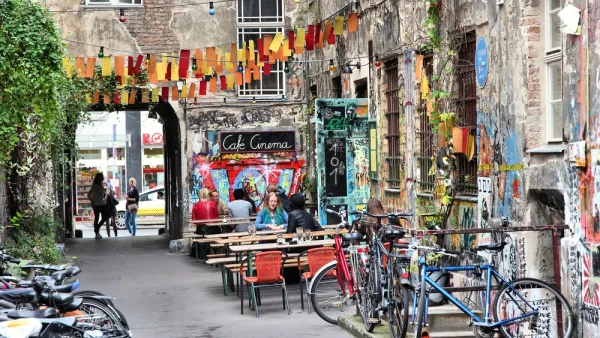
Lessons Learned from Berlin Shopfronts
Susan Henderson looks to Berlin's delectable shopfronts for pointers. Not from the usual suspects like Kurfürstendamm and Friedrichstrasse, but from the neighborhoods of Prenzlaur Berg, Scheunenviertal, Kreuzberg, and of course, Hackeschen Höfe.
San Francisco Voters Increase Height Limits for Waterfront Development
Voters gave Forest City Enterprises' Pier 70 development the go-ahead on Tuesday by increasing height limits from 40 to 90 feet. The 65-acre property will be developed into mixed use, with 2,000 housing units, 30 percent affordable, and open space.
The Rise of Memphis as a Cycling City
In 2009, Memphis was one of the worst cities for cycling, but it quickly reversed its course, becoming the most improved city for cycling according to Bicycling magazine in 2012.

Why Developers Love Parks—the High Line in New York as an Example
The High Line is proving to be a powerful catalyst for development but the same can be true for nearly all parks (less perhaps the starchitect-designed projects near the High Line), explains former Empire State Development Corp VP Carol Berens.

FREE Course: Walkable City 1: Why Walkability?
After describing his path towards focusing on walkability as the essence of good planning, Jeff Speck marches through his five principal reasons for making more walkable places.
Reinventing Malls: Planning Alchemy—Turning Gray Fields Into Gold
The course focuses on the opportunities and imperatives that shape reinvention of mall sites.

Eagle County Government
Harvard University Graduate School of Design
Nashville Planning Department
The Architects Foundation
University of Cincinnati Online
The Pocatello Development Authority
The Urban Renewal Agency of the City of Pocatello
Journal of the American Planning Association