Transportation
New Funding, New Priorities for Georgia Department of Transportation
The Atlanta Journal-Constitution checks in with new leadership at the state's department of transportation.
The Case For and Against Red Light Cameras
Eric Jaffe of CityLab looks at what went wrong with what should have been a clear way to employ technology to reduce crashes and save lives, and what can be done to stem the tide of cities removing red light cameras.
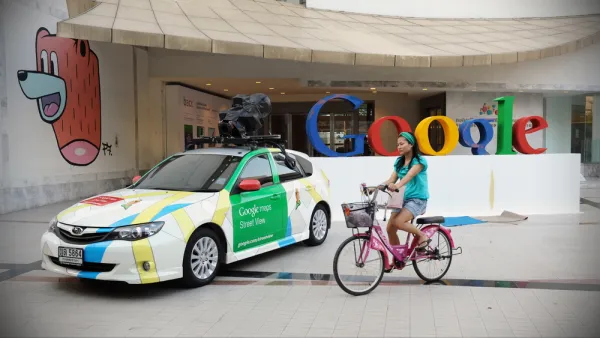
Transportation Apps Designed to Ease the Commute
We all travel, so it's great when a handy new mobile app makes it easier to move around. Whether it is navigating the city, parking, or making our ride safer, there is likely a transportation app for that.

Yes, Urban Millennials Do Drive Less
Proof from the Census Bureau's latest American Community Survey on commuting by auto shows that millennials, if they live in cities, do indeed drive less. Census researcher Brian McKenzie describes the finding in the bureau's blog, Random Samplings.
Is it Time to Rebrand 'Transportation Demand Management'?
As people re-evaluate their transportation decisions, the argument to support transportation demand management might not be what policy makers expected.

Support for Rail Heats Up in Phoenix
A seven-year-old light rail line has beaten ridership projections and transformed neighborhoods in Phoenix. Now, one of the nation's most sprawling cities considers where to expand the system—and how to pay for it.
Bay Area Leads the Nation in Reducing Solo Commuters
According to the Census Bureau's American Community Survey on commuting to work, one subregion in the Bay Area can claim accolades for having achieved the largest drop in solo-commuting from 2006, scoring the third lowest drive-alone rate in 2013.

New Data Sheds Light on Uber's Impact in NYC
Stakeholders are hoping that the 93 million car-for-hire trip records will better inform a heated debate in NYC.
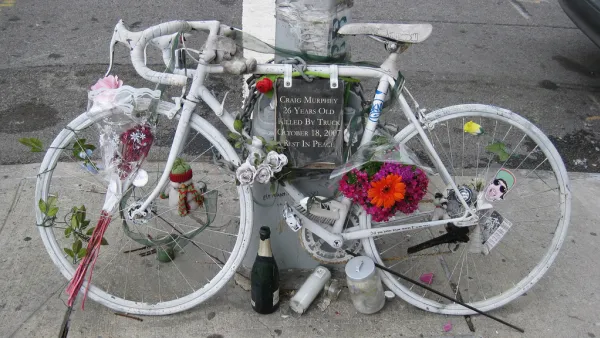
New Study Examines Bicyclist Fatality Data from 1975-2012
There's good and bad news to report from the 37-year study. Good news: Decreased child fatal bike crashes, but it results from fewer children biking. Bad news: Increased adult fatal crashes, but it results from an increase in adult male cyclists.
Connecticut Democratic Leader Quick to Dismiss Road Usage Charge
The senate majority leader made clear that a mileage fee is not in the state's future. Diverting a half cent from the sales tax to the transportation budget took pressure off finding a sustainable solution to the state's transportation funding crisis
Bike and Pedestrian Plan in the Works for the Atlanta Region
With a tradition of bicycle and pedestrian planning dating back to 1973, the Atlanta Regional Commission is currently updating its Regional Bicycle and Pedestrian Plan, with an expected completion date of December 2015.
Small Starts Funding Cut Jeopardizes Critical SMART Train Extension
After a Senate committee slashed the Small Starts grant program, the new Marin-Sonoma "SMART" train may not be extended from San Rafael to the Larkspur ferry landing, a critical link enabling rail commuters to take the ferry to San Francisco.
Buffalo Considering Light Rail Expansion to the Suburbs
As the Niagara Frontier Transportation Authority wraps up a study of expanding into suburban Amherst, support from the community "is stronger than it’s been in decades."
Study: Access to Uber Reduces Drunk Driving Deaths
Researchers have found evidence of one fairly consequential benefit of transportation network companies like Uber.
U.S. Census Releases 2013 Commute Data Goodies
The U.S. Census has released data from 2013 that offer planners the most up-to-date data available about where Americans work and how they commute.
Florida County Commissioners to Vote on Increased Gas Tax
Florida counties have their own gas taxes and can raise them without going to a vote by the people. Due to a road budget shortfall, the Santa Rosa County Commission will vote on August 13 whether to raise the gas tax as much as six cents per gallon.
Designing for Rapid Change and a Cloudy Future
Designing large-scale projects that can take years to build in industries that are constantly evolving run the risk of becoming outdated once completed. Arup's Andrew McAlpine discusses how to design for the long-term while remaining innovative.
Can California Cut Oil Use in Half by 2030?
A bill working its way through the California State Legislature would require the state to reduce petroleum its consumption by half in 15 years. CALmatters, a nonprofit journalism venture, seeks to find out if it is even possible.
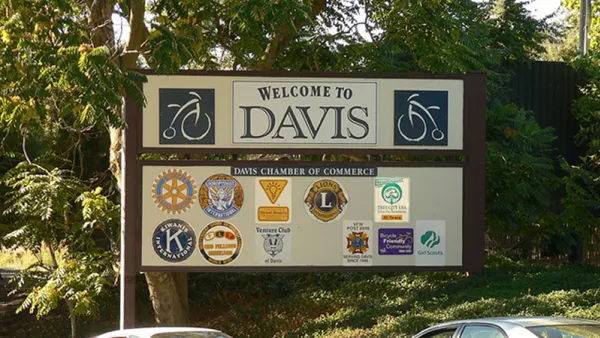
The Protected Intersection for Bicycles Has Arrived
The city of Davis, California, a college town with extremely high commute mode share for bikes, made history last week as the first U.S. city to build a protected intersection for bikes.
The 1989 Roots of Louisiana's Transportation Funding Mess
Incomplete projects proposed in the Transportation Infrastructure Model for Economic Development plan have saddled Louisiana with increasing debt and less money for maintenance.

FREE Course: Walkable City 1: Why Walkability?
After describing his path towards focusing on walkability as the essence of good planning, Jeff Speck marches through his five principal reasons for making more walkable places.
Reinventing Malls: Planning Alchemy—Turning Gray Fields Into Gold
The course focuses on the opportunities and imperatives that shape reinvention of mall sites.

City of Rosemead
Rutgers University, Edward J. Bloustein School of Planning and Public Policy
One Hundred Miles
University of Michigan School for Environment and Sustainability (SEAS)
Hunter College, City University of New York (CUNY)
The Architects Foundation
City of Cambridge
The Pocatello Development Authority
The Urban Renewal Agency of the City of Pocatello









