CDCs
Earned Income Should Not Replace Public Funding for Community Development
Our plan was to seek out community-based organizations trying to back away from developer fees, pursuing recent implications that smaller organizations should consider leaving development work to more efficient, larger ones. We found none.

Seattle Eco-District Fosters Green Development
In a bid to knit sustainability into large-scale community development, Seattle's Capitol Hill EcoDistrict is exploring several avenues toward greener land use.
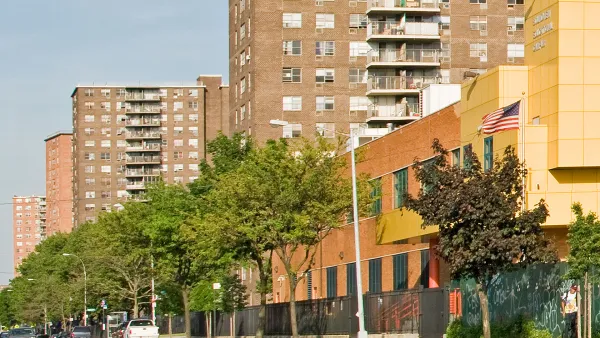
How a Philadelphia Mayoral Candidate Influenced U.S. Public Housing
Former HUD counsel and current Philadelphia mayoral contender Nelson Diaz laid the groundwork for "entrepreneurial" approaches to public housing. Whether the resulting projects were effective is up for debate.
Yes, CDCs Must Do it All
Communities are complex. And the truth is, CDCs are in key positions to bring all the moving parts together, so they must work comprehensively. All the elements of a good neighborhood—schools, retail, housing, jobs, food—are strategic to each other.
It's Not the Size of Your CDC That Matters; It's How You Use It
Patrick Morrissy discusses his experience with HANDS, a small-scale community development corporation that's made a big impact in Orange, N.J. CDCs can stay relevant, he says, not if they go to scale, but if they take risks in a leadership role.
Can Nonprofits Tap Into the $17.5 billion Market in Distressed Mortgages?
The sale of distressed mortgages is far less publicized than talk of the market for foreclosed properties. But these loans are being actively traded—in 2011 this activity included 149,000 loans which translates to roughly $26 billion in trades.
Community Development Corporations Step In Where Business Fear to Tread
With hundreds of billions of dollars in short-term commercial real estate loans underwater, it's safe to say commercial real estate is in trouble. But can community development corporations confront the lending shortfall?
Comeback Cities
Paul Grogan headed LISC for 13 years in the 1980s and 1990s, and it's been 10 years since his influential book, "Comeback Cities", was published. How has Mr. Grogan's "blueprint for urban revival" held up, ten years on?

FREE Course: Walkable City 1: Why Walkability?
After describing his path towards focusing on walkability as the essence of good planning, Jeff Speck marches through his five principal reasons for making more walkable places.
Reinventing Malls: Planning Alchemy—Turning Gray Fields Into Gold
The course focuses on the opportunities and imperatives that shape reinvention of mall sites.

City of Rosemead
Rutgers University, Edward J. Bloustein School of Planning and Public Policy
One Hundred Miles
Hunter College, City University of New York (CUNY)
The Architects Foundation
University of Cincinnati Online
City of Cambridge
Montrose County
The Pocatello Development Authority









