Parks
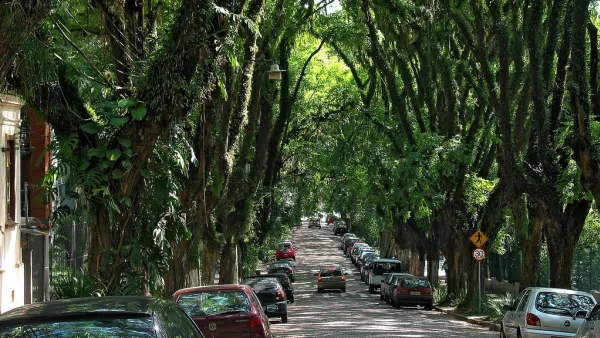
Programmed to Need Urban Nature
Human beings are both born and programmed to need open spaces. As our existence becomes increasingly urban, cities and towns must provide the open spaces our natures require.
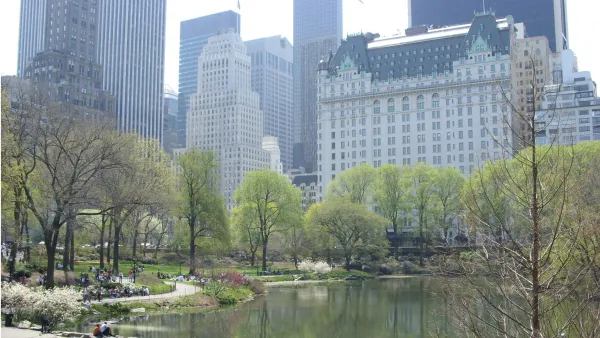
Urban Green Spaces Will Make You Happier than Winning the Lottery
A new study published in the journal Environmental Science and Technology finds that moving to a more-green area can have a long-lasting positive effect on mental health, unlike the short-term jolt from pay rises, promotions or winning the lottery.
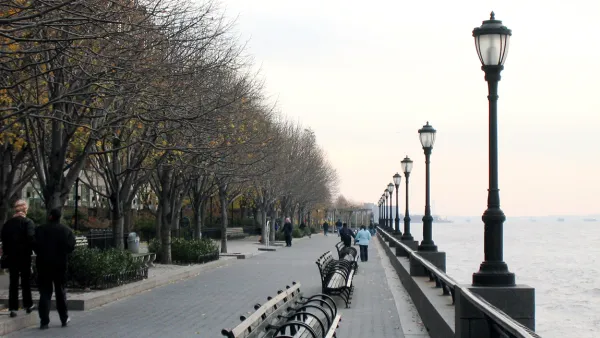
The Evolving Legacy of New York City Park Design
An interview with Thomas Balsley, landscape architect and designer of hundreds of parks and plazas in New York, reveals inside baseball about the evolution of park design, planning, and approvals in the Big Apple.
Big Decisions Looming for Crissy Field in S.F.'s Presidio
Pressure is mounting for a decision regarding the future of Crissy Field, an iconic site in the Presidio of San Francisco currently in the final stages of a design competition.
Lawsuit Aims to Chop Down Proposed Minneapolis Park
A park planned to accompany Minneapolis' new football stadium has raised controversy because of the amount of proposed subsidies. While the details are worked out, planners consider the elements that will ensure its success.
Want to Encourage Exercise? Just Put Up Better Signs
According to a recent Rand Corp. study published in the American Journal of Preventive Medicine, fancy redesigns or new equipment may not be necessary to spark more usage in existing parks. Adding a few signs may do the trick.
ASLA Assembles Reservoir of Resources on Health Benefits of Nature
For years, science has been catching up to the intuitive wisdom that spending time in, or adjacent to, nature has physical and mental health benefits. The ASLA has collected a trove of this research in one easy to navigate website.
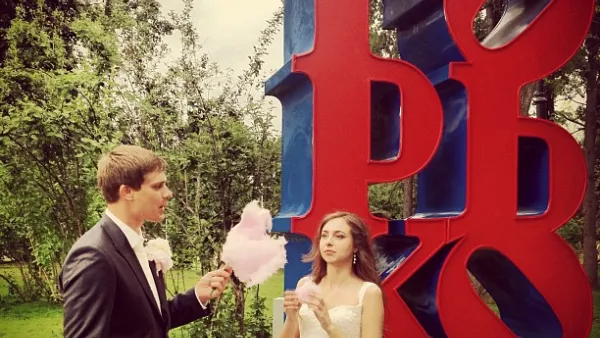
Gorky Park's Transformation from Gritty to Glam
Moscow's Gorky Park, once the rundown backdrop of a murder novel, has experienced a remarkable turnaround. Today, the mayor imagines its recovery as part of his legacy while Muscovites simply see it as the perfect place to play, dine, and relax.
How Moscow Came to Recognize, and Protect, Its Green Spaces
When people think of Moscow, they're unlikely to envision lush green landscapes. But over the last two decades, thanks to a burgeoning environmental movement, the city has rapidly expanded its protected green space.
Are D.C. Planners Missing the Forest for the Trees With Redevelopment Efforts?
Seemingly forgotten in D.C.'s rush to revitalize its once run-down neighborhoods is the allocation of new parks and open space, says Aaron Wiener. Are planners repeating the same mistake in the transitioning Mount Vernon Triangle neighborhood?
Paris Is What People Want; How Can We Make More of It?
Hazel Borys concludes her whirlwind European travelog. This week: a look at the DNA of Paris, and how to replicate it elsewhere.
A Proposal for Reducing New York's Open Space Inequity
With park finances increasingly determined by private fundraising efforts, New York's park system is beginning to reflect the city's growing inequality. Could a Neighborhood Parks Alliance help rebalance the city's park dichotomy?
Chicago’s Top Tourist Attraction to Get Green Makeover
The $176 million Phase I design concept for Navy Pier unveiled last week promises a "parklike" feel along the banks of Lake Michigan.
Take Your Kids to the Park and Leave Them There...Seriously
Apologies for being a little late on this one, but apparently last Saturday was the fourth annual 'Take Our Children to the Park...and Leave Them There Day.' Sounds crazy right? Lenore Skenazy argues why it may be the smartest thing you do all week.
With Parks Investment, Grass Becomes Houston's Green Gold
For a city known for concrete and freeways, Houston has made great strides investing in parks and green spaces. With several new parks completed and in the works, and older ones being renovated, the transformation is garnering national attention.
'We Pay Taxes; Parks Don’t'
Some argue that if something is not directly contributing to our public coffers, why protect it? Perhaps it’s worth broadening our understanding of the services – and tax implications – provided by parks.
Parks: An Antidote to 'Brain Fatigue'
Scientists have long theorized that natural settings can help us manage the stress induced by urban living. New research made possible by advances in EEG technology has confirmed the restorative effects of parks.
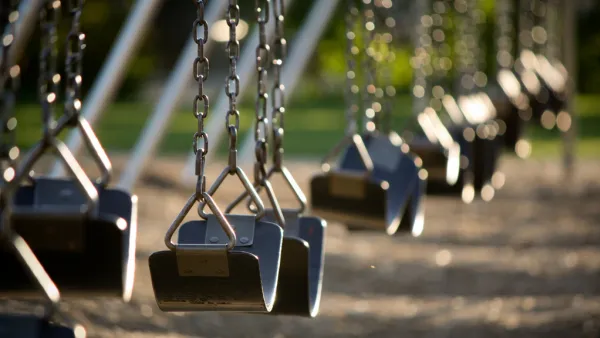
The Prevalence of Play Deserts
A new study analyzing the amenities in 165 parks in the four-county Kansas City metro region found that low-income neighborhoods suffer from a lack of play spaces, despite having more parks per capita, reports Emily Badger.
Parks, in Need of a New Metaphor
Parks have long been likened to "the lungs of the city." But to better capture the totality of parks' role in our urban milieu a more apt metaphor is necessary.
Who Should Pay for Parks?
Philadelphia spends $64 on parks and recreation facilities per resident, one of the lowest totals in the nation. Ryan Briggs uses the city as a lens to examine the growing impact of budget cuts to park systems on their surrounding communities.

FREE Course: Walkable City 1: Why Walkability?
After describing his path towards focusing on walkability as the essence of good planning, Jeff Speck marches through his five principal reasons for making more walkable places.
Reinventing Malls: Planning Alchemy—Turning Gray Fields Into Gold
The course focuses on the opportunities and imperatives that shape reinvention of mall sites.

Greater Baltimore Committee
Eagle County Government
Harvard University Graduate School of Design
The Architects Foundation
University of Cincinnati Online
The Pocatello Development Authority
The Urban Renewal Agency of the City of Pocatello
Journal of the American Planning Association