Seemingly forgotten in D.C.'s rush to revitalize its once run-down neighborhoods is the allocation of new parks and open space, says Aaron Wiener. Are planners repeating the same mistake in the transitioning Mount Vernon Triangle neighborhood?


"When city officials began planning the neighborhood that’s now NoMa in the 1990s, their goal was simple: turn a wasteland into a productive area," says Wiener. "Two decades later, NoMa is mostly a success. Elegant office buildings fill each block, and commercial tenants pay top dollar for a once-unthinkable NoMa address."
"But there’s one thing missing: parks." The city has been forced to rectify the problem by allocating $50 million "to retrofit the neighborhood with parks."
"Bafflingly, just west of NoMa, the same process seems to be repeating itself, this time in Mount Vernon Triangle, the area bounded by New York, Massachusetts, and New Jersey avenues NW," Wiener contends. "With precious little undeveloped land left in the neighborhood that’s not already spoken for," he examines the options for ensuring "a much more attractive—and ultimately valuable—neighborhood."
Read the full story: Parks and Wreck

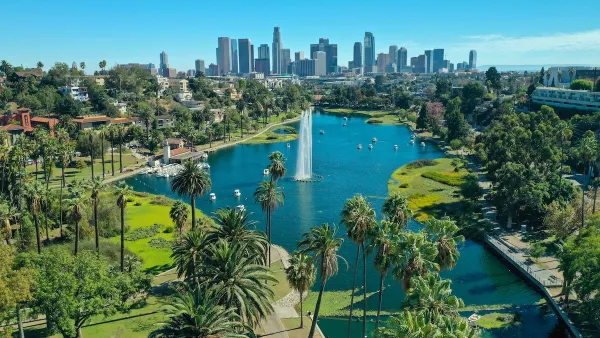
A Historic Investment in LA County’s Parks and Open Spaces
Los Angeles County has launched its largest-ever competitive grant program, investing $58 million to expand park access, enhance climate resilience, and support community-driven projects in the areas that need them most.
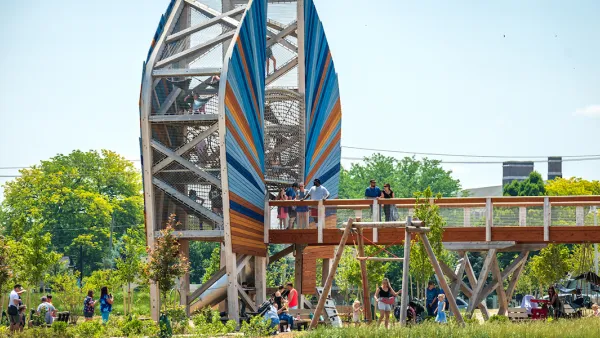
Innovative Park Agencies Receive National Recognition
The National Recreation and Park Association (NRPA) recently announced the recipients of this year’s awards for innovation in health and wellness, equity, conservation, and park design.
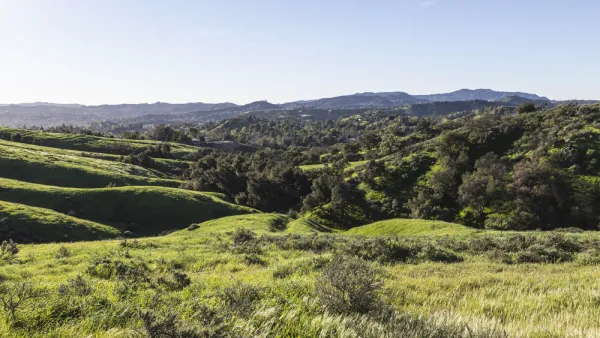
Regenerating and Healing Land Through Parks
Through thoughtful planning and restoration efforts, parks can help heal degraded land, meeting multiple community needs, improving soil quality, restoring native vegetation, and creating habitats for wildlife.

Planetizen Federal Action Tracker
A weekly monitor of how Trump’s orders and actions are impacting planners and planning in America.

California plans to bury El Niño’s downpour
If the state plays its cards right, it may be able to store a billion acre-feet of El Niño’s water in aquifers.

Desperate measures: Advocates weigh draining Lake Powell to fill Colorado River
Draining the reservoir could reduce evaporation losses by a couple hundred thousand acre-feet.

California city breaks ground on transit connector
The project includes three mobility hubs and a pedestrian bridge.

After public outcry, Massachusetts city releases housing development tracker
Cambridge’s tracker currently shows 250 housing projects in various stages of development.

40 years after approval, Chicago breaks ground on new park
The park honors Jean Baptiste Point du Sable, the city’s first permanent non-native settler.

FREE Course: Walkable City 1: Why Walkability?
After describing his path towards focusing on walkability as the essence of good planning, Jeff Speck marches through his five principal reasons for making more walkable places.
Reinventing Malls: Planning Alchemy—Turning Gray Fields Into Gold
The course focuses on the opportunities and imperatives that shape reinvention of mall sites.

City of Rosemead
Rutgers University, Edward J. Bloustein School of Planning and Public Policy
One Hundred Miles
Hunter College, City University of New York (CUNY)
The Architects Foundation
University of Cincinnati Online
City of Cambridge
Montrose County
The Pocatello Development Authority