Social / Demographics
Transit Survey Answers the Who and Why of American Transit Use
A new survey from TransitCenter surveyed 11,846 Americans on their transit use, living environment, upbringing, and personal characteristics.
Portland's Unclear Future as a Young Retirement Community
Portland's over-educated, under-employed population is largely a semi-retired community of young adults, according to some. But with rising housing prices and overall cost of living, it is unclear how Portland will retain these characteristics.

Women on a Mission: The Ovarian Psycos Ride for the Health of their Communities
The first in a series profiling grassroots activism to increase biking among the diverse populations of Los Angeles County. In this installment, we spoke with Karen Díaz, a core member of the Ovarian Psycos bicycle brigade.
On the Virginia Outpost of the Harlem Renaissance
Henry Louis Gates Jr. of Harvard University and The Root tells of the Virginia outpost that helped inspire the artists of the Harlem Renaissance of the 1920s.

Report: Out-Migration Grows in Seattle and Portland
The findings of a new report from United Van Lines along with Michael Stoll, an economist at University of California Los Angeles, show surprising trends from this summer's prime moving months, especially in the Pacific Northwest.
New Orleans Innovations Reduce Violent Deaths
Thanks to data-driven innovations funded with a $4.2 million grant in 2011 from the Bloomberg Philanthropies, New Orleans dropped its murder rate by 20 percent between 2012 and 2013.
What's Missing for Capital Bikeshare?
In a recent piece, Kristine Johnston reviews Washington D.C.'s Capital Bikeshare program and its accessibility for low-income, non-white populations.
America's Growing Data Divide
The opportunities from data-driven innovations are wide, but many communities experiencing the data divide are without access to or reporting of high-quality data, furthering them from these benefits.
Crowdsourced App Finds Playgrounds for All Children
A new application, "Playgrounds for Everyone," has a growing database of 2505 inclusive and accessible playgrounds around the country suitable for children with special needs.
The Important Role of Front Porches in Latino Communities
James Rojas explains the importance of front porches in Latino-American communities.

Playable Cities Bring the Fun Back to City Life
Supporters and practitioners of the playable city movement will gather this week at a conference in Bristol, UK called Making the City Playable.

Mapping the Shrinking Neighborhoods of Chicago
Daniel Kay Hertz shares a map tracking the population of neighborhoods in Chicago since 1950, providing insights into how the city has changed.
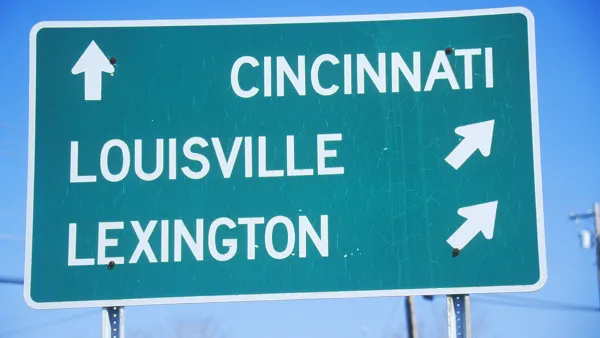
Cincinnati's Unique, Recession-Era Gentrification
A new study examines gentrification (measured by relative income) at the neighborhoods, revealing the unique case of Cincinnati, which increased wealth faster during the recession than it did during the preceding boom.
You’ve Got Lemons: What Now?
A timeless marker of community has emerged as a source of conflict: the lemonade stand is being called an "illegal business." Scott Doyon discusses how getting to know — and support! — your neighbor can be an issue of survival.
Census Releases Data on County-to-County Migration
A new data set released this week by the U.S. Census is helpful for determining patterns of migration during the recession-troubled years of 2008-2012.
Still They Ride
A forthcoming film documents the tribulations and Olympic ambitions of the Afghani women's national cycling team, who face ridicule and harassment for riding in the public.
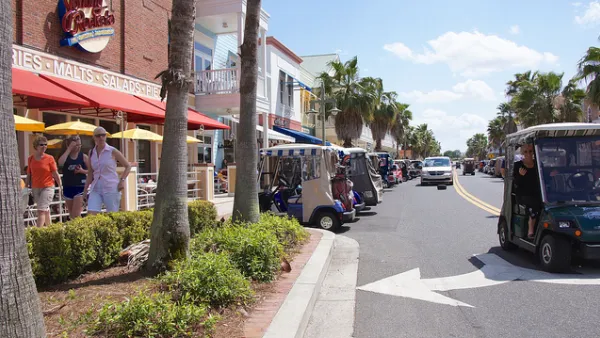
The Fastest Growing Small Cities In America
Joel Kotkin explores the small cities that are growing the fastest in the United States, and what factors lead to this growth.
Qualitative Study of Gentrification in Fort Collins, Colorado Neighborhood
Stanford researcher Clayton Hurd is studying the Tres Colonias, an overarching name for three neighborhoods in Fort Collins, Colorado, with dwindling numbers of Hispanic homeowners facing mounting gentrification pressures.
Is Living in New York City a Consumption Choice?
To what degree are people's location decisions dictated by their consumer preferences? Jordan Weissmann of Slate Magazine discusses whether living in an expensive city like New York City is a consumption choice.
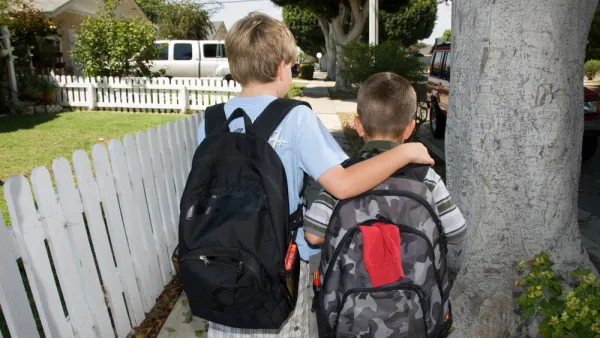
Let Our Children Walk
Many Americans believe children should not be free to walk alone, because of crime and traffic. But children constantly driven around by their parents or locked away at home are also subject to significant risks.

FREE Course: Walkable City 1: Why Walkability?
After describing his path towards focusing on walkability as the essence of good planning, Jeff Speck marches through his five principal reasons for making more walkable places.
Reinventing Malls: Planning Alchemy—Turning Gray Fields Into Gold
The course focuses on the opportunities and imperatives that shape reinvention of mall sites.

City of Charlotte
City of Rosemead
Rutgers University, Edward J. Bloustein School of Planning and Public Policy
University of Michigan School for Environment and Sustainability (SEAS)
Hunter College, City University of New York (CUNY)
The Architects Foundation
University District Partnership









