In post-bankruptcy Detroit, planner Maurice Cox and his interdisciplinary team are making vacancy an asset, revitalizing through preservation, and listening to residents who know the city the best.



Maurice Cox grew up in Brooklyn, a borough whose name has since become a global shorthand for gentrification. An urban designer, architectural educator, and former mayor of the City of Charlottesville, VA, in 2015 Cox became head of the planning department of Detroit, where he hopes to prevent the forces that have reshaped his childhood home from taking over the Motor City. The city’s population peaked at 1.8 million, but has less than half as many residents today; Cox is using design to catalyze growth that’s incremental and closely in line with the city’s strong sense of self. This means making the most of an abundance of vacant land and listening closely to what residents have to say. Below, Cox speaks with Marc Norman about plans and projects underway, preserving Black spaces, and how Detroit might serve as a model for other cities in the 21st century.
Read the full story: Growing in the Gaps

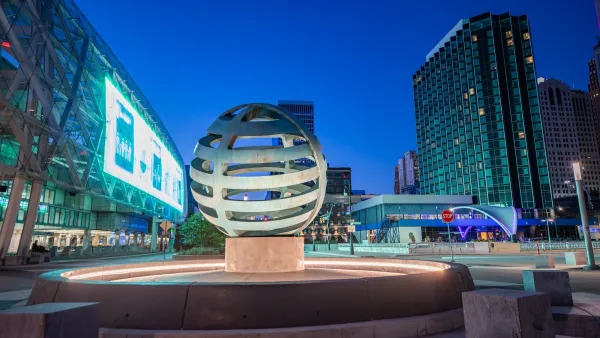
APA conference draws 4,000 urban planners to Detroit this weekend
The annual conference brings together planners for a weekend of panels, discussions and tours.
Could Detroit Rise Again?
Detroit has become our most notorious story of urban collapse. But reporter Matthew Power suggests that we consider the city's official motto: "It shall rise from the ashes."

Evidence-based planning in a time of information overload
The field of academic publishing has become complex and crowded. What does it mean for urban planners?

Planetizen Federal Action Tracker
A weekly monitor of how Trump’s orders and actions are impacting planners and planning in America.

Northwest rail fans eager for Sept. 30 debut of Amtrak’s Airo fleet
Get ready for that new train smell and more seats. But they won’t go faster or run more frequently on the Cascades route in Washington and Oregon.
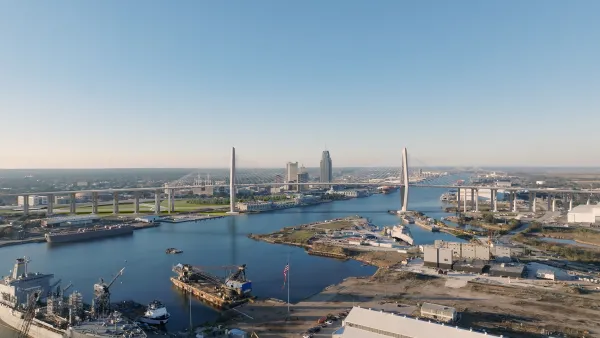
Alabama scores up to $2.5 billion federal loan for largest infrastructure project in state’s history
The Mobile River Bridge and Bayway Project aims to ease congestion at Alabama’s worst bottleneck.

Novel study finds extreme state-by-state disparity in housing construction timelines
The first comprehensive working paper on U.S. construction timelines also found that the permitting process for multi-family projects has slowed nationwide.

California may destroy its beaches trying to save homes from El Niño
Boulders and seawalls can protect homes from waves, but ultimately destroy sandy beaches.

California high-speed rail accomplishes only one legislative goal in 2026
The majority of the agency's failed pitches were never developed into written proposals.

FREE Course: Walkable City 1: Why Walkability?
After describing his path towards focusing on walkability as the essence of good planning, Jeff Speck marches through his five principal reasons for making more walkable places.
Reinventing Malls: Planning Alchemy—Turning Gray Fields Into Gold
The course focuses on the opportunities and imperatives that shape reinvention of mall sites.

City of Thousand Oaks
City of Wisconsin Rapids
Harvard University Graduate School of Design
The Architects Foundation
University of Cincinnati Online
Northern Illinois Transit Authority (NITA)
The Pocatello Development Authority
The Urban Renewal Agency of the City of Pocatello