Total on-site energy use in U.S. homes declined between 2009 and 2015, thanks to new new building technology and warmer winters.



Elizabeth La Jeunesse reports: "Although the number of U.S. households increased by about 4 percent between 2009 and 2015, total on-site energy usage in occupied U.S. homes declined by more than 10 percent, according to our analyses of survey results recently released by the U.S. Energy Information Administration (EIA)."
"Overall, while total households increased from 113.6 million in 2009 to 118.2 million in 2015, total site energy use by those households dropped by more than a quadrillion Btu, even as consumption increased among non-residential uses. As a result, the residential sector’s share of total U.S. energy consumption dropped from 22.4 percent in 2009 to 21.1 percent in 2015," adds La Jeunesse.
The article digs further into the data from the EIA, finding larger energy reductions in the multi-family housing sector, and breaking down reductions by the age of the building stock. The article also includes information about why and how energy use declined.
FULL STORY: U.S. HOUSEHOLDS ARE USING LESS ENERGY


How Smart Street Lights Can Help Cities Achieve Sustainability Goals
Switching to energy-efficient LEDs and using tech to program when and how street lighting operates can save cities millions in electricity expenses and bring down carbon emissions.
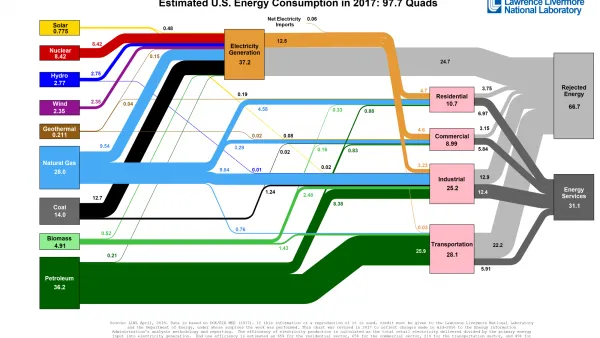
Infographic: Track the Flow of Energy in the United States
The Lawrence Livermore National Laboratory has a collection of infographics illustrating the use and waste of energy in the county and in specific states by year.

Self-Driving Cars Hog Power
Self-driving cars process a tremendous amount of data to pilot themselves through crowded streets. That computing power needs electricity, and lots of it.

Planetizen Federal Action Tracker
A weekly monitor of how Trump’s orders and actions are impacting planners and planning in America.

The state-sanctioned urbicide of Austin
People don’t kill cities. Freeways do.

US to reduce Colorado River water deliveries to Mexico
A new Colorado Treaty amendment reduces Mexico’s Colorado River water allocation by 250,000 acre feet.

5 New England states march closer to 800 megawatt wind energy project
Securing federal approval for the project may be complicated under the Trump administration, which has historically been hostile towards domestic wind power.

Baltimore to break ground on $50 million Transit Priority Project
The project will bring faster bus trips, safer streets and better bike connections to Baltimore.

Airbnb launches $250 million 'last-dollar financing' housing accelerator, makes first investment in Austin
The company will put $6.4 million towards affordable housing development in Texas’ capital.

FREE Course: Walkable City 1: Why Walkability?
After describing his path towards focusing on walkability as the essence of good planning, Jeff Speck marches through his five principal reasons for making more walkable places.
Reinventing Malls: Planning Alchemy—Turning Gray Fields Into Gold
The course focuses on the opportunities and imperatives that shape reinvention of mall sites.

Eagle County Government
Harvard University Graduate School of Design
Nashville Planning Department
The Architects Foundation
University of Cincinnati Online
The Pocatello Development Authority
The Urban Renewal Agency of the City of Pocatello
Journal of the American Planning Association