Alex Baca says following Houston's lead could lead the Greater Cleveland Regional Transit Authority out of a budget and ridership spiral.


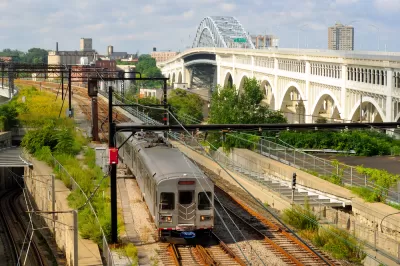
The Greater Cleveland Regional Transit Authority (GCRTA) has a $20 million hole in its budget, resulting from the federal government's July 2017 elimination of the Medicaid managed care organization tax. The GCRTA finished 2017 with $24 million more than expected, but transit service cuts and fare increases are coming eventually.
An article by Alex Baca searches for a path forward for Cleveland, and finds a model in Houston, where transit planners and officials responded to a crisis of reduced ridership and funding by implementing a systematic overhaul.
With Cleveland faced with the likely task of going to the voters of Cuyahoga County, and Baca argues that the GCRTA will need a dynamic vision for the future of the region's transit systems.
"When a region believes in its transit system and creates excitement about its potential, good things can happen. GCRTA must realize its power and stand for something larger than its own survival," writes Baca. "Doing so will help it through the gauntlet of voter approval." Moreover, a "Houston-style re-evaluation of the system’s pluses and minuses" will be attractive to both riders and voters, according to Baca.
Read the full story: Road Warriors

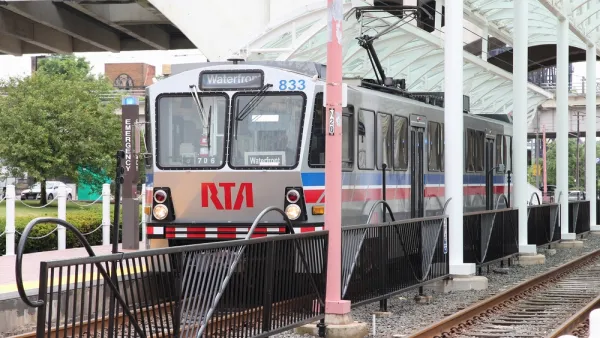
Funding Shortfalls Result in Service Cuts for Cleveland's Regional Transit Authority
A $20 million hole in the Greater Cleveland Regional Transit Authority's (RTA) budget means 15 bus lines around the city will run less frequently. More cuts are soon to come.
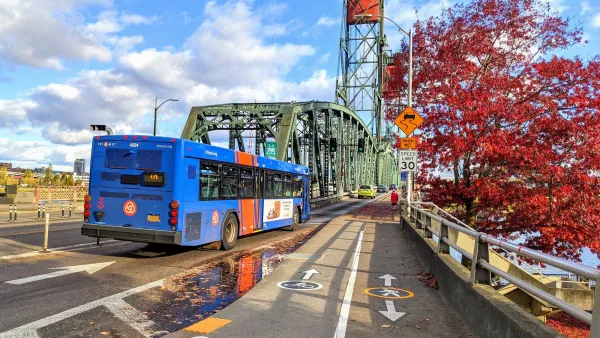
Trimet Slashes Bus Service in First of Three Rounds of Cuts
Oregon’s largest transit agency plans to cut 10% of its services in the next year.
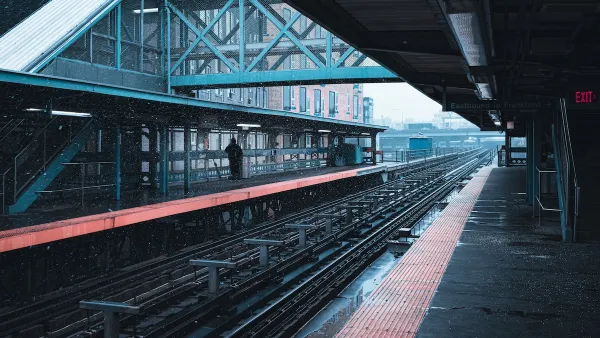
SEPTA to Cut 1/5 of Service Starting Aug 24
The Philadelphia transit agency is eliminating 32 bus lines and slashing service on dozens of others after the state legislature failed to come to an agreement over funding.

Planetizen Federal Action Tracker
A weekly monitor of how Trump’s orders and actions are impacting planners and planning in America.

The state-sanctioned urbicide of Austin
People don’t kill cities. Freeways do.

US to reduce Colorado River water deliveries to Mexico
A new Colorado Treaty amendment reduces Mexico’s Colorado River water allocation by 250,000 acre feet.

Nation's most wind-powered state turns to coal as data centers increase energy demand
For the first time in decades, Iowa has increased its generation of coal power.

NYC cools commuters with city's first rain garden above a bus stop
New York City officials say the plants in the rain garden can absorb 16 gallons of rainwater during heavy storms.

Brightline West’s future may rely on $6 billion federal loan
The company has until Nov. 2 to make a $400 million equity investment into its proposed high-speed rail line.

FREE Course: Walkable City 1: Why Walkability?
After describing his path towards focusing on walkability as the essence of good planning, Jeff Speck marches through his five principal reasons for making more walkable places.
Reinventing Malls: Planning Alchemy—Turning Gray Fields Into Gold
The course focuses on the opportunities and imperatives that shape reinvention of mall sites.

Eagle County Government
Harvard University Graduate School of Design
Nashville Planning Department
The Architects Foundation
University of Cincinnati Online
The Pocatello Development Authority
The Urban Renewal Agency of the City of Pocatello
Journal of the American Planning Association