Oregon’s largest transit agency plans to cut 10% of its services in the next year.


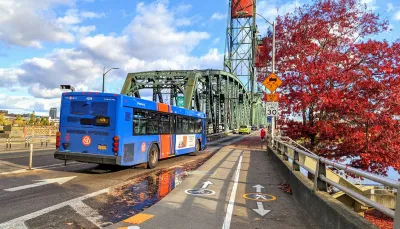
The Portland area’s TriMet transit system, Oregon’s largest, began service cuts last weekend as part of a plan to cut costs. As Lillian Karabaic reports for OPB, “The immediate schedule change will reduce frequency on five bus lines after 7 p.m., when passenger loads are at their lowest.”
The cuts are part of a planned 10 percent reduction in service over the next two years. “Four additional bus lines will reduce service frequency in March, and even more cuts are planned later in 2026.”
According to Tia York, TriMet’s manager of media relations, the cost of providing one hour of bus service has risen by 53 percent in the last few years. “The service reductions are one strategy the agency is using to bridge its $300 million budget gap over the next two years.”
TriMet is also considering raising fares in 2028. The agency issued a public survey asking riders to rank potential cost-saving measures, but York says “We may have to do everything that was on that survey.”
FULL STORY: TriMet’s first service cuts begin Sunday as $300M budget gap looms

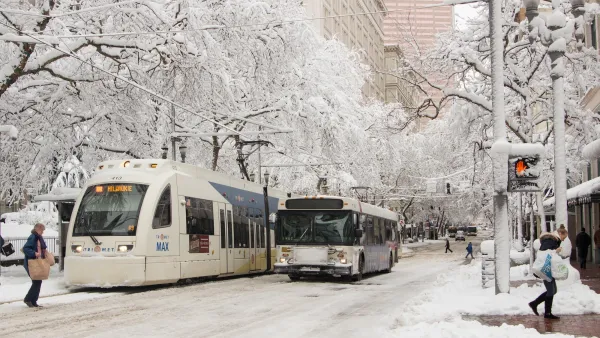
Portland Transit is About to Get a Lot Worse
TriMet is making multiple rounds of service cuts this year as the agency faces a $300 million budget shortfall.
Portland Transit Agency Announces Planned Service Cuts
TriMet says the state legislature’s failure to pass a bill that would have funded transit means it will have to make significant service cuts over the next several years.
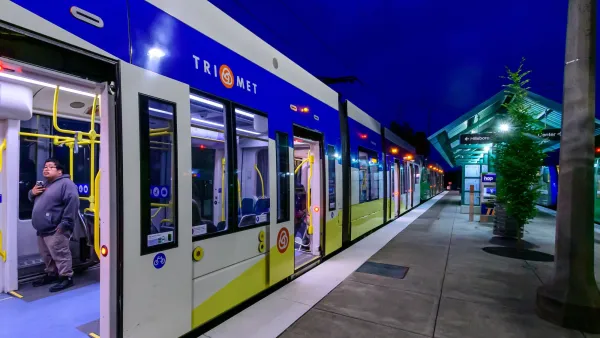
Portland transit announces deep service cuts, hundreds of layoffs
The TriMet agency is cutting service on multiple transit lines, reducing customer service phone hours and eliminating over 100 staff positions.

Planetizen Federal Action Tracker
A weekly monitor of how Trump’s orders and actions are impacting planners and planning in America.

The state-sanctioned urbicide of Austin
People don’t kill cities. Freeways do.

US to reduce Colorado River water deliveries to Mexico
A new Colorado Treaty amendment reduces Mexico’s Colorado River water allocation by 250,000 acre feet.

Baltimore to break ground on $50 million Transit Priority Project
The project will bring faster bus trips, safer streets and better bike connections to Baltimore.

Airbnb launches $250 million 'last-dollar financing' housing accelerator, makes first investment in Austin
The company will put $6.4 million towards affordable housing development in Texas’ capital.

Guerilla urbanists are building DIY bus stop benches in Chicago
A before-and-after of one of the bus stops with a new bench. The new benches are not officially sanctioned or permitted, but the residents who placed them hope they will be the start of a network of DIY benches across the city.

FREE Course: Walkable City 1: Why Walkability?
After describing his path towards focusing on walkability as the essence of good planning, Jeff Speck marches through his five principal reasons for making more walkable places.
Reinventing Malls: Planning Alchemy—Turning Gray Fields Into Gold
The course focuses on the opportunities and imperatives that shape reinvention of mall sites.

Eagle County Government
Harvard University Graduate School of Design
Nashville Planning Department
The Architects Foundation
University of Cincinnati Online
The Pocatello Development Authority
The Urban Renewal Agency of the City of Pocatello
Journal of the American Planning Association