The pundits got it wrong.


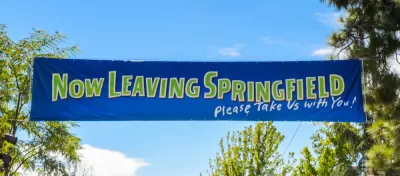
Since Amazon announced its request for proposals for a new second location, handicapping the behemoth corporation's final choice has been almost a cottage industry for many urbanists.
The victor in this contest was promised economic development spoils like a $5 billion construction project, a highly-taxable employment base of 50,000, and a chance for politicians to fast-lane legacy infrastructure projects without it looking too much like a corporate giveaway.
When Amazon CEO Jeff Bezos took to the podium at a press conference held in Seattle to make the long-awaited announcement, the stakes were high. The choice would be made from one of three finalists: Quahog, Springfield, and South Park. When it came time to make the announcement, Bezos got straight to the point, before going on a bit of a tangent. Here's his full statement.
We will be opening Amazon's second headquarters in Springfield. We chose this location for to its metaphorical powers, with its long history of representing all that is troubled and redeeming about middle America, its access to a reliable energy source, and a talented workforce that seems to never get caught napping. I would also like to personally thank Mr. Montgomery Burns for the special attention and the scalp maintenance tips.
It's not at all weird that you've been so interested in which city we might pick for the second headquarters of a company with relatively short history in an industry with massive turnover, but here were are nevertheless. I appreciate how many cities have given me the the password to the Citibank app with connection to their General Fund to help me make my choice. Everyone being so no nice to me for so many months really made this process worth it. It was very difficult to cut down the list of finalists to three, but this final choice was even harder, because I don't want my friends in Quahog and South Park to stop texting the deets for our Bachelor viewing parties on Mondays.
To the residents of Quahog and South Park, I solemnly say, this isn't about you; this is about me. I hope we'll still be friends.
Read the full story: April Fool's Day


Watch Saturday Night Live's Hilarious Take on Amazon's HQ2 Decision
Saturday Night Love comes up with a novel hot take on the thinking behind Amazon's decision to split its new second headquarters between New York City and Northern Virginia.
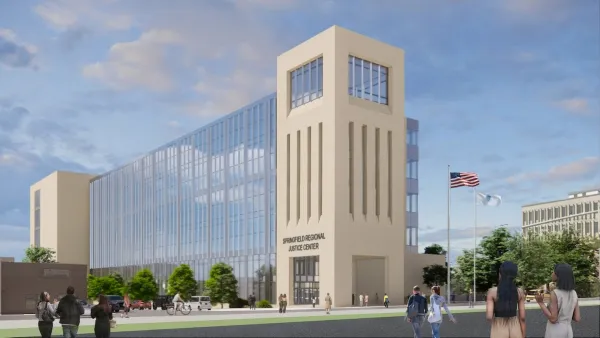
Planned $2 billion courthouse in MA sparks tension with local government
Springfield owns an essential piece of the land developers intend to build on, and some city officials do not want to see the project come to fruition.

Missouri Tenants Sue Housing Owners Over Tax Credit Program
In Springfield, Missouri, organized tenants have filed a lawsuit against the past and present owners of their tax credit–financed properties, claiming that in exercising an opt-out provision they violated both state and federal requirements.

Planetizen Federal Action Tracker
A weekly monitor of how Trump’s orders and actions are impacting planners and planning in America.

California plans to bury El Niño’s downpour
If the state plays its cards right, it may be able to store a billion acre-feet of El Niño’s water in aquifers.

Desperate measures: Advocates weigh draining Lake Powell to fill Colorado River
Draining the reservoir could reduce evaporation losses by a couple hundred thousand acre-feet.

Chicago Avenue bridge construction delays enrages city leaders
The bridge has been closed since 2025. The city originally aimed to re-open it in December, and now expects to finish construction in 2027.

NYC bus network redesign speeds up Queens buses
Rush routes have seen a 4.6% speed increase after the redesign.

California High-Speed Rail Authority picks trainset manufacturer
The California High-Speed Rail Authority aims to start servicing passengers by 2033.

FREE Course: Walkable City 1: Why Walkability?
After describing his path towards focusing on walkability as the essence of good planning, Jeff Speck marches through his five principal reasons for making more walkable places.
Reinventing Malls: Planning Alchemy—Turning Gray Fields Into Gold
The course focuses on the opportunities and imperatives that shape reinvention of mall sites.

City of Rosemead
Rutgers University, Edward J. Bloustein School of Planning and Public Policy
One Hundred Miles
Hunter College, City University of New York (CUNY)
The Architects Foundation
University of Cincinnati Online
City of Cambridge
Montrose County
The Pocatello Development Authority