White flight gets described as a symptom of the racism of the mid- to late-20th century, but a new study finds evidence that it's still rampant and suggests that it's a sign of contemporary prejudice.



A new study that examines residential segregation in America's suburbs concludes that white flight is still very much a fact of life.
"Whites continue to leave neighborhoods with significant levels of non-white residential growth," writes Indiana University sociologist Samuel Kye in the study, published in the Social Science Research journal.
Tom Jacobs shares news of the new study in an article for Pacific Standard, describing the study's findings as follows:
Of the 27,891 Census tracts he looked at, 3,252 experienced "white flight," which [Kye] defines as a neighborhood losing at least 25 percent of its white population between 2000 and 2010. These tracts experienced "an average magnitude loss of 40 percent of the original white population."
Read the full story: 'White Flight' Remains a Reality

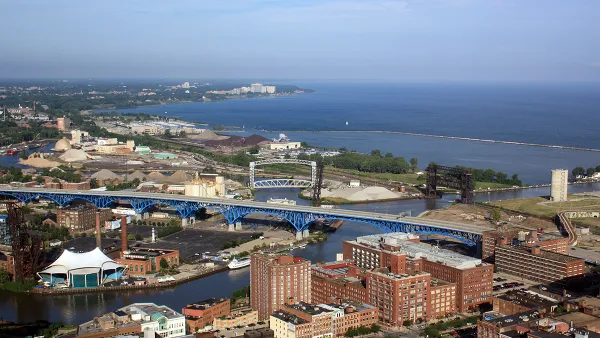
Cleveland Has Yet to Recover From the Last Recession
Decades of racist policy and a lack of critical resources have left Cleveland in a perpetual state of economic fragility. The city can't afford another recession.
Florida a Dangerous Place for Black Pedestrians
In the state that’s the most deadly for pedestrians, black pedestrians are 72% more likely to be the victims of a car crash than whites.
White Flight Continues From Ethnoburbs Around the Country
As affluent whites have returned to more urban areas, some might think that white flight is a relic of the 20th century, but overwhelming evidence shows that white flight continues, just in a different place and time.

Planetizen Federal Action Tracker
A weekly monitor of how Trump’s orders and actions are impacting planners and planning in America.

Amtrak, CN end decades-long dispute with eight-year agreement
The new operating agreement establishes an updated framework for the companies to work together, including processes to resolve disputes.

Northwest rail fans eager for Sept. 30 debut of Amtrak’s Airo fleet
Get ready for that new train smell and more seats. But they won’t go faster or run more frequently on the Cascades route in Washington and Oregon.

St. Louis Metro to test if single-car trains can reduce operating costs, maintain rider satisfaction
The pilot program will run from October to spring 2027, and begin with one single-car train operating on Metrolink’s Red and Blue lines.

Pennsylvania is building data centers in abandoned mines
Housing data centers in mines provides an alternative to destroying local forests and may spare residents from data centers’ noise and air pollution.

If Corpus Christi can’t revive desalination plant project, it may owe Texas $235 million
Earlier this month, city officials declined to pursue developing the plant for the second time in a year.

FREE Course: Walkable City 1: Why Walkability?
After describing his path towards focusing on walkability as the essence of good planning, Jeff Speck marches through his five principal reasons for making more walkable places.
Reinventing Malls: Planning Alchemy—Turning Gray Fields Into Gold
The course focuses on the opportunities and imperatives that shape reinvention of mall sites.

City of Thousand Oaks
City of Wisconsin Rapids
Harvard University Graduate School of Design
The Architects Foundation
University of Cincinnati Online
The Pocatello Development Authority
The Urban Renewal Agency of the City of Pocatello