After passing both houses of state government, a "free range kids" law to allow children to walk to school and play outside unsupervised is headed to the governor's office in Utah.


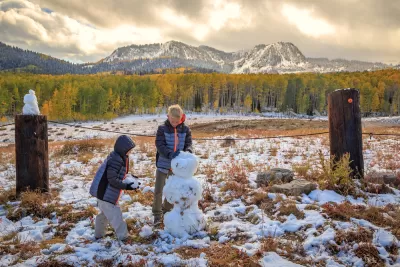
A new law in Utah could free parents from the responsibility of keeping their children under 24-hour surveillance. The "Free Range Kids Law" would give parents the right to allow children to play outside or walk to school unsupervised.
This may seem to be an unnecessary law to those who don't follow parenting trends, but punishments can be severe for moms and dads who allow their children to exercise independence. "South Carolina mom Debra Harrell thrown in jail for letting her 9-year-old play at the park while she worked at McDonald's; the Meitivs of Maryland investigated twice for letting their 10 and 6-year-olds walk home from the playground; Maria Hasankolli handcuffed for oversleeping while her 8-year-old stepson missed the bus and walked himself to school," Lenore Skenazy writes for USA Today.
Arkansas considered a similar bill, but the legislation did not make it out of the State Legislature to the governor's desk.
Read the full story: Free-range kids: Finally, one state lets kids grow up without helicopter parents

Playgrounds Pop Up in New York
Neighborhoods in New York City have built temporary "pop-up" playgrounds in an effort to encourage more physical activity among children.
The New Way to Play
New playground designs are shaking up public parks around the world. So long, slides, hello interpretive playscapes.

Nevada sues feds to block Colorado River cuts
The federal government’s newly released plan for managing the Colorado River’s dwindling water supply could cause Nevada to lose over 70% of its allocated water.

Planetizen Federal Action Tracker
A weekly monitor of how Trump’s orders and actions are impacting planners and planning in America.

California plans to bury El Niño’s downpour
If the state plays its cards right, it may be able to store a billion acre-feet of El Niño’s water in aquifers.

Desperate measures: Advocates weigh draining Lake Powell to fill Colorado River
Draining the reservoir could reduce evaporation losses by a couple hundred thousand acre-feet.

California city breaks ground on transit connector
The project includes three mobility hubs and a pedestrian bridge.

After public outcry, Massachusetts city releases housing development tracker
Cambridge’s tracker currently shows 250 housing projects in various stages of development.

40 years after approval, Chicago breaks ground on new park
The park honors Jean Baptiste Point du Sable, the city’s first permanent non-native settler.

FREE Course: Walkable City 1: Why Walkability?
After describing his path towards focusing on walkability as the essence of good planning, Jeff Speck marches through his five principal reasons for making more walkable places.
Reinventing Malls: Planning Alchemy—Turning Gray Fields Into Gold
The course focuses on the opportunities and imperatives that shape reinvention of mall sites.

City of Rosemead
Rutgers University, Edward J. Bloustein School of Planning and Public Policy
One Hundred Miles
Hunter College, City University of New York (CUNY)
The Architects Foundation
University of Cincinnati Online
City of Cambridge
Montrose County
The Pocatello Development Authority