One of the biggest obstacles to retrofitting suburbia with more walkable environments is passionate local opposition to change.


A collection of Greater Greater Washington contributors gathered online to discuss ideas for walkability in suburban settings to commemorate the release of a new book, Suburban Remix, by Jason Beske and David Dixon.
The discussion focuses on Prince George's County, specifically about the difficulties of overcoming voal local opponents to change. The discussion ranges from framing the conversation about development in terms of safety, focusing on areas where change is possible (potentially by taking other areas out of the redevelopment discussion), finding middle ground, zoning, and historic preservation.
Read the full story: Can transforming suburban places to walkable urban ones be successful and popular?

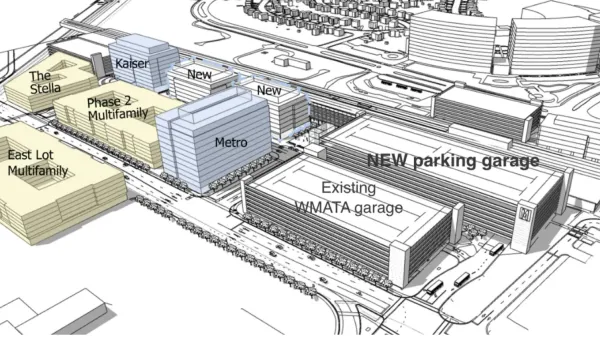
A New Transit-Oriented Downtown for New Carrollton, Maryland
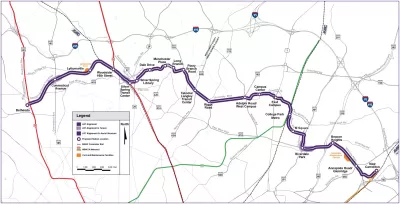
The New Carrollton transit station will add Purple Line light rail to its multi-modal mix; planners at the Washington Metropolitan Area Transit Authority (Metro) hope to leverage the new transit for new land use and development around the station.
Is Atlanta's Shift to Infill Development the Canary in the Sprawl Coal Mine?
A new study indicates that one of America's poster children for auto-centric development has a made a significant u-turn. Since 2009, the majority of Atlanta's new commercial and rental housing has been built in "walkable urban places".
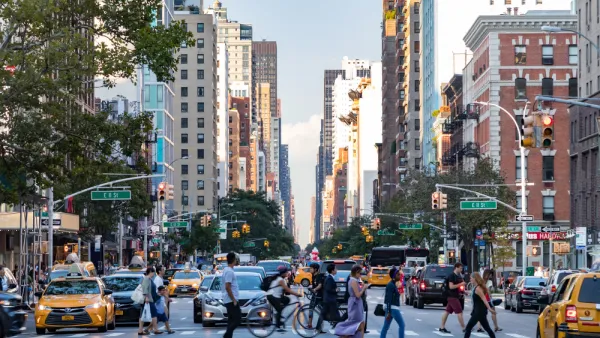
Foot Traffic Ahead: Report Reveals the Resilience of Walkable Places
Reports of the city’s death have been greatly exaggerated, according to new research from Smart Growth America.

Planetizen Federal Action Tracker
A weekly monitor of how Trump’s orders and actions are impacting planners and planning in America.

‘Going backwards:’ Baltimore mayor, students rally against state's transit funding plan
Maryland's proposed six-year plan provides no funding for Baltimore’s BMORE bus program and reduces its road maintenance funding.

Detroit to transform waterfront with $2.2 billion investment
Developers will convert about 18 acres of unused parking lot space into civic spaces.

Planned $2 billion courthouse in MA sparks tension with local government
Springfield owns an essential piece of the land developers intend to build on, and some city officials do not want to see the project come to fruition.

Californians can now transform balconies into power generators
Gov. Gavin Newsom has legalized plug-in solar technology, which allows residents to plug solar panels directly into their outlets

This 85-year-old ranch is Texas’ newest state park
The 650 acre ranch is one of the largest parcels of land along Lake Palestine.

FREE Course: Walkable City 1: Why Walkability?
After describing his path towards focusing on walkability as the essence of good planning, Jeff Speck marches through his five principal reasons for making more walkable places.
Reinventing Malls: Planning Alchemy—Turning Gray Fields Into Gold
The course focuses on the opportunities and imperatives that shape reinvention of mall sites.

City of Thousand Oaks
City of Wisconsin Rapids
Harvard University Graduate School of Design
The Architects Foundation
University of Cincinnati Online
Northern Illinois Transit Authority (NITA)
The Pocatello Development Authority
The Urban Renewal Agency of the City of Pocatello