A bill that would cut back on the feed-in tariffs paid by utilities to solar panel owners in Kentucky.


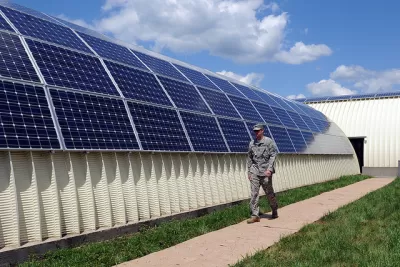
"Kentucky's urban-rural divide surfaced during a legislative committee's final discussion about a controversial solar energy bill Thursday before it was narrowly passed with three new members added to the panel," reports James Bruggers.
House Bill 227—backed by utilities and politicians that support the coal industry—would "slash credits that utilities must provide to future solar panel owners for any extra electricity they produce."
As referenced by Bruggers in the lede, the political debate over the bill in committee pitted representatives from rural areas against representatives from the state's two largest cities.
Rep. Brian Linder, R-Dry Ridge, said that "98 to 99 percent of letters" commenting on the bill came from Louisville and Lexington. "I'll be voting for my constituents," he said, adding that they don't want to "subsidize" people in the state's two largest cities.
The state's fledgling solar industry opposes the bill, saying it could double the time it takes for residents to cover the costs of their solar energy systems and costs "hundreds of jobs" at installation companies. Other opponents say larger utility companies could use the bill to take control of more of the solar market.
Read the full story: Anti-solar bill moves in Kentucky House, despite resistance from Louisville and Lexington

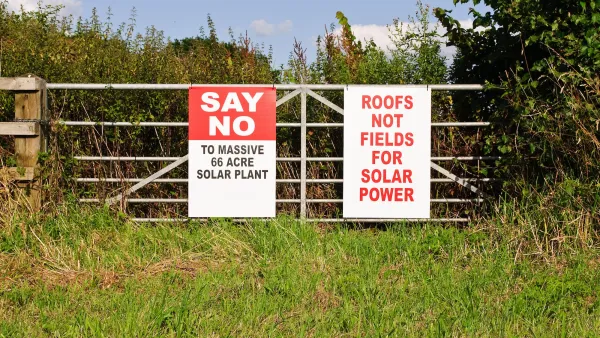
Misinformation and 'AI slop' are hamstringing rural solar development
False claims about the potential drawbacks of solar farms are prompting some communities to reject potentially lucrative energy projects.
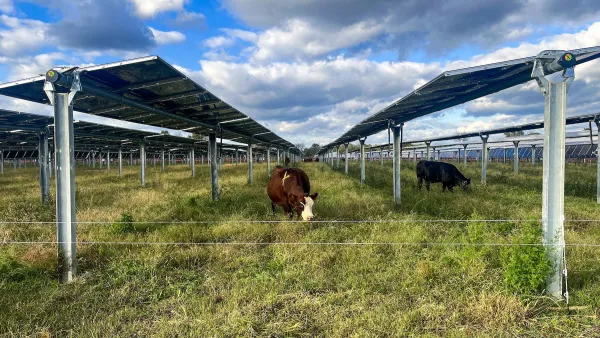
Cows at Tennessee's 'Silicon Ranch' graze under solar panels
The project aims to prove that agriculture and solar energy production can work in tandem.
Study: States approved 90% of renewable energy projects between 2018 and 2024
Ohio had the highest rejection rate for wind and solar proposals.

Planetizen Federal Action Tracker
A weekly monitor of how Trump’s orders and actions are impacting planners and planning in America.

The state-sanctioned urbicide of Austin
People don’t kill cities. Freeways do.

US to reduce Colorado River water deliveries to Mexico
A new Colorado Treaty amendment reduces Mexico’s Colorado River water allocation by 250,000 acre feet.

Nation's most wind-powered state turns to coal as data centers increase energy demand
For the first time in decades, Iowa has increased its generation of coal power.

NYC cools commuters with city's first rain garden above a bus stop
New York City officials say the plants in the rain garden can absorb 16 gallons of rainwater during heavy storms.

Brightline West’s future may rely on $6 billion federal loan
The company has until Nov. 2 to make a $400 million equity investment into its proposed high-speed rail line.

FREE Course: Walkable City 1: Why Walkability?
After describing his path towards focusing on walkability as the essence of good planning, Jeff Speck marches through his five principal reasons for making more walkable places.
Reinventing Malls: Planning Alchemy—Turning Gray Fields Into Gold
The course focuses on the opportunities and imperatives that shape reinvention of mall sites.

Greater Baltimore Committee
Eagle County Government
Harvard University Graduate School of Design
The Architects Foundation
University of Cincinnati Online
The Pocatello Development Authority
The Urban Renewal Agency of the City of Pocatello
Journal of the American Planning Association