The drop in crime in cities has extended American life expectancies, especially those of black men, and brought more wealthy people into urban areas.


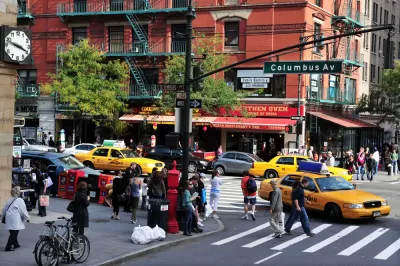
American cities have become less violent in few decades, but Patrick Sharkey argues the causes and outcomes of this change are often misunderstood. In terms of the outcomes, falling crime rates have brought wealthy people into areas they had not lived in before and made some towns more tourist-friendly, but more importantly, the decline in violence has had a pronounced effect on American life expectancy, particularly for African Americans. "We found that the national decline in the homicide rate since [1991] has increased the life expectancy of black men by roughly nine months," Patrick Sharkey writes in the New York Times.
What caused this drop in crime is disputed. While Sharkey concedes that some of the drop in crime comes from problematic policing practices that put more Americans in jail, an under appreciated factor in making cities safer was the growth in anti-violence non-profits. "In a typical city with 100,000 people each additional nonprofit devoted to confronting violence led to a roughly 1 percent drop in the city's murder rate," Sharkey writes. He contends that these groups working directly with the community and law enforcement have the capacity to do yet more to curb violence and could be part of "a new model for combating urban violence."
FULL STORY: Two Lessons of the Urban Crime Decline

Suburbs or Cities: Which Has More Crime?
A Brookings Institute report shows that the difference between crime in the suburbs and cities has drastically decreased, and argues that the current drop in crime rates weakens the correlation between ethnic groups and crime.
New Findings on Immigrants, Crime, & Incarceration
A new report from a non-profit, non-partisan California think tank finds that immigrants, both legal and undocumented, have lower rates of incarceration and criminal activity in California than the U.S.-born population.
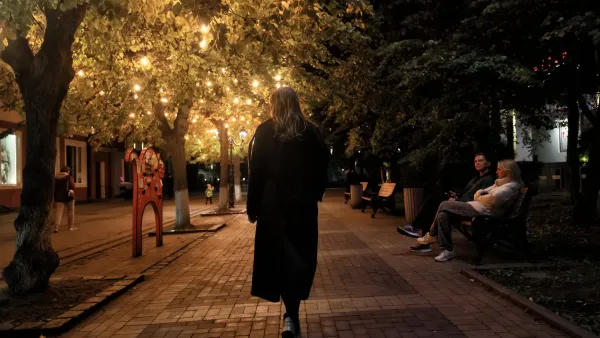
How urban design can deter crime
Well-designed public spaces and good lighting can prevent crime and make residents feel safer.

Planetizen Federal Action Tracker
A weekly monitor of how Trump’s orders and actions are impacting planners and planning in America.

The state-sanctioned urbicide of Austin
People don’t kill cities. Freeways do.

US to reduce Colorado River water deliveries to Mexico
A new Colorado Treaty amendment reduces Mexico’s Colorado River water allocation by 250,000 acre feet.

5 New England states march closer to 800 megawatt wind energy project
Securing federal approval for the project may be complicated under the Trump administration, which has historically been hostile towards domestic wind power.

Baltimore to break ground on $50 million Transit Priority Project
The project will bring faster bus trips, safer streets and better bike connections to Baltimore.

Airbnb launches $250 million 'last-dollar financing' housing accelerator, makes first investment in Austin
The company will put $6.4 million towards affordable housing development in Texas’ capital.

FREE Course: Walkable City 1: Why Walkability?
After describing his path towards focusing on walkability as the essence of good planning, Jeff Speck marches through his five principal reasons for making more walkable places.
Reinventing Malls: Planning Alchemy—Turning Gray Fields Into Gold
The course focuses on the opportunities and imperatives that shape reinvention of mall sites.

Eagle County Government
Harvard University Graduate School of Design
Nashville Planning Department
The Architects Foundation
University of Cincinnati Online
The Pocatello Development Authority
The Urban Renewal Agency of the City of Pocatello
Journal of the American Planning Association