Well-designed public spaces and good lighting can prevent crime and make residents feel safer.


In an article in The Atlantic, Elizabeth Glazer describes how lighting can help reduce crime and increase public safety.
According to Glazer, "Darkness is indeed a good cover for crime, so better lighting can make streets safer, not just by deterring misdeeds but also by encouraging others to fill the streets with activity." A Philadelphia study found that outdoor nighttime street crimes dropped by 15% after the city installed brighter LED streetlights.
A growing body of research indicates that urban design can shape behavior. "A growing body of research has found that the greening of vacant lots in Philadelphia was associated with a reduction in gun violence by 29 percent and overall crime by 9 percent, and the fixing of derelict buildings there coincided with a drop in gun violence by 39 percent. A six-city study that included Baltimore and Washington, D.C., found that the planting of trees was associated with a fall in gun violence by 9 percent."
For Glazer, the lesson is that effective design can be more effective — and less controversial — than other public safety tactics like increased police presence. "What’s plain is that the challenge of curbing crime to its lowest possible level and keeping it there demands all viable strategies, not just enforcement."
FULL STORY: A Cheap Fix for Urban Crime

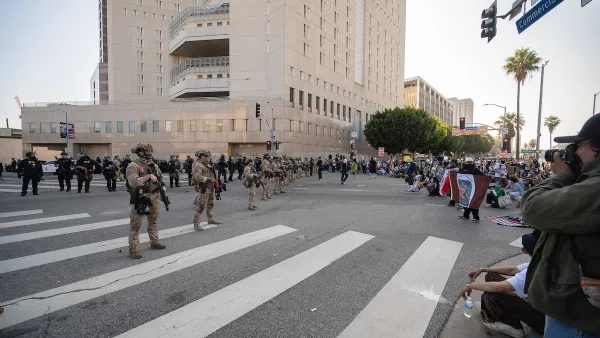
Opinion: Far From Cauldrons of Violence, Cities are Anti-Crime Innovators
Rather than funding the performative militarization of law enforcement, the federal government could instead support programs that prevent poverty and crime before it happens.
The Link Between Urban Design and Crime
A meta-study shows that public realm interventions can help reduce crime rates.
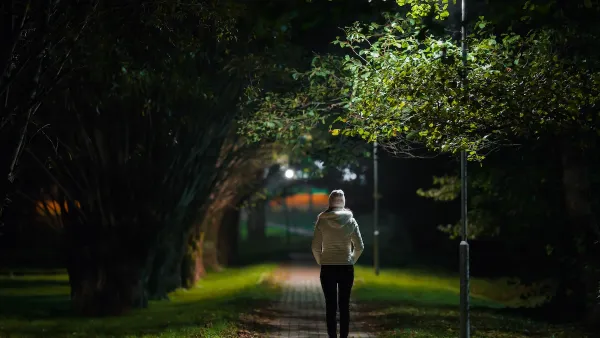
How Effective Street Lighting Improves Women’s Mobility
A lack of effective lighting in streets, parks, and transit stations limits the places where many women and other vulnerable groups feel safe traveling at night.

The state-sanctioned urbicide of Austin
People don’t kill cities. Freeways do.

US to reduce Colorado River water deliveries to Mexico
A new Colorado Treaty amendment reduces Mexico’s Colorado River water allocation by 250,000 acre feet.

New Jersey’s second-largest city bans standalone data centers
Jersey City will continue to allow co-location facilities, such as those meant for research institutions that store their own data.

Amtrak not solely to blame for New Jersey commuter rail's unreliability, report finds
A new study from the Garden State Initiative found that NJ Transit’s budget grew 20% across a 4 year period, but reliability declined significantly over the same period.

EPA erases limits on planet-warming pollution from power plants
Under Monday’s plan, power plants would still have some limits on how much mercury, arsenic and other contaminants they can emit.

Phoenix announces new on-demand transit service, more frequent RAPID buses
Both new services will launch in October, and are part of Phoenix's Project Effective Access Solutions for Easing Congestion.

FREE Course: Walkable City 1: Why Walkability?
After describing his path towards focusing on walkability as the essence of good planning, Jeff Speck marches through his five principal reasons for making more walkable places.
Reinventing Malls: Planning Alchemy—Turning Gray Fields Into Gold
The course focuses on the opportunities and imperatives that shape reinvention of mall sites.

Eagle County Government
Harvard University Graduate School of Design
Nashville Planning Department
The Architects Foundation
University of Cincinnati Online
The Pocatello Development Authority
The Urban Renewal Agency of the City of Pocatello
Journal of the American Planning Association