The city about to set a new standard for battery-powered electric bus transit was a small collection of fishing villages just 40 years ago.


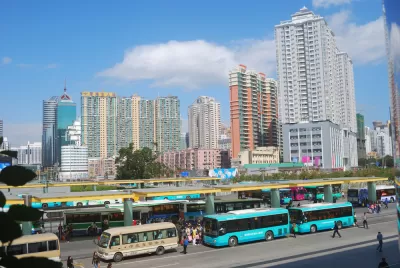
Shenzen is set to reach a major milestone in mass transit technology by the end of the year.
Sebastian Castellanos, Schuyler Null, and Xiangyi Li report that the city will "electrify 100 percent of its public transit bus fleet by the end of 2017." And, "[i]f successful, it will become the first in the world to do so." Shenzen already has 14,500 battery-powered electric buses in its fleet.
The article includes details about how Shenzen overcame some of the obstacles holding back other cities from wide-spread adoption of new battery technology for buses. The articles also discusses the benefits, in terms of air pollution and carbon emissions, of the city's new bus fleet.
FULL STORY: In a Global First, Shenzhen Steers Toward 100% Electric Bus Fleet


The 'Quiet Revolution' of Zero Emission Transit Buses
More and more U.S. transit agencies are rolling out electric buses, and the recently approved federal infrastructure bill could make it easier than ever to buy zero emission electric buses.

Range Anxiety: Electric Buses Still Aren't Ready to Scale
Money intended for electric buses in Indianapolis will instead be spent on diesel buses.
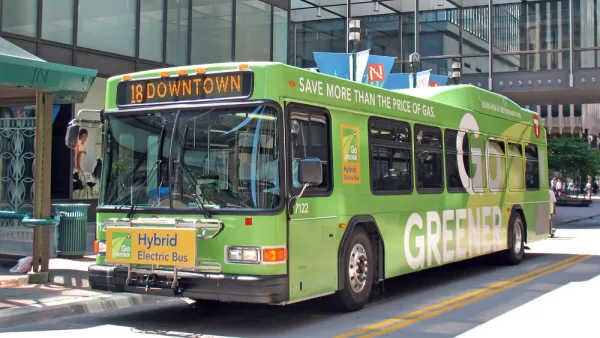
Twin Cities Set Ambitious Target for Electric Buses
The planned opening of a new bus rapid transit line is the impetus for a larger-scale shift to electric buses by Metro Transit.

Planetizen Federal Action Tracker
A weekly monitor of how Trump’s orders and actions are impacting planners and planning in America.

The state-sanctioned urbicide of Austin
People don’t kill cities. Freeways do.

US to reduce Colorado River water deliveries to Mexico
A new Colorado Treaty amendment reduces Mexico’s Colorado River water allocation by 250,000 acre feet.

Guerilla urbanists are building DIY bus stop benches in Chicago
A before-and-after of one of the bus stops with a new bench. The new benches are not officially sanctioned or permitted, but the residents who placed them hope they will be the start of a network of DIY benches across the city.

Mamdani overhauls NYC's Vision Zero plan with 100 new policy goals
The overhaul aims to reduce traffic deaths and make streets safer for pedestrians, cyclists and drivers through lower speed limits, new safety infrastructure and more.

Amtrak not solely to blame for New Jersey commuter rail's unreliability, report finds
A new study from the Garden State Initiative found that NJ Transit’s budget grew 20% across a 4 year period, but reliability declined significantly over the same period.

FREE Course: Walkable City 1: Why Walkability?
After describing his path towards focusing on walkability as the essence of good planning, Jeff Speck marches through his five principal reasons for making more walkable places.
Reinventing Malls: Planning Alchemy—Turning Gray Fields Into Gold
The course focuses on the opportunities and imperatives that shape reinvention of mall sites.

Eagle County Government
Harvard University Graduate School of Design
Nashville Planning Department
The Architects Foundation
University of Cincinnati Online
The Pocatello Development Authority
The Urban Renewal Agency of the City of Pocatello
Journal of the American Planning Association