Decades of activism have led to this victory for pedestrian advocates, Streetsblog NYC reports.


New York Mayor Bill de Blasio announced that vehicular traffic will be banned from Brooklyn's Prospect Park as of January 2, 2018.
Over the years, the Department Transportation has experimented with closing different sections of the park to cars; the west side is already car-free, and a pilot last summer concluded that traffic impacts of closing off the entire loop would be minimal.
Each action was a concession to a steady stream of activism and public pressure, writes David Meyer in Streetsblog NYC:
It’s been 50 years since the first victory in the campaign to get cars out of Prospect Park. For much of the 20th century, with the city ceding more and more space to automobiles, traffic was essentially allowed on the park loop all day, every day. Then in 1967 the city made Prospect Park car-free on weekends ... In the 1990s, Transportation Alternatives revived the campaign for a car-free park.
FULL STORY: Prospect Park Goes Car-Free Forever on January 2


6 Ways to Ensure Equitable Cities for Children
A city that fosters the mental and physical health of children is safer for everyone. Six key planning and design considerations promote the well-being of the city's youngest residents.
Cobblestones vs. Bike and Pedestrian Improvements Controversy in Brooklyn
Improving streets in Sunset Park by removing cobblestones and aging train tracks has created a controversy between historic preservation and the need for safe bike and walking facilities and other streetscape improvements.
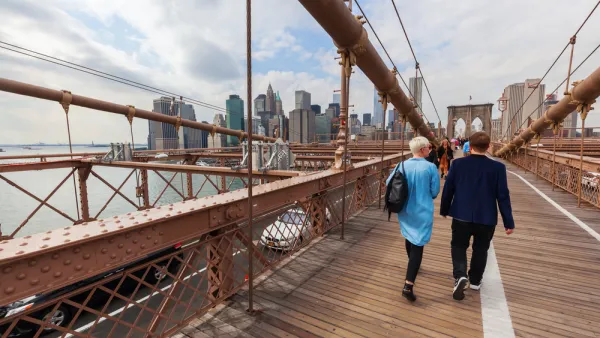
Modal Friction on the Brooklyn Bridge
The popularity of crossing New York City's second oldest bridge by foot and pedal is causing friction between the two modes on the promenade above six lanes of motor vehicle traffic. A report released for NYCDOT proposes recommendations.

Planetizen Federal Action Tracker
A weekly monitor of how Trump’s orders and actions are impacting planners and planning in America.

The state-sanctioned urbicide of Austin
People don’t kill cities. Freeways do.

US to reduce Colorado River water deliveries to Mexico
A new Colorado Treaty amendment reduces Mexico’s Colorado River water allocation by 250,000 acre feet.

5 New England states march closer to 800 megawatt wind energy project
Securing federal approval for the project may be complicated under the Trump administration, which has historically been hostile towards domestic wind power.

Baltimore to break ground on $50 million Transit Priority Project
The project will bring faster bus trips, safer streets and better bike connections to Baltimore.

Airbnb launches $250 million 'last-dollar financing' housing accelerator, makes first investment in Austin
The company will put $6.4 million towards affordable housing development in Texas’ capital.

FREE Course: Walkable City 1: Why Walkability?
After describing his path towards focusing on walkability as the essence of good planning, Jeff Speck marches through his five principal reasons for making more walkable places.
Reinventing Malls: Planning Alchemy—Turning Gray Fields Into Gold
The course focuses on the opportunities and imperatives that shape reinvention of mall sites.

Eagle County Government
Harvard University Graduate School of Design
Nashville Planning Department
The Architects Foundation
University of Cincinnati Online
The Pocatello Development Authority
The Urban Renewal Agency of the City of Pocatello
Journal of the American Planning Association