With a set of 2020 affordability targets met three years early, the DOE can turn its attention to reliability, resilience, and storage.


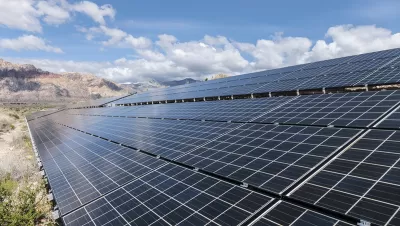
Utility-grade solar panels have hit 2020 cost targets three years early, the U.S. Department of Energy announced. The average price is now 6 cents per kilowatt-hour. Karen Hao explains in Quartz:
"The steady decline in the price of solar power is largely due to falling costs of photovoltaic hardware, driven by market competition, as well as improvements in efficiency, in part stimulated by DOE-funded research, according to a report released by the National Renewable Energy Laboratory on the same day. 'Soft' costs like labor have also fallen, but at a slower rate."
Now, the DOE is moving on to other goals, beginning with an $82 million investment from its Solar Energy Technologies Office in reliability, resilience, and storage solutions. Hao's piece includes further analysis of solar affordability trends and the DOE's new projects.
Read the full story: Solar is now so cheap in the US it beat government goals by three years

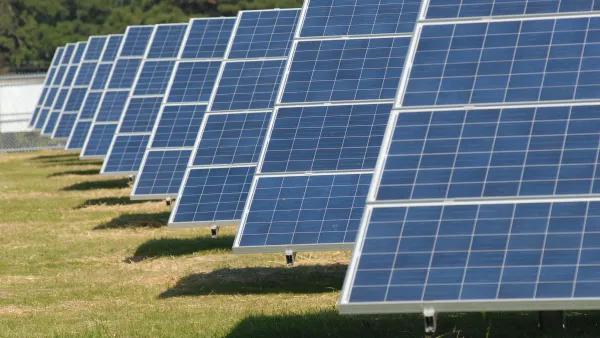
New Jersey Has a Plan to Shift to Clean Energy, but Questions Remain
The state’s energy plan focuses on the move to renewable energy, but specifics about how that will happen and what the costs will be need to be pinned down.

Cows at Tennessee's 'Silicon Ranch' graze under solar panels
The project aims to prove that agriculture and solar energy production can work in tandem.
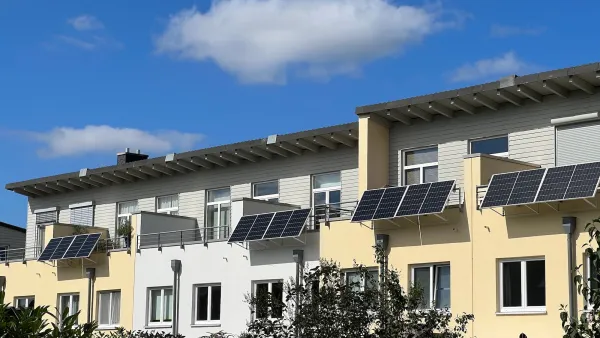
28 States and DC Could Legalize ‘Balcony Solar’
Plug-in solar panels, which are becoming popular across Europe, live in a regulatory gray area in the United States.

Planetizen Federal Action Tracker
A weekly monitor of how Trump’s orders and actions are impacting planners and planning in America.

‘Going backwards:’ Baltimore mayor, students rally against state's transit funding plan
Maryland's proposed six-year plan provides no funding for Baltimore’s BMORE bus program and reduces its road maintenance funding.

Detroit to transform waterfront with $2.2 billion investment
Developers will convert about 18 acres of unused parking lot space into civic spaces.

25 states, cities sue the EPA over erased power plant emissions limits
The coalition also intends to sue the EPA for not regulating emissions from gas-fired power plants.

Newsom vetoes giving CA tribes greater voice in water projects
In his veto letter, Newsom said the bill would add ‘uncertainty’ to the state’s fight to secure Californians’ water supplies.

Michigan Senate votes to revise 'lax' dam safety laws
A Bridge Michigan investigation found more than 100,000 Michigan residents live in the floodpath of a high or significant-hazard dam.

FREE Course: Walkable City 1: Why Walkability?
After describing his path towards focusing on walkability as the essence of good planning, Jeff Speck marches through his five principal reasons for making more walkable places.
Reinventing Malls: Planning Alchemy—Turning Gray Fields Into Gold
The course focuses on the opportunities and imperatives that shape reinvention of mall sites.

City of Thousand Oaks
City of Wisconsin Rapids
Harvard University Graduate School of Design
The Architects Foundation
University of Cincinnati Online
Northern Illinois Transit Authority (NITA)
The Pocatello Development Authority
The Urban Renewal Agency of the City of Pocatello