What we now so far about the Interior Department's plans to shrink a "handful" of national monuments around the country.



Today, the Associated Press broke the news of a long-awaited report by Interior Secretary Ryan Zinke on the fate of 27 national monuments under review by the Trump Administration.
Secretary Zinke told the Associated Press that he will recommend boundary adjustments of some of the monuments, but did not mention any specifics.
The San Gabriel Valley Tribune followed up on the Associated Press' coverage, explaining what is known so far about the changes proposed in the report. "None of the sights would revert to new ownership, [Zinke] told the AP. He said public access for uses such as hunting, fishing or grazing would be maintained or restored."
"He did not comment on whether any portions of the 27 monuments under a White House-ordered review would be opened up to oil and gas drilling, mining, logging or other industries, something Trump has advocated," according to that article.
Jim Carlton also reported on the breaking story for The Wall Street Journal, noting that the announcement fell short of a detailed account of the report Zinke will give to President Trump. Also according to Carlton, "any reductions would likely launch a battle between environmentalists, who want the monuments preserved, and some locals."
Sammy Roth also reported on the announcement for the Desert Sun, noting that the idea of rolling back protections on national monuments is "largely unprecedented." Roth's coverage also includes background of the Obama Administration's use of the Antiquities Act to protect more 5.7 million acres of land and 550 million acres of water.
Juliet Eilperin and Darryl Fears report the big news for The Washington Post as follows:
While Zinke submitted a report to the White House Thursday and told the Associated Press he backed changing the designations for a “handful” of protected federal sites, the Interior Department did not release any specifics. Instead, it released a report summary that described each of the 27 protected areas scrutinized as “unique.”
Finally, Laura Parker also picked up the news for National Geographic, providing links to previous stories on the Interior Department's study, as well as some early indications of the political dynamics that will be at work as more details of the plan emerge.
Read the full story: No national monuments will be eliminated, Zinke says

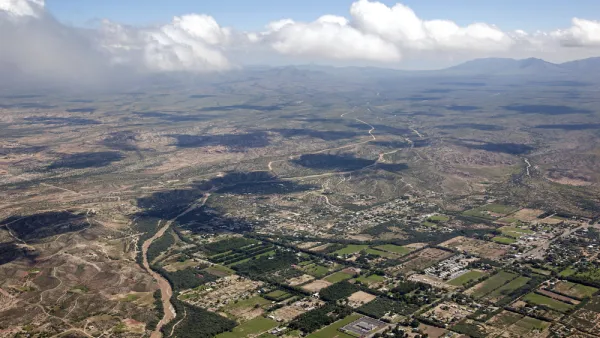
House Natural Resources Committee Reveals Bribes in Trump’s Interior Department
Evidence of a 2017 quid pro quo for development permits connected to a massive master planned community proposed in the Arizona desert led the House Natural Resources Committee to take unprecedented action in 2022.
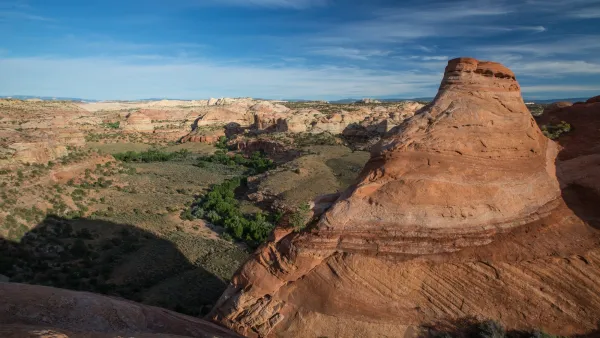
Op-Ed: Feds 'Obsessed' with Undermining National Monument
Utah's Grand Staircase-Escalante National Monument is under severe assault from the Trump administration, Stephen Trimble writes. Long the focus of preservation efforts, the protected land is being opened up for extractive uses.
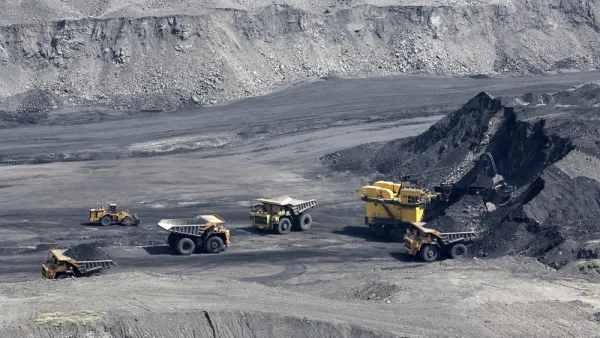
Judge Halts Sales of New Coal Mining Leases on Federal Lands
Once again, the president's efforts to undo his predecessor's environmental legacy were thwarted by a court ruling. In this case, the Interior Department's failure to conduct an environmental review of a Trump executive order ran afoul of NEPA.

Planetizen Federal Action Tracker
A weekly monitor of how Trump’s orders and actions are impacting planners and planning in America.

Amtrak, CN end decades-long dispute with eight-year agreement
The new operating agreement establishes an updated framework for the companies to work together, including processes to resolve disputes.

Northwest rail fans eager for Sept. 30 debut of Amtrak’s Airo fleet
Get ready for that new train smell and more seats. But they won’t go faster or run more frequently on the Cascades route in Washington and Oregon.

Brightline Florida files for bankruptcy
The transit company is over $5 billion in debt.

St. Louis Metro to test if single-car trains can reduce operating costs, maintain rider satisfaction
The pilot program will run from October to spring 2027, and begin with one single-car train operating on Metrolink’s Red and Blue lines.

Pennsylvania is building data centers in abandoned mines
Housing data centers in mines provides an alternative to destroying local forests and may spare residents from data centers’ noise and air pollution.

FREE Course: Walkable City 1: Why Walkability?
After describing his path towards focusing on walkability as the essence of good planning, Jeff Speck marches through his five principal reasons for making more walkable places.
Reinventing Malls: Planning Alchemy—Turning Gray Fields Into Gold
The course focuses on the opportunities and imperatives that shape reinvention of mall sites.

City of Thousand Oaks
City of Wisconsin Rapids
Harvard University Graduate School of Design
The Architects Foundation
University of Cincinnati Online
The Pocatello Development Authority
The Urban Renewal Agency of the City of Pocatello