The nation mourned the ten-year anniversary of the tragic collapse of the I-35W Bridge in Minneapolis this week.


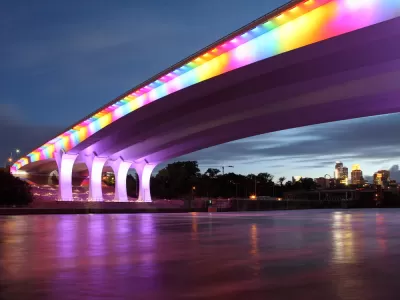
Michael Grass writes:
Flags stood at half-staff on Monday across Minnesota to mark the 10th anniversary of the collapse of the Interstate 35W Bridge in Minneapolis, an event that killed 13 people and injured 145 more after a gusset plate failed during the evening rush hour, causing the half of the 1,907-foot structure to fall into the Mississippi River.
Grass takes the 10th anniversary of the tragedy as an occasion to evaluate the lessons from that "major wake up call" on the state of the nation's infrastructure. The obvious conclusion: that the nation has done little to improve the safety of its roads and bridges. For instance, the Federal Highway Administration considered the I-35W Bridge a "fracture-critical bridge" when it collapsed. In 2017, there are 18,000 fracture-critical bridges in the United States.
For local coverage of the ten-year anniversary of the tragedy, see an article by Dylan Thomas for The Journal.
Read the full story: It’s Been 10 Years Since the Deadly I-35W Bridge Collapse in Minneapolis
How policy changes helped Minneapolis beat rent inflation
Despite a boom in population, Minneapolis has managed to keep rents relatively steady through a combination of legislative action and private investment.
Minneapolis ordinance would halt new data centers for 5 months
The city council approved the temporary moratorium, which now heads to the mayor's desk.
Minneapolis council proposes permitting framework for robotaxis
City leaders say they don't want to be left behind as Waymo and other companies eye the city for the expansion of self-driving fleets.

Planetizen Federal Action Tracker
A weekly monitor of how Trump’s orders and actions are impacting planners and planning in America.

California plans to bury El Niño’s downpour
If the state plays its cards right, it may be able to store a billion acre-feet of El Niño’s water in aquifers.

Desperate measures: Advocates weigh draining Lake Powell to fill Colorado River
Draining the reservoir could reduce evaporation losses by a couple hundred thousand acre-feet.

Chicago voters approve permanent festival grounds, penalty for vacant property owners
Currently, major summer and fall festivals take over public parks for weeks at a time, drawing criticism from nearby residents

NYC votes to cut outdoor dining red tape, speed up permitting
New York City also voted to allow the Department of Transportation to begin work on urgent projects before notifying elected officials.

California appears to reject Prop. 45
The proposition would have expanded the projects that qualify for a streamlined environmental review, effectively paring down the California Environmental Quality Act.

FREE Course: Walkable City 1: Why Walkability?
After describing his path towards focusing on walkability as the essence of good planning, Jeff Speck marches through his five principal reasons for making more walkable places.
Reinventing Malls: Planning Alchemy—Turning Gray Fields Into Gold
The course focuses on the opportunities and imperatives that shape reinvention of mall sites.

City of Rosemead
Rutgers University, Edward J. Bloustein School of Planning and Public Policy
One Hundred Miles
Hunter College, City University of New York (CUNY)
The Architects Foundation
University of Cincinnati Online
City of Cambridge
Montrose County
The Pocatello Development Authority