Some well-meaning urbanists try a place-making-in-a-box approach. Their efforts would resonate more if they took the neighborhood’s history and culture into account.


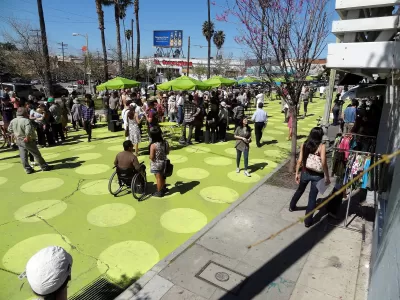
Best practices for place-making encourage improvements in walkability, public transit access, and use of public space, but Sahra Sulaiman argues that the effects of place making are limited, especially when what needs to be "made" are communities.
Sulamiman uses Leiment Park Village's Mask Festival as an example of the type of activation urbanists can miss. "It was an incredible day of beauty, grace, community, unity, resilience, culture, heritage, love, family, and transcendence," Sulamiman writes in Streetsblog LA. Sulamiman argues that for many who have been marginalized, this kind of festival represents a way to engage with public spaces, for communities that might not do so for a variety of reasons. "In many historically marginalized urban neighborhoods, decades of disenfranchisement and the repressive policing that accompanied it created great insecurity in the public space and, over time, eroded bonds of social trust between neighbors," Sulamiman argues.
"The success of cultural events like the mask festival (and the fact that it grows every year) serves as a reminder that much more than polka dots are needed for communities to believe a space is truly meant for its people," Sulamiman writes.
Read the full story: Ancestors v. Polka Dots: Some Thoughts on Approaches to “Place-Making”
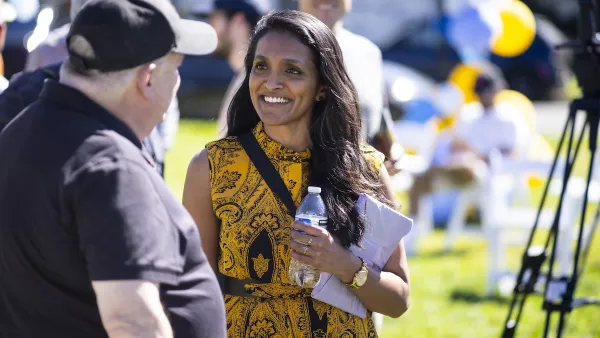
Los Angeles just elected an urban planner as its mayor
Transportation analysts are optimistic that Raman will be more aggressive in addressing transit issues than Bass.
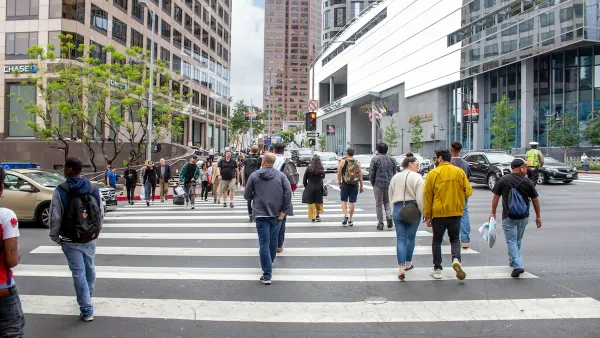
LA residents may be allowed to paint their own crosswalks
Councilwoman Katy Yaroslavsky put out a motion instructing the Los Angeles Department of Public Transportation to study the feasibility of allowing volunteers to paint crosswalks.
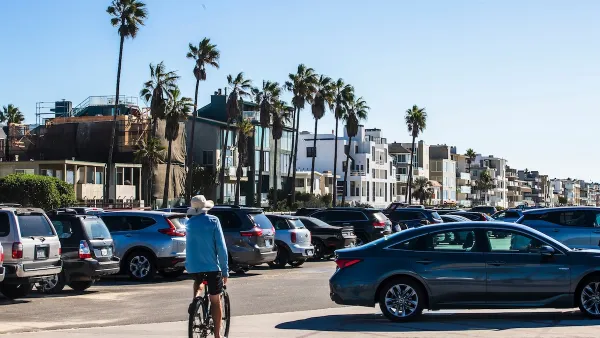
Not in my parking spot: LA renters oppose ADU development in their garages
Some tenants advocates say taking away residents’ parking spaces harms senior citizens and people with disabilities who rely on their cars to navigate the city.

Planetizen Federal Action Tracker
A weekly monitor of how Trump’s orders and actions are impacting planners and planning in America.

Eastern Nebraska is running out of electricity
Data centers and electrification are straining eastern Nebraska’s grid, throttling economic development.

Move over, LA: St. Louis gears up for Olympics, invests millions in downtown redevelopment
The Missouri city will host the 2028 Olympic soccer group stage and knockout matches.

Dallas releases zoning code overhaul to officials
The drafted overhaul is over 400 pages long.

NYC renovations for dangerous, ‘mercilessly crammed’ street delayed until 2027
Construction was supposed to begin this fall.

San Diego’s Midway Rising project gets greenlight from city council
The project looks to become the largest affordable housing development in California's history.

FREE Course: Walkable City 1: Why Walkability?
After describing his path towards focusing on walkability as the essence of good planning, Jeff Speck marches through his five principal reasons for making more walkable places.
Reinventing Malls: Planning Alchemy—Turning Gray Fields Into Gold
The course focuses on the opportunities and imperatives that shape reinvention of mall sites.

City of Rosemead
Rutgers University, Edward J. Bloustein School of Planning and Public Policy
One Hundred Miles
University of Michigan School for Environment and Sustainability (SEAS)
Hunter College, City University of New York (CUNY)
The Architects Foundation
City of Cambridge
The Pocatello Development Authority
The Urban Renewal Agency of the City of Pocatello