The design for the planned city of Columbia, Maryland continues to influence new developments around the world.


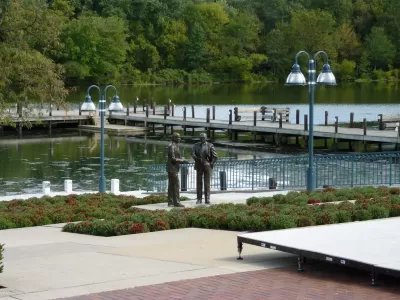
James Rouse's vision for a model planned community, where people of different races live side-by-side, continues to inspire planners despite failing to live up to the high expectations of its builders and supporters. Doug Miller writing for Howard Magazine (via The Baltimore Sun), notes that almost 60 years on, the city of Columbia, Maryland continues to prosper even as the pressures of sprawling development, big box retail, and a middling mass transit system have hindered some of the early optimism for a new way of living.
“It was a terrific counter-measure to suburbia, something was desperately needed,” {architect Ralph Bennett] says, noting that his family has owned land in Howard County since 1954, though none that was included in Rouse’s voluminous purchases in advance of Columbia’s construction.
...
Rouse made a persuasive argument that the planned city would be far less costly to the county than standard suburban development and that tax revenue generated in Columbia offset the additional county expenditures necessitated by the booming population.
“Large lots and scattered developments increase the cost of providing many services,” including garbage collection, police, school buses water and sewer, Rouse’s primer on the Columbia project read.
Miller writes that while planned communities haven't taken off in the United States as much as some had hoped, they are seeing a resurgence in rapidly developing countries including China and India.
FULL STORY: Planned cities have gone out of style, but Columbia still influences urban design

A Suburban Success Story
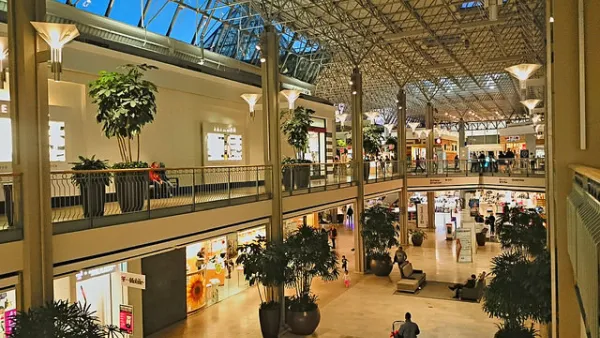
The suburban, master planned community of Columbia, Maryland is many of the things urbanists hope their cities will become.
Will Walkable Urbanism Transform a Pioneering New Town Into a "Real City"
Visionary developer James W. Rouse always wanted his planned community in Howard County, Maryland to be a "real city". As Columbia nears 50, a 30-year plan and new development seeks to fill in the community's "doughnut hole" with walkable density.
'New Town' Columbia May Go Urban
The "new town" of Columbia, Maryland, was built in the 1960s as a model for new growth. The area has remained primarily suburban, but plans for a revitalization district could bring an urban look to this suburban town.

Planetizen Federal Action Tracker
A weekly monitor of how Trump’s orders and actions are impacting planners and planning in America.

The state-sanctioned urbicide of Austin
People don’t kill cities. Freeways do.

US to reduce Colorado River water deliveries to Mexico
A new Colorado Treaty amendment reduces Mexico’s Colorado River water allocation by 250,000 acre feet.

5 New England states march closer to 800 megawatt wind energy project
Securing federal approval for the project may be complicated under the Trump administration, which has historically been hostile towards domestic wind power.

Baltimore to break ground on $50 million Transit Priority Project
The project will bring faster bus trips, safer streets and better bike connections to Baltimore.

Airbnb launches $250 million 'last-dollar financing' housing accelerator, makes first investment in Austin
The company will put $6.4 million towards affordable housing development in Texas’ capital.

FREE Course: Walkable City 1: Why Walkability?
After describing his path towards focusing on walkability as the essence of good planning, Jeff Speck marches through his five principal reasons for making more walkable places.
Reinventing Malls: Planning Alchemy—Turning Gray Fields Into Gold
The course focuses on the opportunities and imperatives that shape reinvention of mall sites.

Eagle County Government
Harvard University Graduate School of Design
Nashville Planning Department
The Architects Foundation
University of Cincinnati Online
The Pocatello Development Authority
The Urban Renewal Agency of the City of Pocatello
Journal of the American Planning Association