The "new town" of Columbia, Maryland, was built in the 1960s as a model for new growth. The area has remained primarily suburban, but plans for a revitalization district could bring an urban look to this suburban town.


"Founded as a 'new town' four decades ago by James Rouse, Columbia is still not an incorporated municipality but rather an area, albeit a large one, of Howard County. It encompasses many land uses and nearly 100,000 people but has remained predominantly a bedroom community. Columbia is "sub-urban" and continues to convey a pastoral image, with its low density and curving parkways and streets, and looping drives and cul-de-sacs."
"But that could change if Howard County approves a proposal on the future of Columbia's center."
"General Growth Properties, a Chicago company that owns about 240 acres of the 364-acre Town Center Revitalization District, including the sprawling Mall in Columbia and acres of surface parking, has submitted an ambitious plan to reshape parts of the district into a more urban downtown."
FULL STORY: Reimagining 'New Town' Columbia as a New City

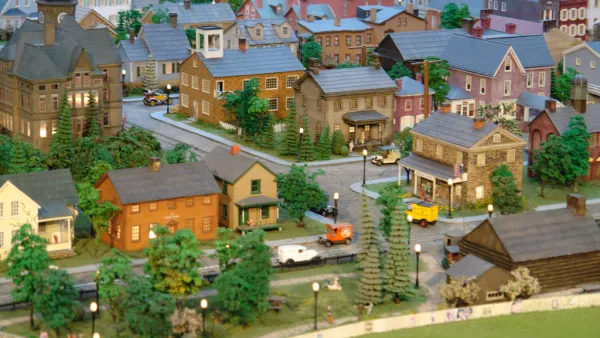
Urban, Suburban, or Rural?
The Pew Research Center digs into a question of definitions, fraught with exceptions and subjectivity.
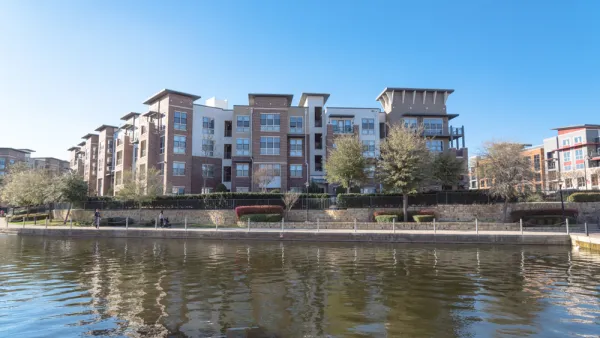
Is the Urban-Suburban Divide Destined to Disappear?
In a new book, Hans Westlund and Tigran Haas argue that the global knowledge economy is radically reshaping urban development. Eventually, they say, it'll render meaningless our present notions of "urban," "suburban," and "rural."
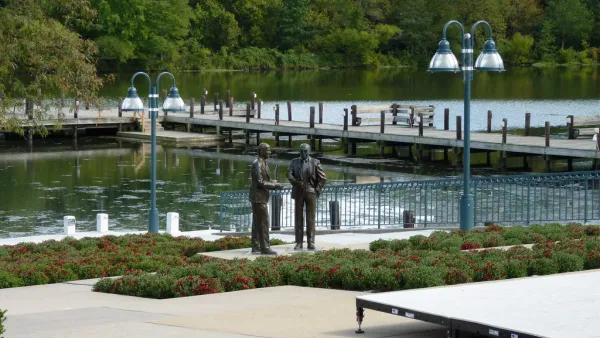
60 Years On, the Planned City of Columbia, Maryland Holds Up Against Change
The design for the planned city of Columbia, Maryland continues to influence new developments around the world.

Planetizen Federal Action Tracker
A weekly monitor of how Trump’s orders and actions are impacting planners and planning in America.

The state-sanctioned urbicide of Austin
People don’t kill cities. Freeways do.

US to reduce Colorado River water deliveries to Mexico
A new Colorado Treaty amendment reduces Mexico’s Colorado River water allocation by 250,000 acre feet.

Mamdani overhauls NYC's Vision Zero plan with 100 new policy goals
The overhaul aims to reduce traffic deaths and make streets safer for pedestrians, cyclists and drivers through lower speed limits, new safety infrastructure and more.

Amtrak not solely to blame for New Jersey commuter rail's unreliability, report finds
A new study from the Garden State Initiative found that NJ Transit’s budget grew 20% across a 4 year period, but reliability declined significantly over the same period.

EPA erases limits on planet-warming pollution from power plants
Under Monday’s plan, power plants would still have some limits on how much mercury, arsenic and other contaminants they can emit.

FREE Course: Walkable City 1: Why Walkability?
After describing his path towards focusing on walkability as the essence of good planning, Jeff Speck marches through his five principal reasons for making more walkable places.
Reinventing Malls: Planning Alchemy—Turning Gray Fields Into Gold
The course focuses on the opportunities and imperatives that shape reinvention of mall sites.

Eagle County Government
Harvard University Graduate School of Design
Nashville Planning Department
The Architects Foundation
University of Cincinnati Online
The Pocatello Development Authority
The Urban Renewal Agency of the City of Pocatello
Journal of the American Planning Association