Colorado's roads and highways are in poor repair—the state of transportation was even called a 'quiet crisis' ten years ago. The problems persist, as does the state's lack of funding to fix the problem.



"A decade ago, then-[Colorado] Gov. Bill Ritter assembled a bipartisan commission to study an issue of growing concern to state leaders: transportation," writes Brian Eason. "But a decade later, Colorado spends even less than it did then."
"The state faces $9 billion in unfunded highway projects over the next decade, on top of unmet needs at the local level," explains Eason. "The state’s roads have deteriorated from a B rating in 2007 to a C- today. At current maintenance levels, the pavement’s on a trajectory to get worse."
Planetizen correspondent Irvin Dawid reported earlier in May about the Colorado State Legislature's failure to reach bipartisan support for transportation funding. The end of the legislative session produced only incremental improvement. At the end of the legislative session, when state lawmakers secured $1.9 billion for transportation projects, funding generated by mortgaging state buildings. That $1.9 billion represents the largest infusion of road money since 2009, when the state last increased vehicle fees. A special legislative session suggested by Gov. John Hickenlooper to find a long-term fix has since been called off, and state legislators are not expected to produce a major transportation bill in the 2018 election year.
Which brings us to the headlining point of Eason's reporting. Pressure is building from outside the capital, according to Eason, for a ballot initiative that would bypass the legislature entirely. There is even a "Fix Our Damn Roads" initiative, which states its agenda bluntly.

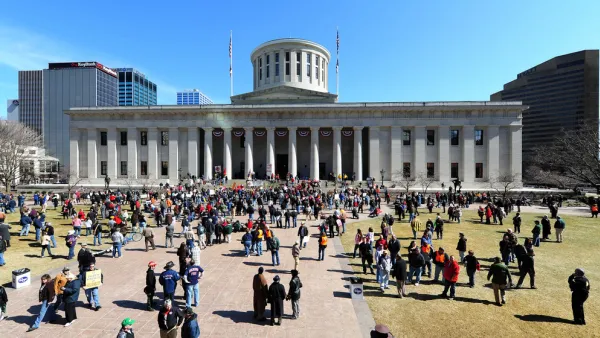
New Leadership Tasked With Solving Ohio's Transportation Challenges
Ohio has a new Republican governor, and the state has a transportation funding problem. Can a new group of advocates convince the state's political leadership to approve a new gas tax?
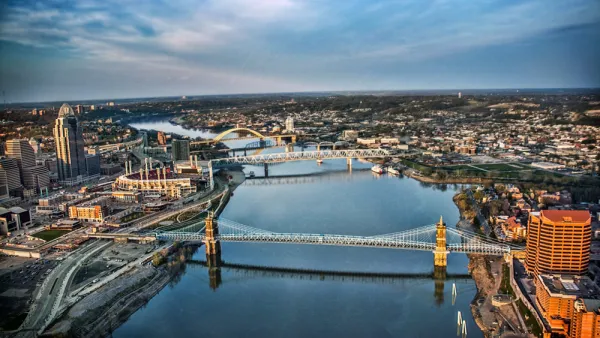
Two Bridges Across the Ohio River in Cincinnati Closed on the Same Day
Two of the transportation connections between Ohio and Kentucky in the Cincinnati metropolitan area were closed on the same day, leaving one side of the Ohio River cut off from the other.
For Transportation, Real Reform Can Only Happen at the State and Local Levels
Without buy-in for new ways of thinking at the state level, the presidential election is not likely to change much about the ways the United States plans and funds transportation infrastructure.

The state-sanctioned urbicide of Austin
People don’t kill cities. Freeways do.

US to reduce Colorado River water deliveries to Mexico
A new Colorado Treaty amendment reduces Mexico’s Colorado River water allocation by 250,000 acre feet.

New Jersey’s second-largest city bans standalone data centers
Jersey City will continue to allow co-location facilities, such as those meant for research institutions that store their own data.

Amtrak not solely to blame for New Jersey commuter rail's unreliability, report finds
A new study from the Garden State Initiative found that NJ Transit’s budget grew 20% across a 4 year period, but reliability declined significantly over the same period.

EPA erases limits on planet-warming pollution from power plants
Under Monday’s plan, power plants would still have some limits on how much mercury, arsenic and other contaminants they can emit.

Phoenix announces new on-demand transit service, more frequent RAPID buses
Both new services will launch in October, and are part of Phoenix's Project Effective Access Solutions for Easing Congestion.

FREE Course: Walkable City 1: Why Walkability?
After describing his path towards focusing on walkability as the essence of good planning, Jeff Speck marches through his five principal reasons for making more walkable places.
Reinventing Malls: Planning Alchemy—Turning Gray Fields Into Gold
The course focuses on the opportunities and imperatives that shape reinvention of mall sites.

Eagle County Government
Harvard University Graduate School of Design
Nashville Planning Department
The Architects Foundation
University of Cincinnati Online
The Pocatello Development Authority
The Urban Renewal Agency of the City of Pocatello
Journal of the American Planning Association