Engineers and scientists in Seattle are testing a new generation of shoreline infrastructure that hopefully can do a better job of letting people and wild animals—in this case salmon—coexist.


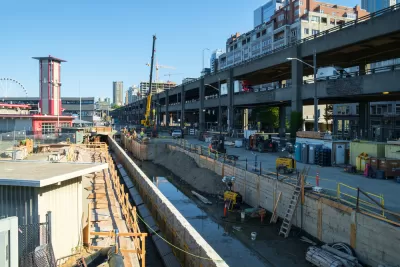
Ken Christensen tells the story of Seattle's new $140 million seawall—an underappreciated but critical piece of infrastructure.
Christensen describes the seawall as an ongoing experiment in habitat restoration, in addition to the brute strength it provides to keep the rising tides at bay. Jeff Cordell, a fish biologist at the University of Washington, is quoted in the article saying the new Alaskan Way seawall is the first of its scale to try to improve habitat for fish.
For 80 years, the Alaskan Way seawall was like most: a smooth, vertical slab of concrete that held back the sea for the city’s bustling waterfront. It helped cement Seattle’s status as a commercial hub and deepwater port, but also sealed the fate of salmon habitat, locking away miles of gradually sloping beaches.
Now:
The new seawall should make life easier by featuring an underwater corridor for the fish to pass through on their way to the ocean. It’s illuminated by glass tiles in the pedestrian sidewalk above and filled with rocky surfaces where microalgae and small marine invertebrates are more likely to survive.
In the early days of the new seawall, the project shows promise, as filamentous microalgae has begun to show at low tide, which will make the new sea wall a more attractive environment for fish. If the experiment is successful, the new seawall could be a model for other coastal communities around the world, faced with the prospects of rising sea levels as a result of climate change.
FULL STORY: Can Seattle’s Seawall Defend The City And Protect Salmon, Too?


How Cities Can Support Climate Adaptation
In the face of federal cuts to climate resilience funding, a panel at ULI’s Resilience Summit offered suggestions for maintaining managed retreat and other climate adaptation programs.
Dams on the Way Out on Two California Rivers
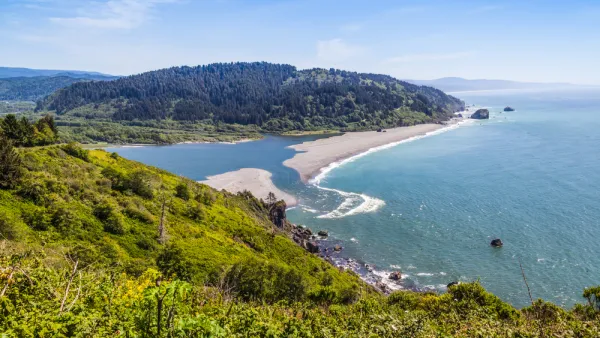
The largest dam removal project in U.S. history is about to commence on the Klamath River. Due to a recent development, a dam on the Eel River is also on expected for decommission.
Oceanside Debates the Future of its Coastline
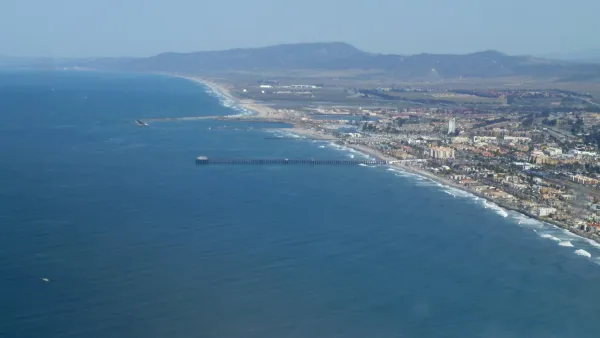
As sea levels rise, California's coastal communities face difficult decisions about how to preserve coastlines and mitigate the looming threat.

The state-sanctioned urbicide of Austin
People don’t kill cities. Freeways do.

US to reduce Colorado River water deliveries to Mexico
A new Colorado Treaty amendment reduces Mexico’s Colorado River water allocation by 250,000 acre feet.

New Jersey’s second-largest city bans standalone data centers
Jersey City will continue to allow co-location facilities, such as those meant for research institutions that store their own data.

Amtrak not solely to blame for New Jersey commuter rail's unreliability, report finds
A new study from the Garden State Initiative found that NJ Transit’s budget grew 20% across a 4 year period, but reliability declined significantly over the same period.

EPA erases limits on planet-warming pollution from power plants
Under Monday’s plan, power plants would still have some limits on how much mercury, arsenic and other contaminants they can emit.

Phoenix announces new on-demand transit service, more frequent RAPID buses
Both new services will launch in October, and are part of Phoenix's Project Effective Access Solutions for Easing Congestion.

FREE Course: Walkable City 1: Why Walkability?
After describing his path towards focusing on walkability as the essence of good planning, Jeff Speck marches through his five principal reasons for making more walkable places.
Reinventing Malls: Planning Alchemy—Turning Gray Fields Into Gold
The course focuses on the opportunities and imperatives that shape reinvention of mall sites.

Eagle County Government
Harvard University Graduate School of Design
Nashville Planning Department
The Architects Foundation
University of Cincinnati Online
The Pocatello Development Authority
The Urban Renewal Agency of the City of Pocatello
Journal of the American Planning Association