A tent city occupation in Atlanta is among several recent actions in cities around the country. Residents fearing displacement at the hands of publicly supported private development are organizing, and running for office, against it.


If you’re up-to-date on your gentrification news, you may have heard that residents of four historically African-American neighborhoods in Atlanta are in the midst of an occupation of Turner Field—the former home of the Atlanta Braves.
The organized resident groups have demanded, since 2013 when the baseball team announced it was leaving, to be considered and included in the planned development of 67 acres of commercial and housing on the land. So far, they’ve reported little to no luck in getting a community benefits agreement considered by the city or the developers, and they have escalated their protest to erecting a tent city on the property. Residents have been camped on the property since April 1 demanding that the proposal be acknowledged and addressed.
In a project called the “deal of the year” by the Atlanta Business Chronicle, the City of Atlanta sold the land to Georgia State University (GSU) and the Carter, Oakwood Development and Healey Weatherholtz joint venture last year. Two resident groups, the Turner Field Community Benefits Coalition and Housing Justice League, have organized community members from the historic towns of Summerhill, Peoplestown, Mechanicsville, and Pittsburgh to push back against planned development they say has purposely excluded them.
“We didn’t make this decision to pitch tents lightly,” says Peoplestown resident Columbus Ward in a recent press release. “We have families, we have jobs, we have responsibilities. But at the end of the day, Carter, GSU, and the city are threatening the very existence of our neighborhoods. This is a fight for our right to remain and thrive. We refuse to be seen as commodities. We are real people.”
This community action is but one among several in cities around the country where longtime residents fear displacement at the hand of publicly supported private development, and have begun organizing against it.
Read the full story: A Community Benefits Proposal Is Ignored. Is Displacement Far Behind?
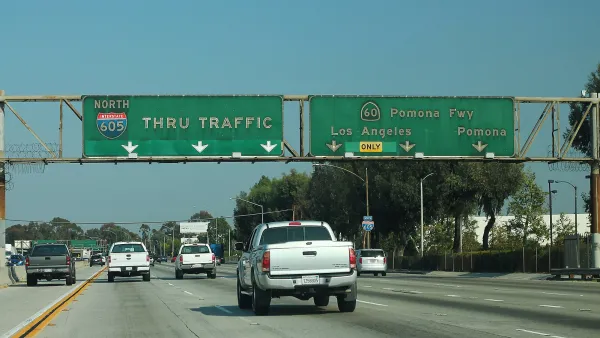
L.A. Freeway Expansion to Move Ahead, Sans Displacement
The 605 freeway expansion project was expected to demolish hundreds of homes and multifamily buildings.
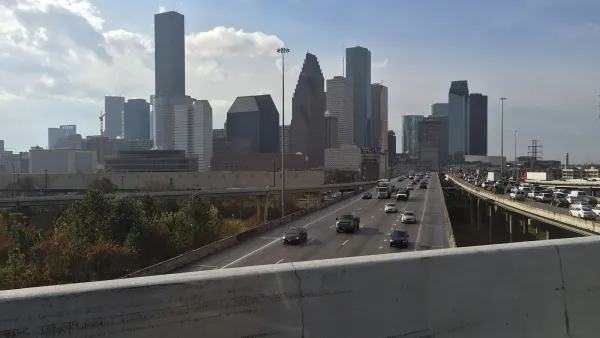
Contentious Houston Freeway Widening Project Inches Forward
Federal officials have given TxDOT the go-ahead to resume work on a small portion of a controversial interstate widening project in downtown Houston.
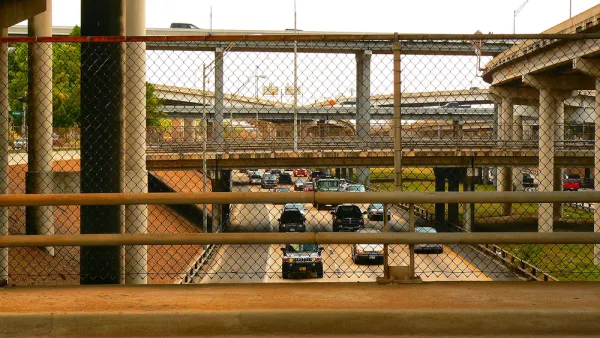
Freeway Expansions Continue to Threaten Black and Brown Communities
Despite calls to center equity in infrastructure projects, highway construction and expansion still disproportionately impacts communities of color, according to a Los Angeles Times investigation.

Planetizen Federal Action Tracker
A weekly monitor of how Trump’s orders and actions are impacting planners and planning in America.

Washington state to charge fee to drivers with fuel-efficient cars
Revenue from the fee will go towards supporting the state’s highways.

Illinois considers spending $1 billion in taxpayer money on data center
A quantum computing campus and data center are currently under construction in Chicago.

Senate passes bill overhauling permitting
The bill still needs to pass the House.

Did data centers change how voters cast their ballots?
Texas, Ohio, and Georgia all flipped party control. But in rural counties, the effect of local data centers was mixed.

Amtrak invests in eight new Airo trainsets
The new trainsets will begin serving passengers in 2031.

FREE Course: Walkable City 1: Why Walkability?
After describing his path towards focusing on walkability as the essence of good planning, Jeff Speck marches through his five principal reasons for making more walkable places.
Reinventing Malls: Planning Alchemy—Turning Gray Fields Into Gold
The course focuses on the opportunities and imperatives that shape reinvention of mall sites.

City of Charlotte
City of Rosemead
Rutgers University, Edward J. Bloustein School of Planning and Public Policy
University of Michigan School for Environment and Sustainability (SEAS)
Hunter College, City University of New York (CUNY)
The Architects Foundation
University District Partnership