Some use the phrase to refer to Midwest towns where black people "aren't welcome after dark." A legacy of racial persecution has left majority-white places where black people feel their outlier status.


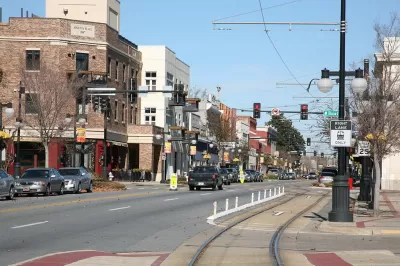
In Midwest towns in states like Indiana and Ohio, the issue of race rarely comes up. Unless you're not white, that is. Jack Shuler covers the debate around "'sundown towns'–towns where black Americans knew they were not welcome once the sun went down."
"In sundown towns across the Midwest, black Americans were denied housing, persecuted, or violently evicted during a period from the 1890s to the 1940s, leaving a homogeneity that has defined the towns for much of the past century." The result is a disparity between whites, many of whom don't see any racial issues, and the black minority, who often live lives defined by race.
For those researching American demographic history, written records can only tell part of the story. As a result, "the very concept of sundown towns is debated. The historian who has looked deepest into the phenomenon, James Loewen, contends that there were once thousands stretching from coast to coast. Critics of his work say he relies too much on oral history."
Read the full story: 'Sundown towns': Midwest confronts its complicated racial legacy

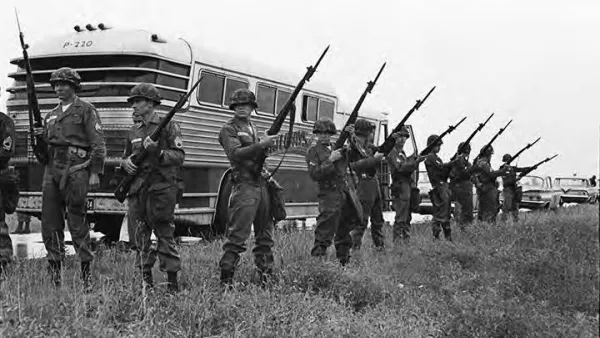
Reclaiming Transportation as a Place of Resistance
The systems that move us are not neutral — and we don’t have to pretend like they are.
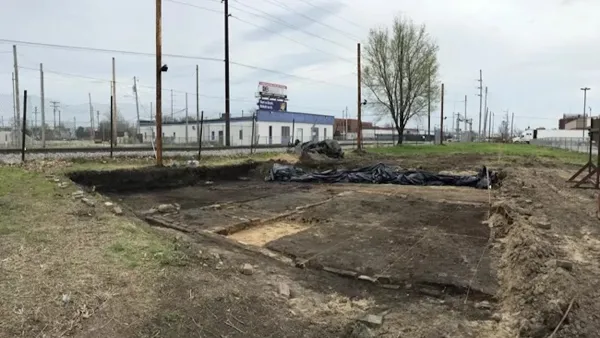
Site of Race Riot in Springfield, Illinois, Designated as National Monument
President Biden has designated the site of the 1908 Springfield race riot as a national monument, honoring its historical significance.
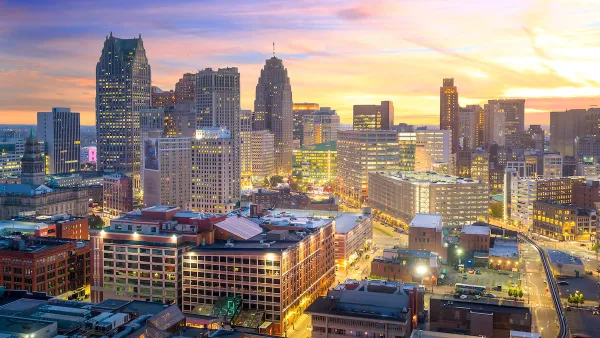
Detroit and Michigan on the Upswing
It's been 66 years since the Motor City last grew its population. Census data released last month revealed an increase of nearly 2,000 people last year, nearly half the state's population growth.

Planetizen Federal Action Tracker
A weekly monitor of how Trump’s orders and actions are impacting planners and planning in America.

California plans to bury El Niño’s downpour
If the state plays its cards right, it may be able to store a billion acre-feet of El Niño’s water in aquifers.

Chicago breaks ground on $3 billion megadevelopment
The new neighborhood, titled Foundry Park, will one day host 3,700 residences.

California High-Speed Rail Authority CEO resigns after $600,000 scandal
Under Ian Choudri, the authority used taxpayer dollars to fund first class flights and trips to nightclubs.

Want to study the Missouri River? Soon, you may need unanimous approval from 10 states
Legislation would require 10 governors’ permission to study or build projects moving water outside the basin.

Desperate measures: Advocates weigh draining Lake Powell to fill Colorado River
Draining the reservoir could reduce evaporation losses by a couple hundred thousand acre-feet.

FREE Course: Walkable City 1: Why Walkability?
After describing his path towards focusing on walkability as the essence of good planning, Jeff Speck marches through his five principal reasons for making more walkable places.
Reinventing Malls: Planning Alchemy—Turning Gray Fields Into Gold
The course focuses on the opportunities and imperatives that shape reinvention of mall sites.


City of Rosemead
Rutgers University, Edward J. Bloustein School of Planning and Public Policy
One Hundred Miles
Hunter College, City University of New York (CUNY)
The Architects Foundation
University of Cincinnati Online
City of Cambridge
Montrose County
The Pocatello Development Authority