Like his father and great-uncle before him, 37-year-old Caracas native Guillermo Lares is using Venezuela's rural traditions to help himself and his contemporaries reflect on the country's current reality.


After Venezuela's first commercial oil well was developed in 1914, the poor, rural nation transformed into a wealthy, urbanized global power within a relatively short period. Over time, economic mismanagement and weak institutions chipped away at this success, leading to the current crisis.
Much of the transformation that has shaped the nation over the past century has been led from Caracas. Long the country's largest and most powerful city, it has historically served as the main point of exchange between Venezuela and the wider world.
For one family based there, the desire to explore the immense (and often hidden) cultural diversity found outside the modern, cosmopolitan capital has been an obsession spanning three generations. Through projects stretching back to the 1940s, Guillermo Lares, his father, and his great-uncle have used the nation's traditional music to spark public reflection about its future in Caracas and beyond.
FULL STORY: Searching for Venezuela in its folk music

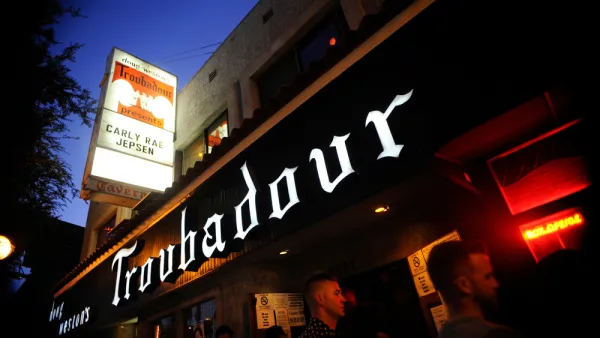
Independent Music Venues Face a Tough Road Ahead
Where have all the venues gone?
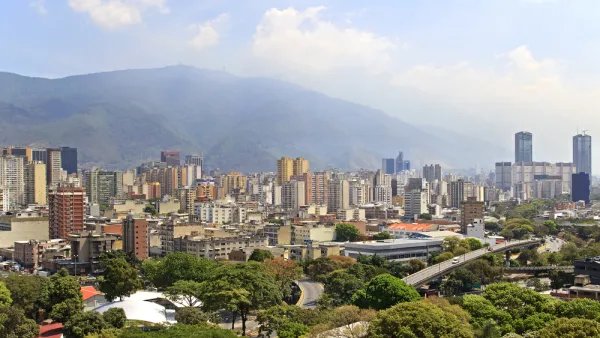
Lamenting the Decline of Caracas, Once the 'Jewel of Latin America'
"A generation ago, Venezuela’s capital was one of Latin America’s most thriving, glamorous cities; an oil-fuelled, tree-lined cauldron of culture that guidebooks hailed as a mecca for foodies, night owls and art fans."
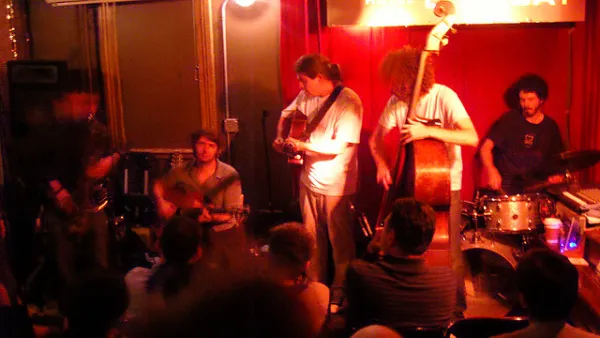
Safe for Now, Brooklyn Music Mecca Sees a Cloudy Future
More than 20 percent of New York's smaller music venues have closed in the past 15 years. Although Brooklyn institution Barbes was recently saved by a crowdfunding campaign, its founder is pessimistic about the future of New York's independent arts.

Planetizen Federal Action Tracker
A weekly monitor of how Trump’s orders and actions are impacting planners and planning in America.

The state-sanctioned urbicide of Austin
People don’t kill cities. Freeways do.

US to reduce Colorado River water deliveries to Mexico
A new Colorado Treaty amendment reduces Mexico’s Colorado River water allocation by 250,000 acre feet.

5 New England states march closer to 800 megawatt wind energy project
Securing federal approval for the project may be complicated under the Trump administration, which has historically been hostile towards domestic wind power.

Baltimore to break ground on $50 million Transit Priority Project
The project will bring faster bus trips, safer streets and better bike connections to Baltimore.

Airbnb launches $250 million 'last-dollar financing' housing accelerator, makes first investment in Austin
The company will put $6.4 million towards affordable housing development in Texas’ capital.

FREE Course: Walkable City 1: Why Walkability?
After describing his path towards focusing on walkability as the essence of good planning, Jeff Speck marches through his five principal reasons for making more walkable places.
Reinventing Malls: Planning Alchemy—Turning Gray Fields Into Gold
The course focuses on the opportunities and imperatives that shape reinvention of mall sites.

Eagle County Government
Harvard University Graduate School of Design
Nashville Planning Department
The Architects Foundation
University of Cincinnati Online
The Pocatello Development Authority
The Urban Renewal Agency of the City of Pocatello
Journal of the American Planning Association