A planning consultant hired by FirstEnergy is putting out the first speculative ideas for the future of a contaminated lakefront site of a most demolished power plant.


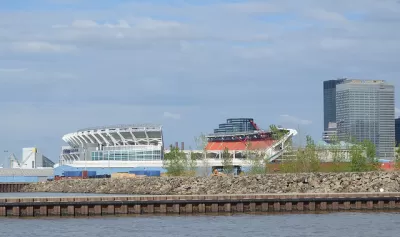
"The contaminated site of the largely demolished FirstEnergy lakefront power plant at East 72nd Street could become a park, or it could host housing, commercial and institutional development, a creative zone for small-scale innovators, or a food production center," reports Steven Litt, sharing the details of a presentation by planning firm CRTKL to the St. Clair Superior Development Corp. in late March.
The recent meeting was the second of the year, "in a fast-moving process" aimed at providing guidance to FirtEnergy and the city for the future of the site. "FirstEnergy is paying for the study to satisfy part of an agreement under which the city allowed it to demolish the former coal-fired plant and to prepare for its eventual sale," reports Litt.
The article includes a lot more detail about the planning study and outreach process so far, the political situation (including the opinions of a group of local advocates called the Green Ribbon Coalition), and the environmental concerns about the site.
Read the full story: FirstEnergy lakefront site could host parks, housing, gardens and more, planner says

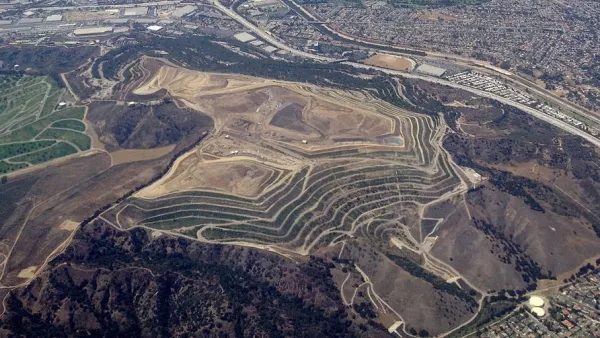
Creating a New Regional Park by Restoring Degraded Lands
Los Angeles County is transforming 142 acres of the Puente Hills Landfill into parkland, creating the first new regional park in the county in over 35 years. The recently released concept plan and renderings show what the park will look like.
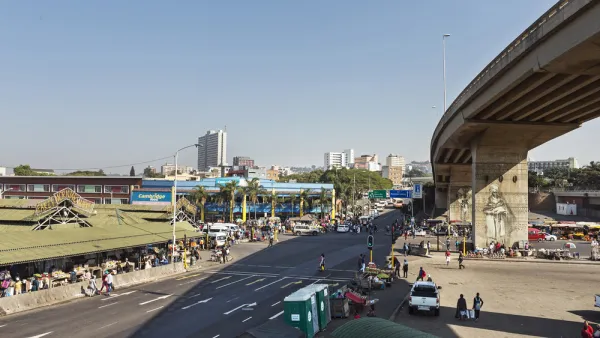
6 International Models of Urban Revitalization
The New York Times recently published an article exploring six cities from around the world reinventing themselves for the 21st century: Paris, Sydney, Medellin, Lisbon, Singapore, and Durban.
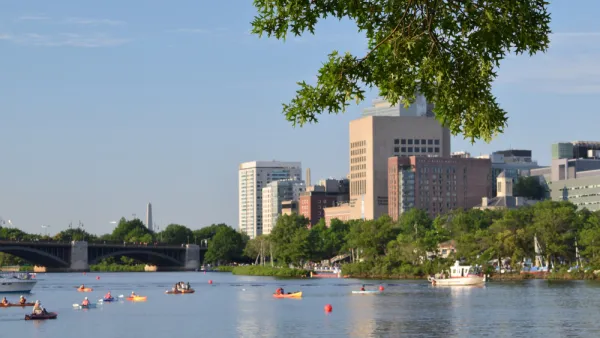
Urban Rivers Everywhere Follow the Cuyahoga's Lead
On the 50th anniversary of the Cuyahoga River catching fire in Cleveland, it's a good time for urban river keepers everywhere to reevaluate their work and redouble their efforts to make safe and healthy rivers for everyone.

Planetizen Federal Action Tracker
A weekly monitor of how Trump’s orders and actions are impacting planners and planning in America.

Amtrak, CN end decades-long dispute with eight-year agreement
The new operating agreement establishes an updated framework for the companies to work together, including processes to resolve disputes.

Judges permit Denver to divert 77,000 acre feet from the Colorado River for reservoir expansion
Overuse and climate change have caused the Colorado River’s water levels to plummet.

Boston has spent millions making the Green Line more accessible — and there’s no end in sight
While the city has invested millions into expanding and adding platforms to the Green Line to make it more accessible, new train cars set to arrive next year will be too tall for disabled passengers to board without raising the current platforms.

Idaho may see an 18% drop in federal surface transit funding — the largest estimated cut in the US
Transit systems in rural communities are much more reliant on federal funding to provide their services.

How ‘post-disaster gentrification’ alters neighborhoods after natural calamities
After hurricanes, fires or other calamities, the original residents of a community are often replaced by younger, wealthier residents.

FREE Course: Walkable City 1: Why Walkability?
After describing his path towards focusing on walkability as the essence of good planning, Jeff Speck marches through his five principal reasons for making more walkable places.
Reinventing Malls: Planning Alchemy—Turning Gray Fields Into Gold
The course focuses on the opportunities and imperatives that shape reinvention of mall sites.

City of Wisconsin Rapids
Harvard University Graduate School of Design
KFH Group Inc.
The Architects Foundation
University of Cincinnati Online
The Pocatello Development Authority
The Urban Renewal Agency of the City of Pocatello