A founder and veteran of the EPA’s Environmental Justice Office has resigned over the White House's plans to shutter the program.



In the early '90s, Mustafa Ali helped found the EPA’s Environmental Justice Office. This month, rather than stay on to unravel two decades of work, the longtime advocate announced his resignation.
His departure was motivated by the White House's plan to slash the agency's overall budget by more than a quarter, reports The Washington Post.
[The budget] also listed the environmental justice program as among several dozen slated to lose all funding. The document stated that the new administration supports the idea of environmental justice but would eliminate that EPA office and “assumes any future EJ specific policy work can be transferred to the Office of Policy.”
As senior advisor and assistant associate administrator for environmental justice under both Republican and Democratic administrations, Ali's career has focused on protections for communities—largely low-income and people of color—who bear the brunt of pollution nationwide.
"I can't be a part of anything that would hurt those communities," Ali said in an interview. "I just couldn't sign off on those types of things."
He is now senior vice president at the Hip Hop Caucus, a non-profit that encourages youth activism through music and culture.
Read the full story: EPA environmental justice leader resigns, amid White House plans to dismantle program

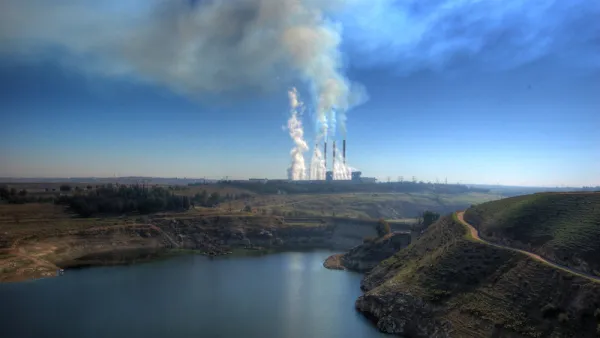
The Trump Administration's Environmental Policies Have Consequences for Black Lives
A Trump administration decision not to tighten Clean Air Act restrictions on soot pollution will have more consequences for Black Americans.
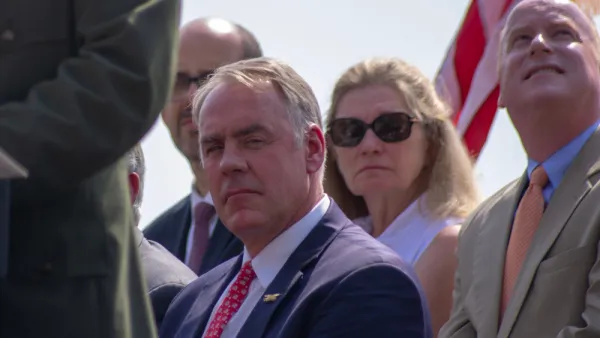
Interior Secretary Ryan Zinke Resigns Amid Scandals
With a tweet from the president on Saturday morning, the public learns that yet another embattled cabinet member will lose his job. Zinke, a former congressman from Montana, is the subject of numerous investigations and controversies.

Federal Appeals Court Orders EPA to Ban Harmful Pesticide
The ruling puts another stain on former EPA Administrator Scott Pruitt's legacy as it rebukes his denial of a petition to ban a pesticide that causes neurodevelopmental damage in children. Pruitt had rejected his own scientists' recommendation.

Planetizen Federal Action Tracker
A weekly monitor of how Trump’s orders and actions are impacting planners and planning in America.

Amtrak, CN end decades-long dispute with eight-year agreement
The new operating agreement establishes an updated framework for the companies to work together, including processes to resolve disputes.

Judges permit Denver to divert 77,000 acre feet from the Colorado River for reservoir expansion
Overuse and climate change have caused the Colorado River’s water levels to plummet.

NYC DOT wants faster, more permanent street upgrades
The city is examining ways to build more concrete infrastructure without getting entangled in 'decades-long' projects.

'Something we’ve never seen before:' rising utility rates could strain city finances nationwide
Data centers, climate change and other factors have caused utility rates in the United States to increase by 38% since 2020.

Trump to overrule local leaders, lease millions of acres of America’s Pacific Island territories’ seafloors to mining companies
International law says that the Indigenous people of America’s territories have a right to prior and informed consent regarding projects that impact their countries.

FREE Course: Walkable City 1: Why Walkability?
After describing his path towards focusing on walkability as the essence of good planning, Jeff Speck marches through his five principal reasons for making more walkable places.
Reinventing Malls: Planning Alchemy—Turning Gray Fields Into Gold
The course focuses on the opportunities and imperatives that shape reinvention of mall sites.

Harvard University Graduate School of Design
KFH Group Inc.
Greater Baltimore Committee
The Architects Foundation
University of Cincinnati Online
The Pocatello Development Authority
The Urban Renewal Agency of the City of Pocatello