Small reminders and suggestions can add up to big changes for cities that "nudge" citizens.


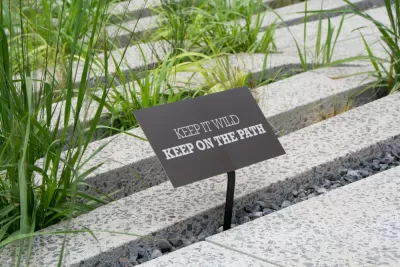
"Nudges from governments, non-profits, and private companies can help reverse that inertia and produce more desirable behaviors from residents." writes Chris Bousquet for Data-Smart City Solutions. Behavioral scientists have long studied the ways in which reminders and small incentives can change actions and some cities are taking advantage of this insight to do things like boost participation in city programs, or get residents to pay bills before the city does something more drastic like turning off the water.
One example Bousquet cites comes from a Louisiana health program that intended to get low-income people to get health check-ups. "In a trial facilitated by the Behavioral Insights Team through the What Works Cities program, New Orleans sent text messages to more than 21,000 low-income adults who had not seen a primary care physician in two years or longer," writes Chris Bousquet for Data-Smart City Solutions," Bousquet writes. The program tested multiple messages to find which would resonate best with patients and then used their data to create a more compelling nudge.
Read the full story: Ten Ways Cities are Nudging for Better, Healthier Citizens


Study: New Orleans sea level rise is at 'point of no return'
Research shows that the city could be surrounded by water by the end of this century.

Amtrak’s Mardi Gras train ‘blows away’ ridership expectations
The line brought back rail service between New Orleans and Mobile, Alabama for the first time since Hurricane Katrina.
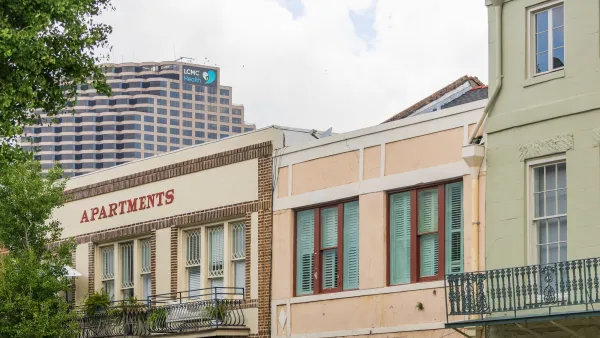
Is New Orleans’ Healthy Homes Ordinance a Hollow Promise?
The Healthy Homes Ordinance is supposed to help fix New Orleans’s deteriorating rental housing stock. But three years in, many “certified habitable” apartments still have leaking roofs, black mold, and dangerous heat. What went wrong?

Planetizen Federal Action Tracker
A weekly monitor of how Trump’s orders and actions are impacting planners and planning in America.

Amtrak, CN end decades-long dispute with eight-year agreement
The new operating agreement establishes an updated framework for the companies to work together, including processes to resolve disputes.

Northwest rail fans eager for Sept. 30 debut of Amtrak’s Airo fleet
Get ready for that new train smell and more seats. But they won’t go faster or run more frequently on the Cascades route in Washington and Oregon.

Brightline Florida files for bankruptcy
The transit company is over $5 billion in debt.

St. Louis Metro to test if single-car trains can reduce operating costs, maintain rider satisfaction
The pilot program will run from October to spring 2027, and begin with one single-car train operating on Metrolink’s Red and Blue lines.

Pennsylvania is building data centers in abandoned mines
Housing data centers in mines provides an alternative to destroying local forests and may spare residents from data centers’ noise and air pollution.

FREE Course: Walkable City 1: Why Walkability?
After describing his path towards focusing on walkability as the essence of good planning, Jeff Speck marches through his five principal reasons for making more walkable places.
Reinventing Malls: Planning Alchemy—Turning Gray Fields Into Gold
The course focuses on the opportunities and imperatives that shape reinvention of mall sites.

City of Thousand Oaks
City of Wisconsin Rapids
Harvard University Graduate School of Design
The Architects Foundation
University of Cincinnati Online
The Pocatello Development Authority
The Urban Renewal Agency of the City of Pocatello