A new report identifies key actions for the city of Portland to prepare for the certainty of a large earthquake.



"The City Club of Portland has released a lengthy report from its Earthquake Resilience Research Committee and it looks like the city has its work cut out for it before the big one hits," reports Kale Williams.
The report, "Big Steps Before the Big One: How the Portland area can bounce back after a major earthquake" [pdf], identifies five areas of primary concern to the city's resilience in the event of a large earthquake: fuel, buildings, lifelines, people, and coordinated planning.
Portland is one of the cities located on the Cascadia Subduction Zone, the subject of a frightening July 2015 freature in the New Yorker. The report by the City Club isn't the first step taken by the city to assess its earthquake readiness since that article shook everyone up. In May 2016, the city also released an interactive online map of the risk presented by specific buildings around the city.
Read the full story: City Club of Portland releases earthquake resiliency report

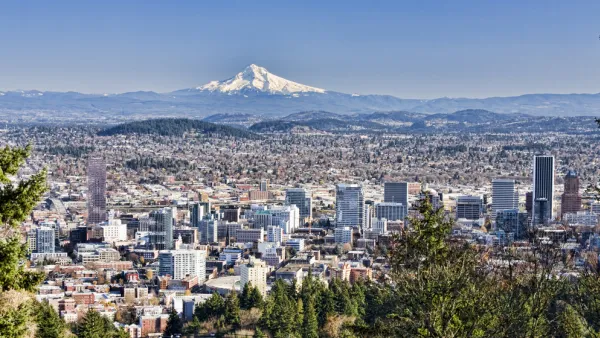
Portland Digs Into Data on Seismic Vulnerabilities
With an earthquake due to shake up the Pacific Northwest in the not so distant future, Portland has provided an online map to identify potentially vulnerable buildings in danger of suffering major damage when the big one hits.

Rebuilding America's Backbone: A Call for Resilient Infrastructure
How sustainable investments in infrastructure made today can secure the future.
Portland Releases 43-Step Climate Action Plan
A draft plan outlines suggested actions to build resilience, minimize carbon emissions, and protect vulnerable residents from extreme weather events.

Planetizen Federal Action Tracker
A weekly monitor of how Trump’s orders and actions are impacting planners and planning in America.

Amtrak, CN end decades-long dispute with eight-year agreement
The new operating agreement establishes an updated framework for the companies to work together, including processes to resolve disputes.

Judges permit Denver to divert 77,000 acre feet from the Colorado River for reservoir expansion
Overuse and climate change have caused the Colorado River’s water levels to plummet.

Philadelphia to invest $2 billion into upgrading city airports as PHL places last in customer satisfaction
Modernizations to Philadelphia's airports will include baggage system upgrades and a new automated parking garage guidance system.

The LA housing policies making developers turn away from the city
Despite LA’s housing shortage, developers say the city’s "mansion-tax" and pandemic-era policies make it an unappealing place to build housing.

New density bill would require 7 California cities to establish regional transit hubs
The bill would also require major cities in California to permit high-rise residential buildings.

FREE Course: Walkable City 1: Why Walkability?
After describing his path towards focusing on walkability as the essence of good planning, Jeff Speck marches through his five principal reasons for making more walkable places.
Reinventing Malls: Planning Alchemy—Turning Gray Fields Into Gold
The course focuses on the opportunities and imperatives that shape reinvention of mall sites.

City of Wisconsin Rapids
Harvard University Graduate School of Design
KFH Group Inc.
The Architects Foundation
University of Cincinnati Online
The Pocatello Development Authority
The Urban Renewal Agency of the City of Pocatello