An in-depth look into the political controversies stirred up in the Boston neighborhood of Jamaica Plain as a result of a proposed, density-adding zoning plan.


"Boston officials this week are set to approve new zoning rules for a section of Jamaica Plain from Egleston Square to Forest Hills, bringing new growth and affordable housing to a neighborhood that many residents say needs both," according to an article by Tim Logan and Shelby Grebbin.
But there's a catch: the plan has critics on both sides of the proposal. "Developers and their allies worry that aggressive requirements for low-cost units make it too expensive to build, while a group of vocal protesters argue the opposite, that the city hasn’t gone far enough on affordable housing," according to Logan and Grebbin.
The article highlights the proposed plan as a case study of conflicting dynamics at work in Boston and other cities all over the country: the need for more housing, especially affordable housing, and the desire to preserve neighborhoods for the communities already living there.
The specifics of the Jamaica Plain experience, which are detailed in the article with infographics and testimonials, will also be helpful as the city gears up for similar rezonings in the neighborhoods of Roxbury and Dorchester.
FULL STORY: Housing plan brings growing pains to Jamaica Plain

A Critical Review of "Sick City: Disease, Race, Inequality and Urban Land"
Patrick Condon's new book, "Sick City: Disease, Race, Inequality and Urban Land" recommends tax reforms and housing subsidies to create more affordable and inclusive communities. It is attractive propaganda that deserves critical analysis.

City Council Rejects Rezoning Approved by Planning Commission, Planning Staff
It's a tale as old as time: A plan to rezone ten acres of land in Spokane splits the public and the City Council from the opinions of the city's planning staff and Planning Commission.
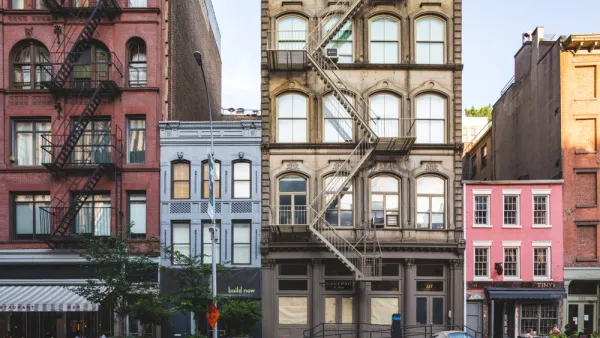
NoHo and SoHo Rezoning Controversies, Amplified
One of the big questions of planning is up for debate with a proposed rezoning in the SoHo and NoHo neighborhoods of New York City: Can upzoning be an effective tool for affordability?

Planetizen Federal Action Tracker
A weekly monitor of how Trump’s orders and actions are impacting planners and planning in America.

The state-sanctioned urbicide of Austin
People don’t kill cities. Freeways do.

US to reduce Colorado River water deliveries to Mexico
A new Colorado Treaty amendment reduces Mexico’s Colorado River water allocation by 250,000 acre feet.

Baltimore to break ground on $50 million Transit Priority Project
The project will bring faster bus trips, safer streets and better bike connections to Baltimore.

Airbnb launches $250 million 'last-dollar financing' housing accelerator, makes first investment in Austin
The company will put $6.4 million towards affordable housing development in Texas’ capital.

Guerilla urbanists are building DIY bus stop benches in Chicago
A before-and-after of one of the bus stops with a new bench. The new benches are not officially sanctioned or permitted, but the residents who placed them hope they will be the start of a network of DIY benches across the city.

FREE Course: Walkable City 1: Why Walkability?
After describing his path towards focusing on walkability as the essence of good planning, Jeff Speck marches through his five principal reasons for making more walkable places.
Reinventing Malls: Planning Alchemy—Turning Gray Fields Into Gold
The course focuses on the opportunities and imperatives that shape reinvention of mall sites.

Eagle County Government
Harvard University Graduate School of Design
Nashville Planning Department
The Architects Foundation
University of Cincinnati Online
The Pocatello Development Authority
The Urban Renewal Agency of the City of Pocatello
Journal of the American Planning Association