An editorial in the Dallas Morning News argues that Fair Park could be a vibrant part of the city if it were restored, and that the restoration could be financed in part by revenue generated from the park itself.



Dallas' Fair Park is not what it once was. "Over time, Fair Park's original Art Deco buildings have suffered from benign neglect and are now vacant, while many of the museums and performance halls have relocated," Michelle Corson and Nan Ellin write in Dallas Morning News. They argue that the park remains a resource to the city and need not be funded by a bond issuance.
"If we are going to step away from asking taxpayers to fund 100 percent of the redevelopment of Fair Park, we will need to incorporate revenue-generating elements into the redesign," Corson and Ellin write. The city could rent parking spaces and use some of the park's many buildings as event spaces. The city could also solicit donations and build solar panels on refurbished structures and parking facilities, they suggest. Whatever the funding structure, the park presents a great opportunity for the growing city.
Read the full story: Fair Park could become a vibrant part of the city, but how do we pay for it?

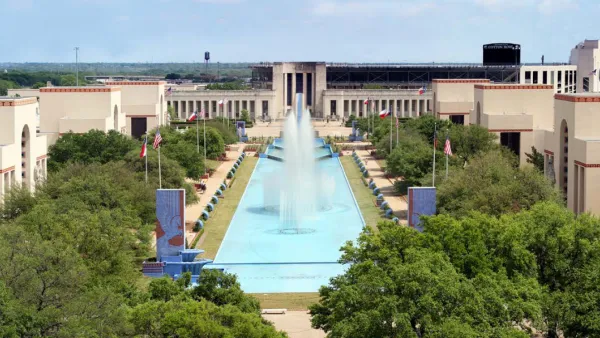
New Park Coming to Historic Dallas Fairgrounds
A 20-year plan to revitalize a historic Dallas fairground will bring much-needed new green space and multi-use venues to Fair Park.
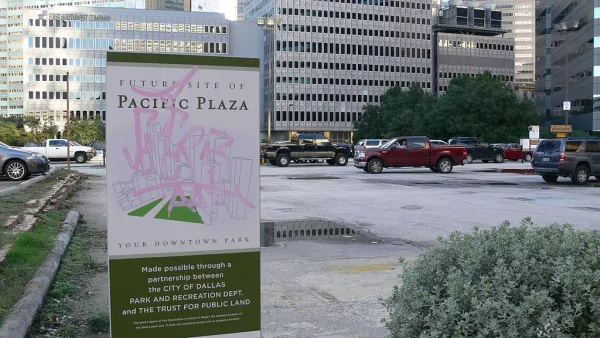
From Parking Lot to Urban Green Space
The first of four new parks opening in Dallas in the next few years opened earlier this month—Pacific Plaza park.

School Playgrounds to Parks
More than 40 percent of Dallas residents live within a half-mile of a park, but the school district and the city are working together with nonprofits to improve that figure.

‘Going backwards:’ Baltimore mayor, students rally against state's transit funding plan
Maryland's proposed six-year plan provides no funding for Baltimore’s BMORE bus program and reduces its road maintenance funding.

Detroit to transform waterfront with $2.2 billion investment
Developers will convert about 18 acres of unused parking lot space into civic spaces.
Mamdani sent nearly 6,000 pied-à-terre tax warnings to homes that didn’t qualify
A judge has ordered the administration to cancel thousands of pied-à-terre tax notices after it sent 35% of them erroneously.

25 states, cities sue the EPA over erased power plant emissions limits
The coalition also intends to sue the EPA for not regulating emissions from gas-fired power plants.

Newsom vetoes giving CA tribes greater voice in water projects
In his veto letter, Newsom said the bill would add ‘uncertainty’ to the state’s fight to secure Californians’ water supplies.

Michigan Senate votes to revise 'lax' dam safety laws
A Bridge Michigan investigation found more than 100,000 Michigan residents live in the floodpath of a high or significant-hazard dam.

FREE Course: Walkable City 1: Why Walkability?
After describing his path towards focusing on walkability as the essence of good planning, Jeff Speck marches through his five principal reasons for making more walkable places.
Reinventing Malls: Planning Alchemy—Turning Gray Fields Into Gold
The course focuses on the opportunities and imperatives that shape reinvention of mall sites.

City of Thousand Oaks
City of Wisconsin Rapids
Harvard University Graduate School of Design
The Architects Foundation
University of Cincinnati Online
Northern Illinois Transit Authority (NITA)
The Pocatello Development Authority
The Urban Renewal Agency of the City of Pocatello