It might seem obvious that vacant homes attract crime and other noxious elements to surrounding properties, but researchers are still working to quantify those external costs.


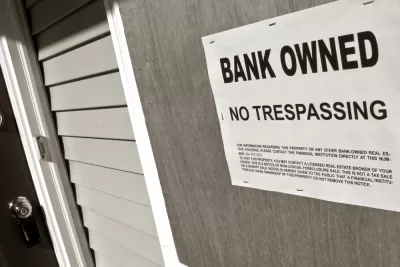
"That foreclosed house on your street with the chipped paint and boarded-up windows — it’s ugly, sure, but how much does it cost?"
That's the question posed by a new report written by Aaron Klein and covered by Rachel Dovey in an article for Next City. According to Dovey's summary, the report estimates that each vacant property "costs roughly $155,000 in its first year."
Those boarded-up windows are something of an “X marks the spot” for certain types of crimes, particularly the theft of appliances and copper pipes. The report estimates that, within 250 feet of a foreclosed home, the foreclosure process actually leads to a 10 percent increase in the number of reported crimes per year. And the impact of vacancy on crime increases as the property stays unoccupied, leveling out between a year and 18 months. Then, in a vicious cycle, that increase in crime can cause neighboring property values to decline.
The report, "Understanding the True Costs of Abandoned Properties: How Maintenance Can Make a Difference," was published by Community Blight Solutions.
FULL STORY: Dollar Amount Put on Cost of Blight to Neighbors

New Ohio Law Fast Tracks Foreclosures for Vacant Properties
The Federal Reserve Bank of Cleveland provides an early assessment of a new foreclosure law in Ohio designed to help reduce vacant and blighted properties in the state.
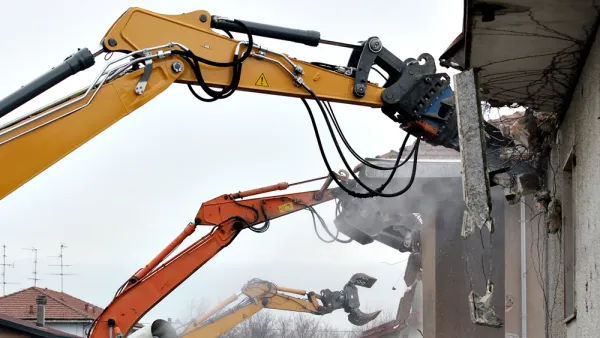
$160 Million in Bond Funding for Demolitions on the Ballot in Detroit
Proposal N, on the ballot for Detroit voters next week, will provide $160 million in bond funding for demolitions and $90 million to mothball homes for future rehab, but, according to this opinion, it won't solve the city's blight challenges.
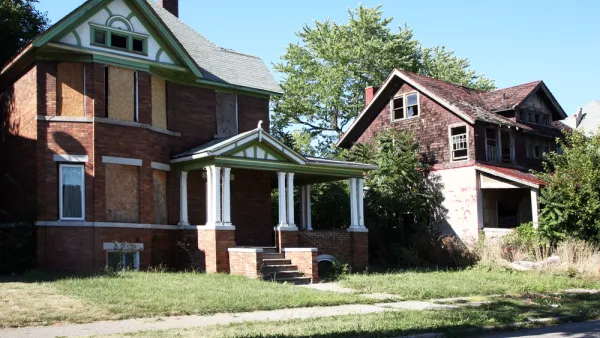
Detroit Continues Demolition Program After Lead Risks Revealed
The city of Detroit said it would halt a demolition program after a report revealed the amount of lead released by demolitions into the environment, risking the health of children and other local residents.

Planetizen Federal Action Tracker
A weekly monitor of how Trump’s orders and actions are impacting planners and planning in America.

The state-sanctioned urbicide of Austin
People don’t kill cities. Freeways do.

US to reduce Colorado River water deliveries to Mexico
A new Colorado Treaty amendment reduces Mexico’s Colorado River water allocation by 250,000 acre feet.

Mamdani overhauls NYC's Vision Zero plan with 100 new policy goals
The overhaul aims to reduce traffic deaths and make streets safer for pedestrians, cyclists and drivers through lower speed limits, new safety infrastructure and more.

Amtrak not solely to blame for New Jersey commuter rail's unreliability, report finds
A new study from the Garden State Initiative found that NJ Transit’s budget grew 20% across a 4 year period, but reliability declined significantly over the same period.

EPA erases limits on planet-warming pollution from power plants
Under Monday’s plan, power plants would still have some limits on how much mercury, arsenic and other contaminants they can emit.

FREE Course: Walkable City 1: Why Walkability?
After describing his path towards focusing on walkability as the essence of good planning, Jeff Speck marches through his five principal reasons for making more walkable places.
Reinventing Malls: Planning Alchemy—Turning Gray Fields Into Gold
The course focuses on the opportunities and imperatives that shape reinvention of mall sites.

Eagle County Government
Harvard University Graduate School of Design
Nashville Planning Department
The Architects Foundation
University of Cincinnati Online
The Pocatello Development Authority
The Urban Renewal Agency of the City of Pocatello
Journal of the American Planning Association